
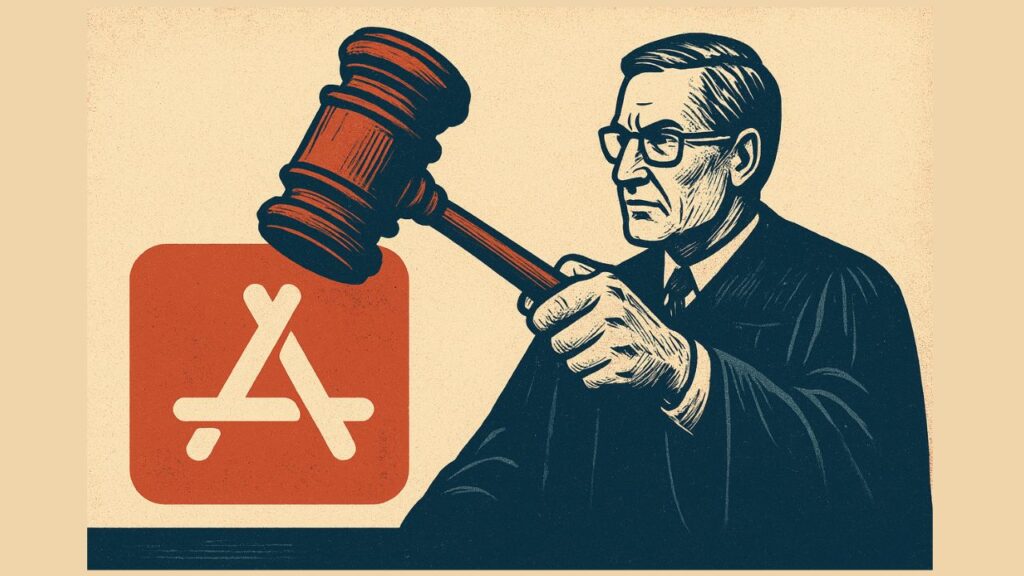
Judge Decertifies Apple App Store Suit
A federal judge has decertified a long-running class-action lawsuit brought by tens of millions of Apple customers who alleged that Apple monopolized the market for iPhone apps by restricting all purchases to its App Store, resulting in inflated prices.
The lawsuit, titled In re Apple iPhone Antitrust Litigation, originally filed in December 2011, had for years sought to represent all U.S. iPhone users who spent $10 or more on apps or in-app purchases since July 2008.
In February 2024 the class certification was granted, allowing the case to proceed as a class-wide action. But on October 27, 2025, U.S. District Judge Yvonne Gonzalez Rogers reversed that decision, ruling that the plaintiffs failed to present a reliable model that could prove class-wide injury or damages in a single stroke.
In her decision, Judge Rogers pointed out significant flaws in the plaintiffs’ data-model. For example, one plaintiff named “Robert Pepper” and an alleged claimant “Rob Pepper” appeared as different individuals despite having the same home address and credit-card information. Also flagged: the grouping of more than 40,000 payment records for persons simply named “Kim” who had no other shared identifiers.
These “alarming errors” led the court to conclude that the aggregation of claims was unreliable.
Apple welcomed the ruling, emphasizing its investments in the App Store ecosystem and claiming the decision “recognized the plaintiffs failed to demonstrate the alleged harm to consumers.”
The decertification doesn’t necessarily end the case, but it removes one of the key advantages of class-action status—namely the ability for one suit to recover on behalf of millions rather than many individual lawsuits. The plaintiffs’ lawyers said they are reviewing next steps, including whether to seek reconsideration or refiling on other grounds.

Why It Matters
-
Class-action viability challenged — The decision signals that even long-pending, high-profile consumer cases must present robust modeling of injury and damages before class certification.
-
Monopoly & antitrust scrutiny — Apple’s App Store business practices have been under scrutiny for years; this ruling is a major turn in consumer-access litigation and may influence how other tech giants are treated.
-
Consumer-rights implications — For millions of users who purchased apps via the App Store, the decertification may limit their ability to pursue collective legal redress.
-
Legal strategy evolution — Companies now may face heightened pressure to mount strong defenses early on class-certification issues, shifting how antitrust and tech-litigation are approached.
-
Precedent for tech litigation — This outcome could set a new bar for how courts evaluate large-scale consumer harm claims in the tech sector—especially where data-models and user grouping are involved.

Key Legal Outcome
-
Class decertified — Judge Rogers formally decertified the class action, reversing her previous certification decision from February 2024.
-
Failure of damage model — The plaintiffs’ expert model failed to reliably show class-wide injury and damages in one stroke, a critical legal standard for class-actions.
-
Significant data-flaws noted — The court highlighted “alarming” errors in the class-definition and grouping, including mis-identification of individuals and improper aggregation of payment records.
-
Case continues individual avenues — With class status removed, plaintiffs may still pursue claims individually or reorganize their suit, but loses the benefits of collective action.
-
Impact on tech-antitrust cases — The ruling may constrain future large-scale consumer antitrust suits in the tech industry by emphasizing stricter proof standards for class certification.

