
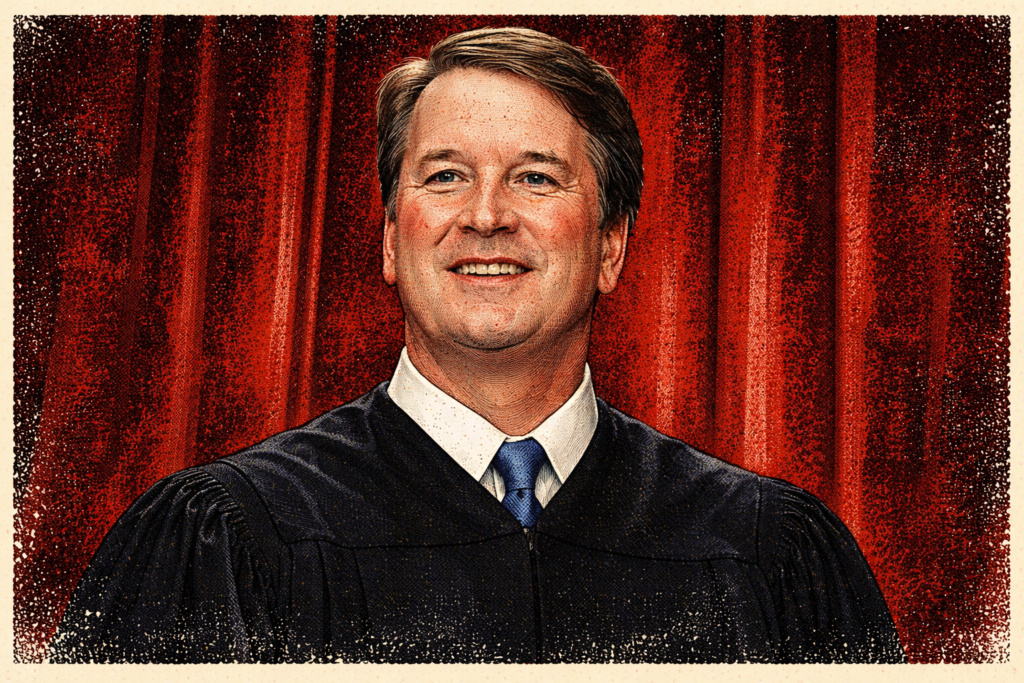
Epstein Emails Reveal Support for Kavanaugh
Newly released internal emails and text messages from the U.S. Department of Justice reveal that late financier and convicted sex offender Jeffrey Epstein expressed sympathy for Brett Kavanaugh during the Supreme Court nominee’s heated 2018 confirmation hearing and offered pointed comments on how the Senate should handle accusations against him.
The emails and communications show Epstein was closely following the controversial confirmation process, during which Dr. Christine Blasey Ford publicly accused Kavanaugh of sexual assault from when they were both teenagers. Epstein’s messages portray the confirmation hearing as a “trap” and provide explicit commentary on how he thought Republicans should handle Ford’s testimony.
In the correspondence dated September 2018, Epstein described the Senate Judiciary Committee proceedings in starkly strategic terms. He said he had “sat in Kavanaugh chair” and was “thinking of November,” suggesting both intense personal focus and a connection to political stakes, though the precise meaning of the comment remains unclear.
Epstein warned that Ford would “cry” and frame her life story around the alleged assault, predicting that her testimonies about anxiety and trauma would shape the narrative of the hearing. He criticized the selection of Rachel Mitchell—the female prosecutor chosen by Republican senators to question Ford—calling it a “horrible choice” that was a “critical and maybe lethal mistake.” In Epstein’s view, Mitchell’s role as cross-examiner was inappropriate, as prosecutors typically seek convictions rather than questioning alleged victims.
The emails show Epstein even suggested alternate questioning strategies designed to challenge Ford’s credibility. He proposed asking about details such as Ford’s family history of anxiety, lighting conditions at the scene, and inconsistencies in her account—lines of inquiry that he believed might weaken her testimony.

Throughout these exchanges, Epstein made clear his personal investment in the outcome. He disparaged the choice of prosecutor and offered tactical advice on how to “handle” the situation, despite having no explicit role in the proceedings and no evidence suggesting Kavanaugh even knew him. Nonetheless, the messages represented a rare glimpse into Epstein’s engagement with a major national political process.
Legal and political experts were quick to condemn the appearance of a convicted sex offender weighing in on one of the most contentious Supreme Court confirmation fights in modern history. Lisa Graves, a former chief counsel for judicial nominations in the Senate Judiciary Committee, called it “appalling” to see Epstein opine on the hearing given his history of abusing women and girls and the very nature of Ford’s testimony.
The documents also reveal Epstein had long-standing communication with Kenneth Starr, the late former U.S. solicitor general, who served as a mentor and superior to Kavanaugh during Starr’s investigation of former President Bill Clinton in the 1990s. In some exchanges, Epstein expressed admiration for Starr and discussed matters related to the Clinton investigation.
Interestingly, earlier emails show Epstein referring to Kavanaugh as his “first choice” for nomination—suggesting he favored his eventual selection by President Donald Trump. Epstein’s positive view of Kavanaugh’s prospects surfaced in July 2018, days before the nomination was officially announced, and indicates Epstein followed the confirmation closely.
There is no evidence in any of the released files showing that Epstein ever met or directly communicated with Kavanaugh. The connection is limited to Epstein’s commentary and observations in his emails and text messages. Nonetheless, the revelations have reignited debate about influence, power dynamics, and the role of private correspondence in public-facing political processes.
This reporting adds to a series of disclosures from the Department of Justice, which has released millions of pages of previously sealed Epstein-related communications and files. These materials have highlighted Epstein’s extensive network of contacts among elites and raised questions about how information tied to his activities circulated among powerful figures.

⚖️ Key Legal Outcomes
-
New DOJ documents reveal Epstein’s commentary on Brett Kavanaugh’s 2018 Supreme Court confirmation process.
-
Epstein described the confirmation hearing as a “trap” and offered detailed opinions on handling Dr. Christine Blasey Ford’s testimony.
-
He criticized Republican Senate strategy and suggested alternative interrogation approaches during the hearing.
-
Epstein expressed early support for Kavanaugh’s nomination, calling him his “first choice” in communications before the selection was official.
-
The emails highlight Epstein’s high-profile correspondences with Kenneth Starr, tying into broader historical legal and political networks.
🔍 Why It Matters
-
It sheds new light on Jeffrey Epstein’s engagement with national political events beyond his criminal cases.
-
Raises questions about the influence of private communications on public confirmations.
-
Amplifies scrutiny of the 2018 Brett Kavanaugh confirmation, already one of the most contentious in history.
-
Highlights Epstein’s extended network of contacts and influence among elites.
-
The disclosures could inform ongoing debates about transparency and ethical boundaries in politics and high-stakes nominations.
