
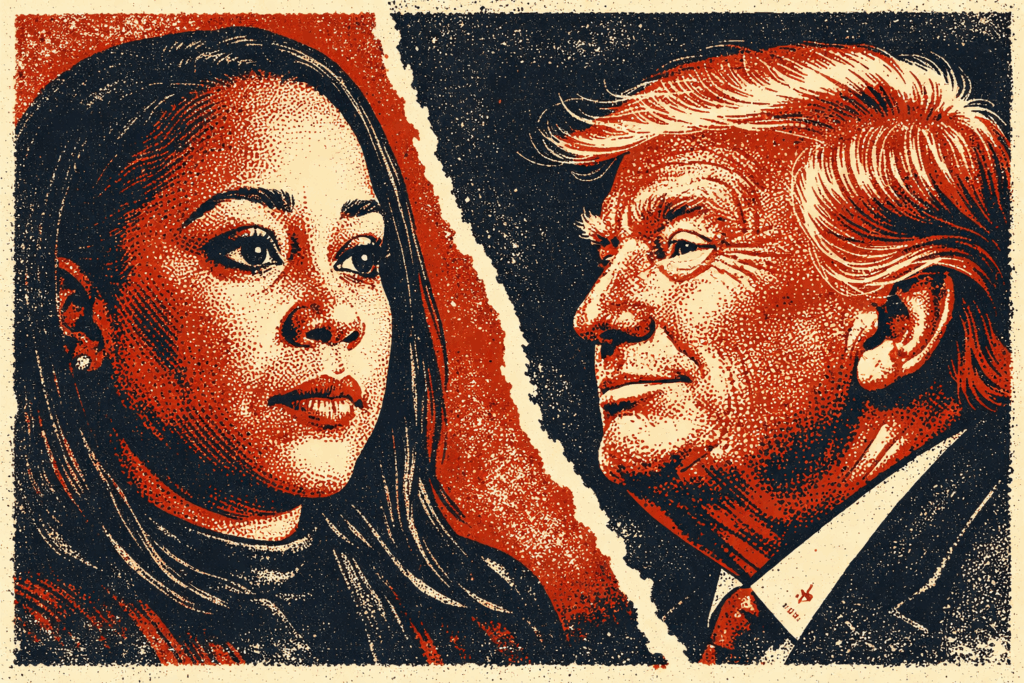
Georgia DA Vows Fight Over Legal Fees
A political and legal dispute continues to unfold in Georgia after Fani Willis, the district attorney of Fulton County, vowed to continue fighting efforts by Donald Trump and several of his allies to recover millions of dollars in legal fees tied to a dismissed election-interference case.
The conflict stems from the high-profile prosecution initiated by Willis in 2023 against Trump and 18 co-defendants, alleging a criminal conspiracy to overturn the results of the 2020 presidential election in Georgia. The case relied heavily on Georgia’s racketeering statute and accused the defendants of coordinating efforts to pressure election officials and disrupt the certification of the vote. All defendants denied wrongdoing.
However, the prosecution was derailed after a series of legal challenges centered on Willis’ relationship with a special prosecutor she had hired to help lead the case. Courts determined that the relationship created an “appearance of impropriety,” prompting the Georgia Court of Appeals to disqualify Willis and her office from continuing the prosecution. This decision ultimately led to the dismissal of the charges against Trump and his co-defendants when a replacement prosecutor declined to proceed with the case.
Following the collapse of the prosecution, Trump and several other defendants began pursuing reimbursement for legal costs under a Georgia law enacted in 2025. The statute allows defendants to recover attorney fees when charges are dropped after a prosecutor is disqualified for misconduct or other improper conduct during a case. Trump alone has requested more than $6 million in legal fees, while other defendants have submitted additional claims, pushing the combined total potentially close to $16 million.
Willis has strongly opposed these efforts. In public comments and filings, she argues that the defendants should not automatically receive reimbursement simply because the case ended after her disqualification. She has maintained that the prosecution itself was justified and that the law allowing reimbursement is flawed and possibly unconstitutional.
Despite her objections, Fulton County Superior Court Judge Scott McAfee ruled that Willis cannot challenge Trump’s request for legal fees in court because she is no longer part of the case after being removed from it. According to the ruling, the disqualification effectively stripped her of legal standing to contest the fee request directly within the same proceedings.

Even with this setback, Willis has indicated she will continue fighting the reimbursement claims through other legal avenues and public advocacy. She insists that allowing defendants to recover millions of dollars from taxpayers in this situation would create dangerous precedents for prosecutors and local governments. According to her arguments, the law used to justify the reimbursement requests unfairly penalizes prosecutors for decisions made during complex and politically sensitive cases.
Legal analysts note that the dispute now raises broader constitutional questions about the Georgia statute itself. Some legal officials have argued that forcing local governments to pay defendants’ legal costs without giving them adequate opportunity to contest the expenses may violate due-process protections. Others say the law is necessary to deter prosecutors from pursuing cases that later collapse because of ethical conflicts.
The controversy has also intensified political tensions around the original election-interference investigation. The prosecution of Trump and his allies was one of several criminal cases related to the 2020 election, and it drew national attention because it relied on Georgia’s expansive anti-racketeering law typically used against organized crime.
For Willis, the dispute is both legal and reputational. Her removal from the case, along with other court rulings related to records requests and office conduct, has drawn criticism from political opponents and some legal observers. At the same time, supporters argue that the original prosecution raised legitimate questions about attempts to influence election outcomes and should not be dismissed entirely because of procedural controversies.
As the legal fight continues, courts may ultimately determine whether Trump and other defendants are entitled to recover millions of dollars in legal expenses—and whether taxpayers in Fulton County will be required to cover those costs. The outcome could have far-reaching consequences for how prosecutorial disqualifications and reimbursement laws are handled in future high-profile criminal cases.

⚖️ Key Legal Outcomes
-
A Georgia court disqualified Fani Willis from prosecuting the election-interference case due to an appearance of impropriety tied to a relationship with a special prosecutor.
-
The criminal case against Donald Trump and his co-defendants was dismissed after the disqualification.
-
Trump and several co-defendants filed requests for reimbursement of legal fees totaling potentially $16 million.
-
Judge Scott McAfee ruled Willis cannot oppose the fee request in court because she is no longer involved in the case.
-
The dispute now centers on the constitutionality and interpretation of Georgia’s law allowing reimbursement after a prosecutor’s disqualification.
❗ Why It Matters
-
Taxpayer impact: Fulton County residents could be required to pay millions in legal fees if courts approve the reimbursement requests.
-
Legal precedent: The case may define how reimbursement laws apply when prosecutions collapse after conflicts of interest.
-
Prosecutorial accountability: Courts must balance ethical standards for prosecutors with the risk of discouraging complex cases.
-
Political significance: The dispute remains tied to investigations into attempts to challenge the 2020 U.S. election results.
-
Future criminal cases: The ruling could influence how states structure laws about compensating defendants when prosecutions fail.
