
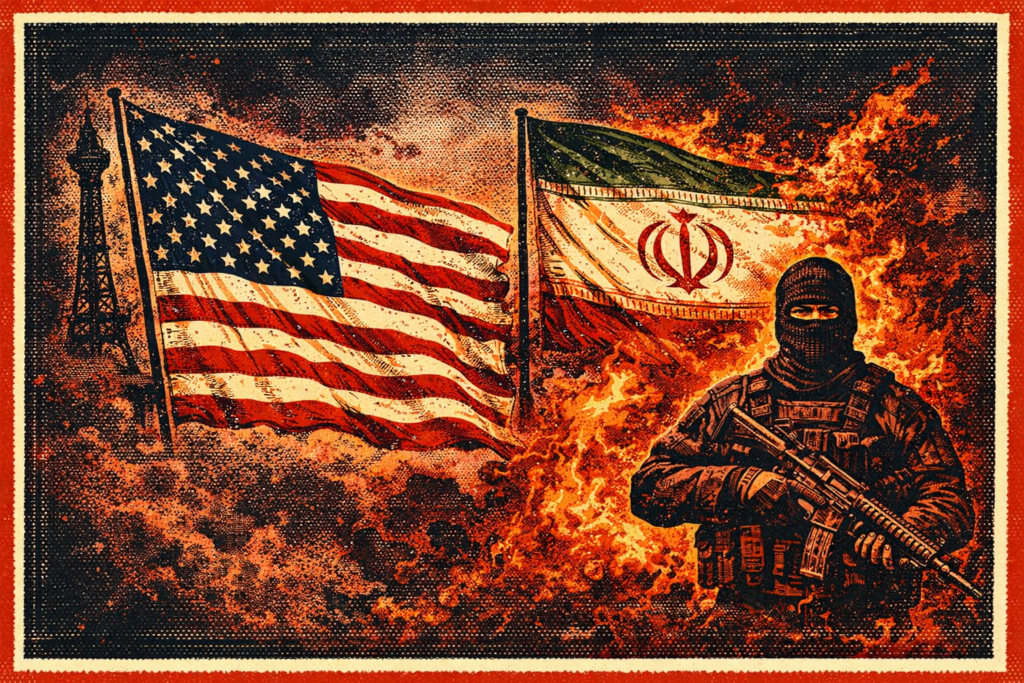
US‑Iran Conflict Sparks International Law Crisis Debate
A growing chorus of international legal experts and human rights advocates has raised alarm over recent United States military actions against civilian infrastructure in Iran, arguing that these strikes may violate international humanitarian law and could amount to war crimes—an accusation that carries profound implications for global norms governing armed conflict.
The concern intensified following public statements by U.S. leaders threatening and then carrying out attacks on critical Iranian infrastructure—including energy grids, bridges, and possibly a school—elements that international law traditionally protects unless they are used for clear military purposes. At the center of this debate is the Geneva Conventions’ strict prohibition against targeting civilian objects, coupled with the requirement that any legitimate attack must be proportionate and necessary for achieving a concrete military advantage.
Legal scholars from over 100 universities and law associations have signed open letters asserting that U.S. and allied strikes may breach the United Nations Charter and established norms of international humanitarian law. They point to a particularly devastating strike on a school in Minab, Iran, where scores of children and teachers were reportedly killed—a target that should have been safeguarded under global legal standards.
The criticisms extend far beyond academic circles. Human rights organizations like Amnesty International argue that the U.S. rhetoric—such as threats to “bring Iran back to the stone ages”—combined with strikes that hit civilian infrastructure, violates the principle of distinction (the obligation to distinguish between military targets and civilian entities) and proportionality (the requirement to minimize civilian harm).
Even within international institutions, concerns have been voiced. The United Nations Secretary‑General’s office warned that striking civilian infrastructure, especially when not justified by a clear military objective, risks violating international law. Similarly, European leaders have publicly called attacks on civilian facilities “illegal and unacceptable,” underscoring the diplomatic fallout from such actions.

While Washington defends its military operations as necessary to degrade capabilities and pressure Iran politically, critics contend such justifications lack sufficient legal grounding. They note that strikes on facilities like power plants, desalination facilities, or bridges—if chosen primarily to inflict broad societal disruption—do not meet the demanding legal tests laid out in treaties like Additional Protocol I to the Geneva Conventions.
The allegations take on even greater gravity in light of a public push by certain Democratic lawmakers to invoke the 25th Amendment or pursue formal limitations on war powers, emphasizing civilian safety and accountability.
Amid mounting pressure, diplomatic developments have also gained traction. A conditional two‑week ceasefire between the U.S. and Iran has been announced, brokered with international mediation. Although it temporarily halts hostilities and includes provisions like reopening the Strait of Hormuz, deep mistrust remains—especially around accountability for past strikes and future conduct.
International legal experts stress that even temporary halts to conflict do not erase the legal issues at stake: if attacks on civilian infrastructure are unlawful, responsible individuals or states may be subject to future legal action under international criminal law or universal jurisdiction principles.
The Guardian article highlights how this situation is not simply a matter of political rhetoric or conventional military strategy but sits at the intersection of international humanitarian law, geopolitical power, and global standards for conduct during war.
Critics argue that allowing major powers to operate outside these norms sets a dangerous precedent, potentially eroding long‑held protections for civilians worldwide and weakening the legal frameworks designed to constrain violence in armed conflict.

⚖️ Key Legal Outcomes
- International law experts publicly state U.S. strikes on civilian infrastructure may violate the Geneva Conventions and UN Charter.
- Over 100 legal scholars signed letters warning of potential war crimes.
- Attack on a school with significant civilian casualties has been widely cited as especially problematic under international law.
- UN officials have warned that strikes on non‑military targets could be illegal under international law.
- Diplomatic pressure and ceasefire efforts are ongoing, reflecting legal and political pushback against the conflict.
📌 Why It Matters
- Challenges established international humanitarian law norms designed to protect civilians.
- Could have future legal ramifications, including international prosecution or investigation.
- Raises questions about the limits of executive war powers and accountability.
- Influences diplomatic relations and global perceptions of U.S. conduct in war.
- Sets precedent for how modern conflicts involving AI and advanced weaponry are governed.
