
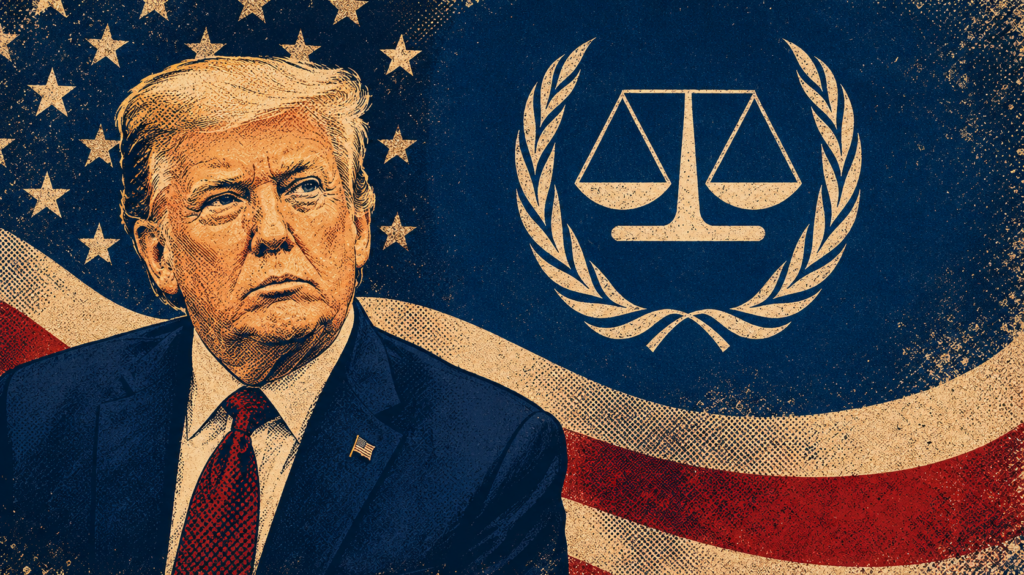
Trump Faces Lawsuit From International Criminal Court Judges
Three judges from the International Criminal Court (ICC) have filed a lawsuit against President Donald Trump and members of his administration, challenging sanctions that were imposed on them following controversial ICC actions involving Israel and the United States. The lawsuit marks an extraordinary legal confrontation between international judges and the U.S. government, highlighting longstanding tensions over the ICC’s jurisdiction and authority.
The plaintiffs are ICC judges Kimberly Prost, Solomy Balungi Bossa, and Reine Adelaide Sophie Alapini-Gansou. The judges filed their lawsuit in federal court in Manhattan, arguing that sanctions imposed by the Trump administration were unlawful and exceeded the government’s legal authority.
According to the complaint, the judges contend that the sanctions were designed to exert pressure on independent judicial officers and interfere with their official duties. They argue that the measures amounted to an attempt to punish and coerce judges for decisions made in their judicial capacity rather than for any personal misconduct. The lawsuit characterizes the sanctions as an unprecedented effort to influence judicial decision-making through economic and financial restrictions.
The dispute stems from actions taken by the ICC involving two highly sensitive matters. First, the court issued an arrest warrant for Benjamin Netanyahu, a move that generated strong opposition from the United States and Israel. Second, the ICC previously authorized investigations into alleged war crimes committed by U.S. military personnel in Afghanistan. Successive U.S. administrations have challenged the court’s authority to investigate American citizens because the United States is not a party to the ICC’s founding treaty.
In response to those actions, the Trump administration imposed sanctions on several ICC officials and judges. The measures were widely viewed as one of the most aggressive actions ever taken by the United States against an international judicial institution. Administration officials argued that the sanctions were necessary to protect U.S. sovereignty, military personnel, and key allies from what they viewed as politically motivated prosecutions.
The judges’ lawsuit argues that the sanctions caused significant personal and professional harm. Because U.S. sanctions generally require compliance by financial institutions with American ties, affected individuals often encounter severe difficulties conducting routine banking activities, receiving payments, transferring funds, or engaging in ordinary financial transactions. The plaintiffs contend that these restrictions impaired their ability to perform professional duties and participate in international legal activities.

The lawsuit seeks judicial intervention to invalidate the sanctions and prevent future enforcement. The judges maintain that the sanctions violate constitutional and statutory limits on executive authority and improperly target independent judicial officials carrying out legitimate international legal functions. They argue that allowing such sanctions to stand could create a dangerous precedent for international judicial independence.
The case also raises broader questions about the relationship between the United States and international legal institutions. The United States has long maintained a complicated relationship with the ICC. While Washington has supported certain international criminal accountability efforts, it has consistently opposed ICC assertions of jurisdiction over U.S. citizens and military personnel. Critics of the court argue that it lacks sufficient democratic accountability and can be influenced by political considerations, while supporters view it as an essential institution for prosecuting genocide, war crimes, and crimes against humanity.
Legal experts say the lawsuit could become a significant test of the scope of presidential sanctions powers. Federal courts may ultimately be asked to determine whether foreign judges performing official judicial functions can be subjected to economic sanctions under existing statutory authorities. The litigation may also address questions involving separation of powers, foreign affairs authority, and protections for international judicial independence.
The State Department, Treasury Department, and White House did not immediately comment on the lawsuit. The Trump administration has previously defended its actions against the ICC, arguing that the court has exceeded its mandate and improperly targeted U.S. interests and allies.
Ultimately, the case represents a rare and highly consequential legal battle between international judges and the U.S. government. The outcome could influence future relations between the United States and international tribunals while shaping the limits of executive sanctions authority in disputes involving global judicial institutions.

⚖️ Key Legal Outcomes
- Three ICC judges sued President Donald Trump and his administration in federal court.
- The judges challenge sanctions imposed in response to ICC actions involving Israel and U.S. military personnel.
- Plaintiffs argue the sanctions unlawfully targeted independent judicial decision-making.
- The lawsuit seeks to invalidate the sanctions and prevent their continued enforcement.
- The case could test the legal limits of presidential sanctions authority.
📌 Why It Matters
- Raises major questions about judicial independence and international law.
- Tests the scope of presidential authority to impose sanctions on foreign officials.
- Highlights tensions between the United States and the International Criminal Court.
- Could affect future interactions between governments and international tribunals.
- May establish precedent regarding sanctions targeting judges performing official duties.
