
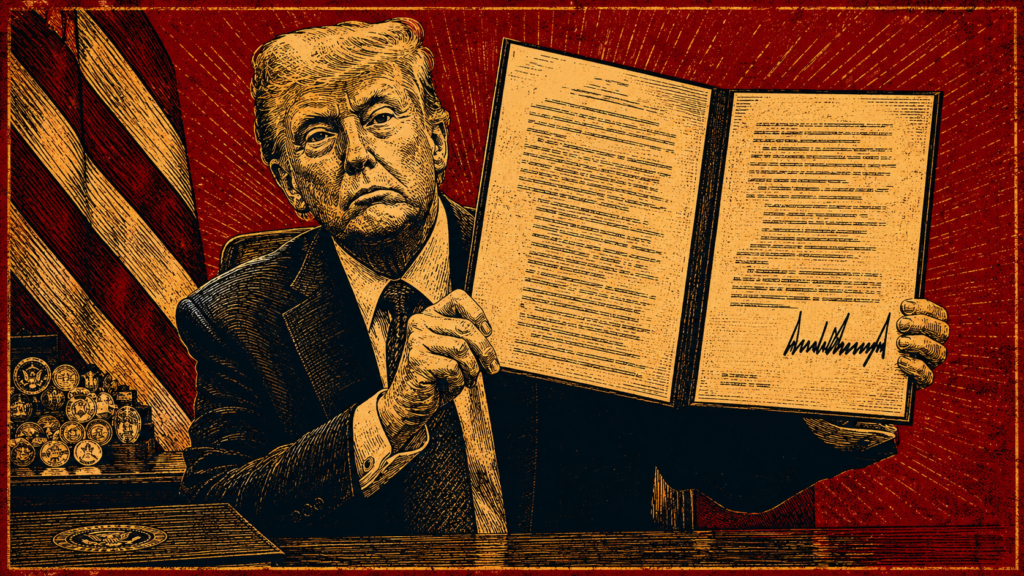
Housing Bill Becomes Law Without Signature
A sweeping bipartisan housing affordability bill is set to become U.S. law despite President Donald Trump’s decision not to sign it, marking an unusual moment in the legislative process where a major piece of legislation will take effect without either presidential approval or a formal veto. Under the U.S. Constitution, if a president neither signs nor vetoes a bill within the prescribed period while Congress remains in session, the measure automatically becomes law. In this case, Trump chose to withhold his signature as a political protest rather than exercise his veto authority, allowing the legislation to take effect on its own.
The legislation, known as the 21st Century ROAD to Housing Act, received overwhelming bipartisan support in Congress. It passed the Senate by an 85-5 vote and the House of Representatives by a 358-32 margin, demonstrating rare cooperation between Republicans and Democrats on one of the country’s most pressing economic issues. Lawmakers from both parties acknowledged that the United States faces a severe housing shortage, estimated at roughly 10 million homes, contributing to rising home prices, escalating rents, and declining affordability for millions of Americans.
The new law contains dozens of provisions intended to expand the nation’s housing supply and reduce barriers to construction. Among its key measures are efforts to streamline federal permitting processes, modernize housing regulations, encourage faster residential development, support manufactured housing, and reduce unnecessary regulatory obstacles that increase construction costs. The legislation also limits the ability of large institutional investors to purchase single-family homes, a provision supporters argue could improve opportunities for individual homebuyers competing in tight housing markets.

Although Trump did not oppose the housing provisions themselves, he announced that he would not sign the bill because Congress failed to pass separate election legislation that he strongly supported. Specifically, Trump demanded action on the SAVE America Act, which would establish stricter voter identification requirements and include additional election-related provisions. He argued that election security legislation should take priority over the housing package and canceled a planned bill-signing ceremony as a demonstration of his dissatisfaction with congressional leadership. Despite his refusal to sign the housing legislation, Trump stopped short of issuing a veto that could have sent the measure back to Congress.
The president’s decision drew criticism from Democratic lawmakers, who accused him of using a broadly supported housing measure as leverage in an unrelated political dispute. Senate Democratic leaders argued that affordable housing affects millions of Americans and should not become entangled in debates over election policy. Republican supporters of the housing bill likewise expressed optimism that the legislation would still become law, emphasizing that the bill represented years of bipartisan negotiations aimed at addressing long-standing supply shortages and affordability challenges.
Housing industry organizations, builders, and many real estate groups welcomed the bill’s imminent enactment. They view the legislation as one of the most comprehensive federal housing initiatives in decades, believing it will encourage additional residential construction and gradually improve housing availability. However, many economists and affordable housing advocates caution that while the law addresses important structural issues, it is unlikely to produce immediate reductions in home prices or rental costs. Housing affordability has been driven by years of underbuilding, elevated mortgage rates, inflation, and regional zoning restrictions that cannot be solved solely through federal legislation.
The legislation’s automatic enactment also illustrates an important constitutional feature of the U.S. legislative process. When Congress remains in session, a president who neither signs nor vetoes a bill within ten days (excluding Sundays) effectively allows it to become law without endorsement. By declining to veto the measure, Trump avoided blocking legislation that enjoyed overwhelming bipartisan support while simultaneously signaling his dissatisfaction over the lack of progress on his election priorities.
Politically, the episode highlights growing tensions within Washington despite occasional bipartisan cooperation. While lawmakers successfully negotiated a significant housing package, disagreements over election policy and other unrelated legislative priorities continue to shape the relationship between Congress and the White House. The situation also demonstrates how presidents may use symbolic actions—such as refusing to sign legislation—to communicate political positions without preventing a bill from taking effect.
As implementation begins, federal agencies will be responsible for carrying out the law’s numerous housing reforms. Policymakers, industry leaders, and housing advocates will closely monitor whether the new measures increase housing construction, improve affordability, and expand access to homeownership over the coming years. Although expectations vary regarding the law’s immediate impact, it represents one of the largest bipartisan federal efforts in decades to address America’s persistent housing shortage and affordability crisis.

Key Legal Outcome
- The 21st Century ROAD to Housing Act will become federal law without the president’s signature.
- President Trump declined to sign the legislation but did not issue a formal veto.
- Because Congress remained in session, the bill automatically became law under the U.S. Constitution’s presentment process.
- The legislation authorizes broad federal housing reforms aimed at increasing housing supply and reducing construction barriers.
- The enactment demonstrates that bipartisan legislation can become law even without presidential approval when constitutional requirements are met.
Why It Matters
- It represents one of the most significant bipartisan housing reforms enacted in decades.
- The law seeks to address the nation’s long-term housing shortage and affordability crisis.
- It illustrates the constitutional process allowing legislation to become law without a presidential signature.
- The episode highlights ongoing political conflicts between Congress and the White House over unrelated policy priorities.
- The law’s implementation could influence future housing development, homeownership opportunities, and federal housing policy.
