
SCOTUS Rejects GOP’s Election Map
The legal battle over Missouri’s congressional districts took another dramatic turn when Supreme Court Justice Brett Kavanaugh rejected Missouri Republicans’ emergency request to use a newly drawn congressional map that was expected to improve the party’s chances of gaining another U.S. House seat. Kavanaugh’s decision left in place a Missouri Supreme Court ruling that had blocked the new map from being used in the November 2026 midterm elections.
The dispute is part of a much broader national fight over congressional redistricting ahead of the 2026 midterm elections. Republicans and Democrats in multiple states have been attempting to redraw congressional boundaries in ways that could improve their parties’ electoral prospects. Missouri’s case is particularly significant because the Republican Party currently holds six of the state’s eight House seats, while the new map was designed to put pressure on one of the two Democratic-held districts.
The Republican-backed map was adopted after President Donald Trump encouraged Missouri Republicans to pursue redistricting that could give the GOP an additional congressional advantage. The map specifically targeted the Kansas City-based district represented by Democratic Rep. Emanuel Cleaver II. Under the new boundaries, Cleaver’s district would have been substantially altered, potentially making it considerably more favorable to Republicans.
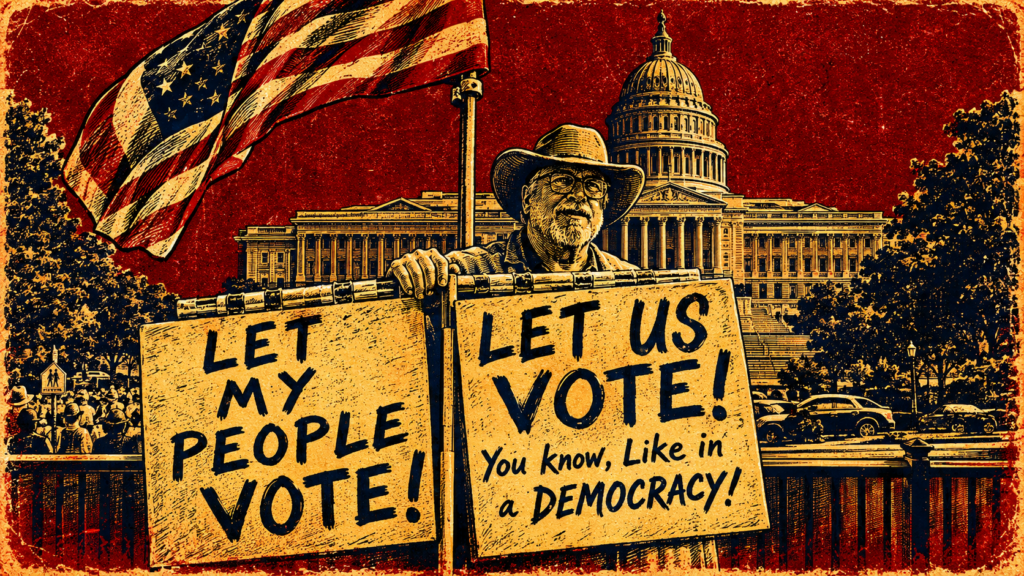
The controversy began because opponents of the new map collected more than 300,000 signatures seeking to place the redistricting plan before Missouri voters through a referendum. Missouri Secretary of State Denny Hoskins rejected the referendum effort, but the Missouri Supreme Court later unanimously ruled that the petition was valid and that the new congressional map had never legally taken effect. As a result, the court ordered officials to use the previous congressional boundaries unless voters approved the new map.
Missouri Republican officials then appealed to the U.S. Supreme Court, arguing that changing the map after the August primary elections would create enormous disruption. The Republican side maintained that candidates had already competed under the new districts and that switching back to the older boundaries before the November election could confuse voters and undermine the legitimacy of the primary results.
Kavanaugh rejected that emergency request on September 8. He did so without providing an explanation or referring the application to the full Supreme Court, meaning the decision did not establish a broad new constitutional precedent on Missouri redistricting. Instead, Kavanaugh declined to grant the extraordinary emergency relief sought by the state and left the Missouri Supreme Court’s ruling in effect.
The decision appeared to settle the immediate question in favor of the older map — but only briefly.
Within minutes of Kavanaugh’s action, U.S. District Judge Stephen Clark issued a conflicting order requiring Missouri to use the Republican-backed map for the November election. Clark reasoned that reverting to the older map after voters had already participated in primaries under the new districts could create serious confusion and effectively disenfranchise voters. His temporary restraining order was set to remain in effect for 14 days while the federal litigation continued.

The contradictory rulings created an extraordinary situation in which a Supreme Court justice had declined to revive the GOP map while a lower federal judge almost immediately ordered Missouri to use it. The federal order has been appealed, meaning the ultimate question of which congressional map will govern the November election remains subject to further litigation.
This conflict is particularly consequential because election officials were already approaching deadlines for finalizing ballots and preparing absentee and mail-in voting. Missouri officials therefore faced the practical challenge of determining which districts should appear on November ballots while courts continued to issue competing orders.
The political stakes are also considerable. Missouri’s congressional delegation currently includes six Republicans and two Democrats. The proposed map was designed to give Republicans a strong opportunity to capture an additional seat, potentially strengthening the party’s narrow majority in the U.S. House. Reuters reported that Republicans currently hold a 219-214 House majority, making even a small number of additional seats potentially important to control of Congress.
The dispute also highlights the unusual nature of mid-decade redistricting. Congressional maps are traditionally redrawn after the decennial census, but the current national redistricting fight has involved states attempting to redraw districts before the next census in order to gain political advantages. Trump’s intervention in the Missouri process forms part of a larger Republican effort to strengthen the party’s position in Congress, while Democrats have pursued their own redistricting strategies in states where they have the political power to do so.
For Kavanaugh, the decision is also notable because he was appointed to the Supreme Court by Trump. Nevertheless, his refusal to grant Missouri’s emergency request demonstrates that judicial outcomes cannot simply be predicted based on the political affiliation of the president who appointed a judge. Kavanaugh’s action was procedural and narrow, but politically it represented a significant setback for Missouri Republicans’ attempt to implement the new map immediately.
The case is therefore about much more than a single congressional district. It raises fundamental questions about state constitutional procedures, voter referendums, federal judicial authority and the rules governing congressional elections. It also illustrates how redistricting disputes can become especially complicated when state and federal courts issue competing orders close to an election.
For now, the most important takeaway is that Kavanaugh did not approve Missouri’s Republican-favored map. Instead, he declined to intervene, leaving the Missouri Supreme Court’s decision intact. But because a federal judge subsequently ordered the opposite result, the final electoral map remains unsettled.
The Missouri dispute demonstrates just how consequential the courts have become in the 2026 redistricting battle. With control of the House potentially hinging on only a handful of seats, the outcome of seemingly technical disputes over district boundaries could have national political consequences.

Key Legal Outcome
- Justice Brett Kavanaugh rejected Missouri Republicans’ emergency request to reinstate the new GOP-favored congressional map.
- His action left standing a Missouri Supreme Court ruling that blocked the new map from being used for the November election without voter approval.
- Kavanaugh gave no explanation and did not refer the matter to the full Supreme Court, so the ruling did not establish a broad precedent on redistricting.
- A federal district judge subsequently issued a conflicting temporary order requiring Missouri to use the GOP-backed map, creating further legal uncertainty.
- The dispute remains active in the lower courts, meaning the final congressional map for November has not necessarily been settled.
Why It Matters
- It could affect control of Congress: The Republican-favored map was expected to improve the GOP’s chances of gaining another House seat.
- It tests state versus federal authority: The dispute raises questions about whether federal courts can override state-court rulings concerning state election procedures.
- It puts redistricting under the spotlight: The case is part of a national battle over mid-decade congressional map changes.
- It could affect Emanuel Cleaver’s seat: The new boundaries specifically targeted the Democratic congressman’s Kansas City district.
- It creates election-administration uncertainty: Conflicting judicial orders arriving close to ballot deadlines could complicate the November election process.
