
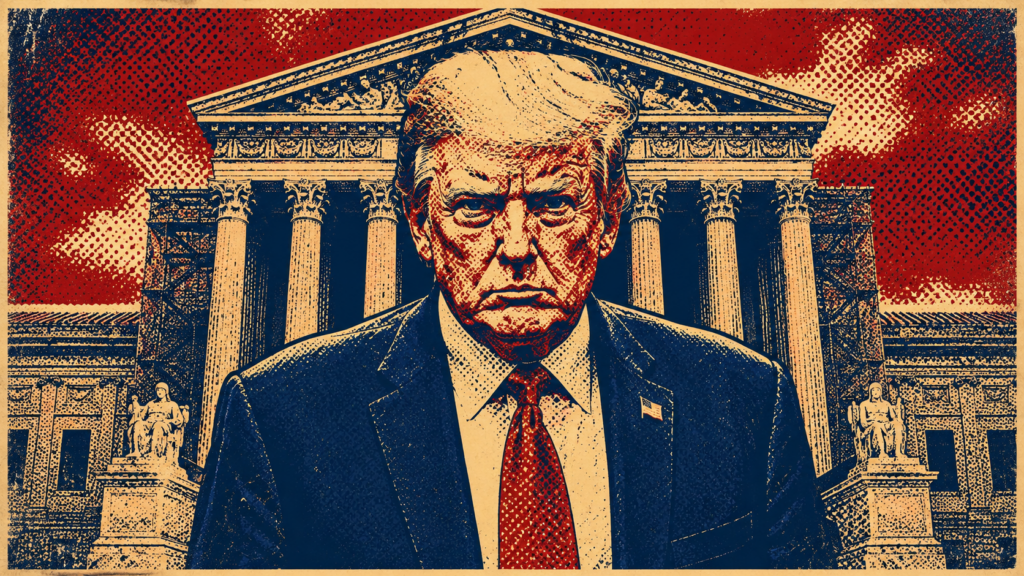
Court Rules Trump Doesn’t Have the Power to Fire U.S. Attorneys
A federal judge has ruled that President Donald Trump could not unilaterally remove a U.S. attorney who had been appointed by federal judges to fill a vacancy, ordering the reinstatement of Roger Rogoff as the U.S. attorney for the Western District of Washington. The October 1, 2026 decision creates a significant legal dispute over presidential removal authority and the role federal courts and the Senate play in selecting federal prosecutors.
The case arose after Rogoff was appointed by the federal judges of the Western District of Washington in July 2026. The appointment came after the expiration of the statutory period for an interim U.S. attorney to serve without a Senate-confirmed successor. Under federal law, when an interim U.S. attorney’s 120-day appointment expires and the position remains vacant, the district court may appoint a U.S. attorney to serve until the vacancy is filled by a presidential nominee confirmed by the Senate.
Rogoff was sworn into office on July 15. Less than an hour later, the Trump administration removed him from the position. The administration argued that the president retained authority to dismiss a U.S. attorney, even when that prosecutor had been appointed by the district court.
Rogoff challenged the removal in federal court, arguing that the administration’s action violated the federal statute governing vacancies in U.S. attorney positions. He maintained that the court’s appointment was intended to remain effective until a replacement was nominated by the president and confirmed by the Senate.
U.S. District Judge Stanley Bastian ruled in Rogoff’s favor and ordered that he be reinstated. The judge concluded that the president did not have unilateral authority to remove a U.S. attorney appointed by the district court under the applicable vacancy statute.
The ruling also addressed who could exercise the authority of the office while the dispute continued. Bastian determined that Charles Neil Floyd, who had been functioning as the acting head of the Seattle-area federal prosecutor’s office, could not be treated as the U.S. attorney while Rogoff held the position.
The judge’s order prevents the administration from obstructing Rogoff’s ability to perform his duties, denying him access to the resources associated with the position or treating another person as the U.S. attorney. The order remains tied to the statutory structure governing the vacancy and the appointment of a permanent successor.
The dispute is significant because U.S. attorneys occupy powerful positions within the federal justice system. They oversee federal criminal and civil litigation within their districts and generally serve as the Justice Department’s principal representatives in those jurisdictions.
Presidents normally nominate U.S. attorneys, who then require Senate confirmation. Federal law also provides mechanisms for temporary appointments when a position becomes vacant. The Seattle dispute concerns what happens when the temporary appointment period ends without a Senate-confirmed replacement.
The administration has pursued alternative approaches to maintaining preferred prosecutors in some districts after temporary appointment periods expired. In Seattle, Floyd had initially served as an interim U.S. attorney before his temporary term expired. He was subsequently designated as first assistant U.S. attorney while the top position remained vacant.
The administration’s position was that the president ultimately retained authority over the federal executive branch and therefore could remove Rogoff. Rogoff’s position was that Congress had specifically given district courts appointment authority in circumstances like this and that allowing the president to remove a court-appointed U.S. attorney would effectively nullify that statutory authority.
Judge Bastian rejected the administration’s interpretation in the Seattle case. His ruling emphasized the relationship among the executive, legislative and judicial branches in the appointment process. Allowing the president to remove a court-appointed U.S. attorney without a Senate-confirmed replacement, the court concluded, would undermine the statutory appointment framework.
The Justice Department has said it disagrees with the ruling and intends to appeal. That means the dispute is not necessarily the final word on the president’s removal authority. An appellate court could review the ruling, and the broader legal conflict over U.S. attorney appointments could eventually reach the Supreme Court.

The Seattle case is also part of a wider dispute involving U.S. attorneys appointed through mechanisms other than the ordinary presidential nomination and Senate confirmation process. Courts have considered related challenges in several jurisdictions involving the administration’s efforts to maintain or install prosecutors after statutory appointment periods expired.
The ruling therefore has implications beyond Rogoff personally. If upheld, it could limit the administration’s ability to remove court-appointed U.S. attorneys before a Senate-confirmed successor takes office. It could also reinforce the importance of the statutory role assigned to federal district courts when temporary appointments expire.
At the same time, the decision does not eliminate the president’s general authority to nominate U.S. attorneys or establish a broad rule that presidents can never remove federal prosecutors. The central issue is narrower: whether the president can unilaterally remove a U.S. attorney whom a federal district court appointed under the specific statutory vacancy procedure.
The case illustrates the continuing legal debate over executive authority, Senate confirmation and the independence of federal prosecutorial offices. Its ultimate significance will depend on the outcome of the government’s appeal and whether other courts adopt or reject the reasoning used by Judge Bastian.
For the Justice Department, the case presents a direct challenge to its interpretation of presidential control over U.S. attorneys. For federal courts, it concerns the practical effect of the appointment authority Congress granted them when vacancies remain unfilled. For the Senate, the dispute raises questions about the extent to which confirmation authority can be bypassed through executive personnel decisions.
The litigation will therefore remain important as courts continue to define the boundaries between presidential authority and the statutory roles assigned to Congress and the judiciary in filling federal prosecutorial positions.

Key Legal Outcome
- A federal judge ruled that President Trump could not unilaterally remove court-appointed U.S. Attorney Roger Rogoff.
- The court ordered Rogoff reinstated as U.S. attorney for the Western District of Washington.
- The ruling held that the district court’s appointment remained effective until a Senate-confirmed replacement filled the vacancy.
- The administration was barred from treating another prosecutor as the district’s U.S. attorney while Rogoff remained in the position.
- The Justice Department plans to appeal, leaving the broader dispute over presidential removal authority unresolved.
Why It Matters
- The ruling directly addresses the balance between presidential authority and the statutory appointment power of federal courts.
- It could affect how U.S. attorney vacancies are handled when temporary appointments expire without Senate confirmation.
- The decision may influence similar legal disputes involving court-appointed federal prosecutors in other districts.
- The case raises broader constitutional and statutory questions about executive control over federal prosecutors.
- An appeal could produce further appellate guidance or potentially bring the issue before the Supreme Court.
