
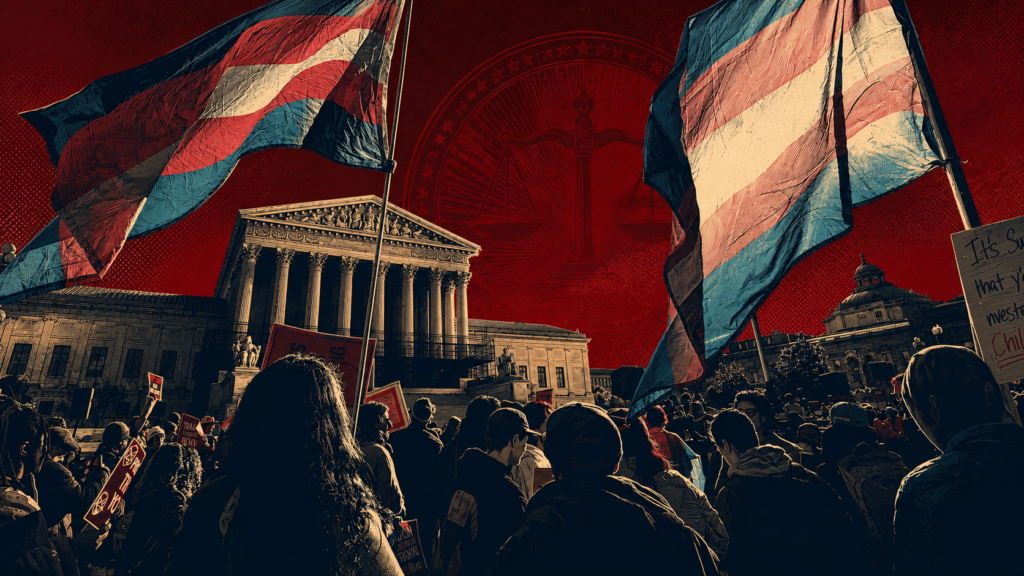
Explainer: Can the Supreme Court Let Religious Schools Reject Children of Gay Parents?
The U.S. Supreme Court is considering whether Catholic preschools receiving public funding can refuse to enroll children of same-sex couples based on the schools’ religious beliefs. The dispute places constitutional religious-freedom protections in conflict with laws designed to prevent discrimination against LGBTQ+ families.
The case, St. Mary Catholic Parish v. Roy, involves two Catholic preschools affiliated with the Archdiocese of Denver and Colorado’s universal preschool program. The schools want to participate in the publicly funded initiative without agreeing to the state’s nondiscrimination requirements.
Colorado’s program provides eligible four-year-old children with access to 15 hours of free preschool each week. Both public and private institutions can participate, but providers receiving government funding must offer equal enrollment opportunities regardless of characteristics including sexual orientation and gender identity.
The Catholic schools argue that requiring them to enroll children of same-sex couples would conflict with their religious teachings. They maintain that the government should not condition access to public benefits on abandoning religious practices protected by the First Amendment.
The schools are supported by the Trump administration, which argues that Colorado’s requirements impose an unconstitutional burden on religious exercise. The Justice Department has contended that religious institutions should be able to establish enrollment conditions consistent with their faith.

Colorado maintains that its requirements are neutral rules applying to every provider receiving public money. State attorneys argue that religious schools remain free to teach their beliefs but must follow the same nondiscrimination conditions as other participating institutions.
During oral arguments, several conservative justices appeared receptive to the religious schools’ position. Justice Brett Kavanaugh questioned why Colorado could not accommodate religious institutions while continuing to provide preschool services through other participating schools.
Justice Amy Coney Barrett also questioned whether Colorado’s requirements effectively exclude religious providers whose beliefs conflict with the state’s enrollment rules. Justice Samuel Alito raised concerns about the state’s treatment of religious institutions in other First Amendment disputes.
The court’s liberal justices expressed concerns about the consequences of granting the requested exemption. Justice Sonia Sotomayor questioned whether allowing schools to exclude children because of their parents’ sexual orientation would permit other forms of discrimination based on religious beliefs.
Justice Ketanji Brown Jackson warned that accepting the schools’ arguments could create a broader principle allowing religious institutions to exclude people from educational environments based on characteristics they consider inconsistent with their faith.
Justice Elena Kagan also questioned how far the proposed exemption could extend, raising concerns that similar arguments could eventually affect public schools and other publicly funded institutions.
The dispute follows a series of Supreme Court decisions expanding protections for religious institutions seeking access to public funding. Earlier rulings involving Maine and Montana established that governments generally cannot exclude schools from public benefit programs simply because they provide religious instruction.
Colorado argues that its policy is different because it does not exclude religious schools from receiving public assistance. Instead, it requires all participating providers to comply with the same nondiscrimination standards.
A ruling in favor of the Catholic schools could limit the ability of states to impose certain equality requirements on religious organizations receiving public funds. A decision for Colorado would reinforce the authority of governments to attach nondiscrimination conditions to publicly funded programs.
The Supreme Court is expected to issue its decision by the end of June 2027. Until then, the Colorado requirements remain the subject of the legal challenge, and the justices have not yet issued a final judgment on the constitutional questions.

Key Legal Outcome
-
Supreme Court review: The justices heard arguments in St. Mary Catholic Parish v. Roy on November 3, 2026.
-
Religious freedom challenge: Catholic preschools are seeking an exemption from Colorado’s nondiscrimination requirements.
-
State’s position: Colorado argues that publicly funded schools must follow equal-enrollment rules regardless of religious affiliation.
-
Constitutional dispute: The case centers on the First Amendment’s Free Exercise Clause and the government’s authority to impose conditions on public funding.
-
No final decision: The Supreme Court is expected to rule by summer 2027.
Why It Matters
-
LGBTQ+ protections: The decision could affect whether publicly funded religious schools may refuse children from same-sex families.
-
Religious liberty: The case could expand or clarify constitutional protections for religious institutions.
-
Public funding: It may determine how far governments can go in requiring publicly funded organizations to follow nondiscrimination policies.
-
School enrollment: Families could face different admission policies depending on the religious beliefs of participating schools.
-
Future legal precedent: The ruling could influence disputes involving religious exemptions and LGBTQ+ protections beyond preschool education.
