
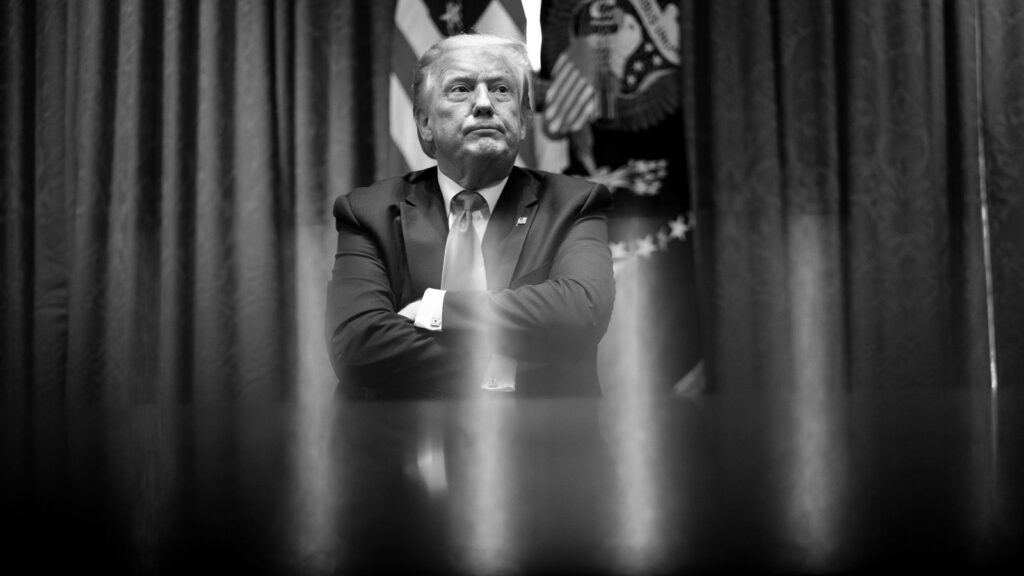
Could This Supreme Court Restrain Trump Even if It Wanted?
📝 Summary:
Slate explores the critical question of whether the current conservative-dominated Supreme Court possesses both the constitutional authority and political will to halt former President Donald Trump’s expanding executive power. The piece systematically addresses how recent rulings—favoring federal authority, curbing judicial oversight, and granting immunity—may embolden Trump and future leaders to sidestep legislative checks.
The article begins with the Court’s shift toward limited transparency, notably its preference for unsigned, ultra-brief shadow-docket orders. These rulings have allowed the Trump administration to proceed with measures like firing civil servants or dismantling agencies without sharing the legal rationale, prompting concern that the Court is eroding constitutional accountability.

Next, Slate highlights landmark decisions:
-
Trump v. United States (2024), which granted former presidents absolute immunity for official acts, significantly narrowing potential prosecutorial actions.
-
The Trump v. CASA (2025) case, where the Court blocked nationwide injunctions, allowing executive orders (e.g., ending birthright citizenship) to bypass judicial scrutiny unless narrowed to specific plaintiffs.
Slate argues these changes collectively empower presidential assertions of authority, but opponents assert that courts still retain essential tools—such as rights-based rulings, statutory interpretations, and enforcement of congressional mandates—that can check “lawless” presidential actions.

The article outlines two distinct paths for the Court:
-
Continue a cooperative posture, issuing narrow and unsigned rulings designed to avoid provoking presidential resistance, thus preserving the Court’s legitimacy while enabling executive power grabs.
-
Take a more assertive stance, issuing full, reasoned opinions, reinforcing constitutional boundaries even in politically sensitive cases. Crucial forthcoming challenges—like attempts to strip citizenship, dismiss independent-agency heads, or limit injunctions—may define whether the Court aligns with constitutionalism or political expedience.
Slate concludes that the Court’s approach in upcoming cases could determine whether it ultimately reinforces or undermines the checks and balances system. A shift toward transparency and principled reasoning may restore restraint; ongoing deference may enable encroachments that threaten democratic structure.
⚖️ Key Legal & Policy Outcomes
-
Immunity for presidential conduct elected in Trump v. United States limits post-office accountability. Wikipedia+7The Guardian+7The Guardian+7Wikipedia.
-
Nationwide injunctions curtailed by Trump v. CASA, narrowing lower court authority. The Guardian+4Wikipedia+4Wikipedia+4.
-
Supreme Court increasingly rules via shadow docket, often without full explanations. The Guardian+2The Guardian+2The Daily Beast+2.
-
The Court has sided with Trump-aligned policies—including agency dismantlement and removal of protections—in unsigned orders. Vox+2The Guardian+2Politico+2.
-
Key upcoming cases will test whether the Court sustains judicial restraint or asserts traditional constitutional checks.
❗ Why It Matters
-
Sets precedent for the balance of power: whether the judiciary defers to or restrains the executive.
-
Impacts the enforcement of constitutional limits, affecting future policy actions.
-
Influences public trust: transparency in judicial decision-making shapes legitimacy.
-
Determines whether courts act as guardians of civil rights and democratic norms.
-
Signals to future presidents whether unchecked power grabs are tolerable.
Slate – Read full article
Published: July 21, 2025
Tags
supreme court, donald trump, presidential immunity, shadow docket, executive power, us politics, constitutional law, judiciary limits
