
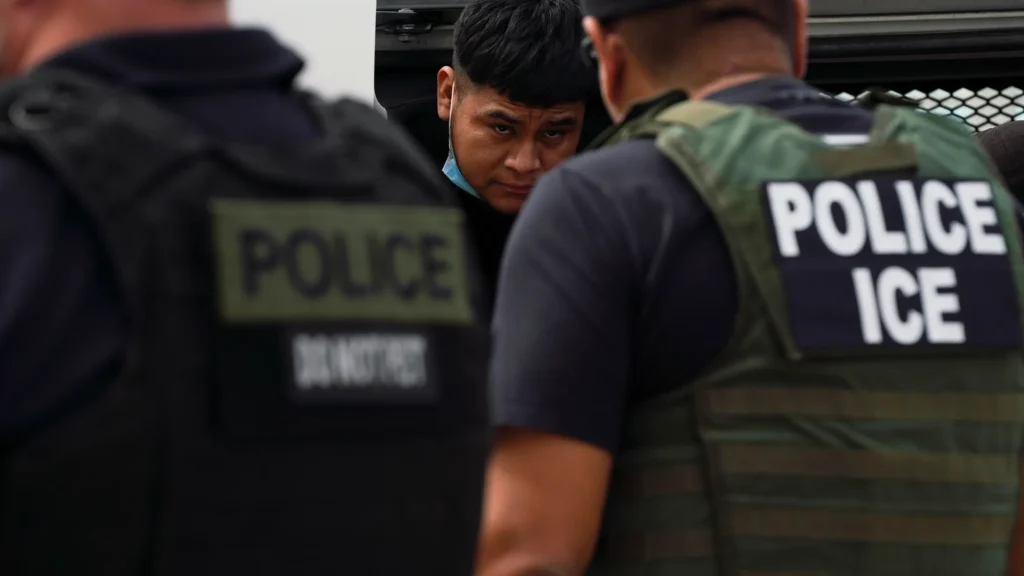
High-Stakes Stops: Advocates Urge SCOTUS to Keep Block on Suspicion-less Immigration Raids in L.A.
Summary:
Immigrants’ rights groups, U.S. citizens, and undocumented residents asked the Supreme Court to leave undisturbed a July 11 order by U.S. District Judge Maame Ewusi-Mensah Frimpong that sharply limits immigration stops across the Central District of California, including Los Angeles and Orange County. The district court barred federal agents from detaining individuals absent reasonable suspicion of unlawful presence, and it prohibited agents from relying—alone or in combination—on four factors: apparent race or ethnicity, speaking Spanish or accented English, being at locations frequented by undocumented immigrants, and working in certain jobs like landscaping or construction. The Ninth Circuit declined to fully stay that order, prompting the Trump administration to seek emergency relief at the Supreme Court.
In their Supreme Court opposition, the challengers stress the Fourth Amendment’s constraint on “roving” suspicion-less raids, citing recent enforcement sweeps that allegedly detained citizens and noncitizens without specific cause. They argue the district court broke no doctrinal ground: nothing stops consensual encounters or reliance on the flagged factors when combined with specific, articulable facts creating reasonable suspicion. The Solicitor General counters that the injunction hamstrings immigration enforcement and that the plaintiffs lack standing to enjoin speculative future harms. Petitioners reply that without injunctive relief, the government could repeat unconstitutional raids with impunity, immune from pre-enforcement review because victims cannot prove they will be targeted again.

The emergency application drops SCOTUS into a volatile intersection of immigration powers and Fourth Amendment protections. The government frames the order as a sweeping, district-wide restraint that risks contempt sanctions for routine investigative stops; the challengers cast it as a narrow, temporary correction that preserves ordinary policing while barring reliance on proxies like language or ethnicity. The request also raises the Court’s recurring concerns about “universal” or geographically broad injunctions and litigant standing.
SCOTUS could: (1) stay the injunction in whole or part, (2) deny a stay and let the litigation play out, or (3) tailor interim relief to allow certain enforcement scenarios while preserving the core rule against proxy-based suspicion. However it rules, the Court’s shadow-docket handling will reverberate in other fast-moving challenges to immigration initiatives and nationwide injunction practices. For residents of the Central District, the immediate practical question is whether agents may continue large-scale stops based on general profiles or must develop case-specific facts first. For agencies, the dispute pressures training, documentation, and supervisory review to ensure reasonable suspicion is articulated beyond demographic or linguistic markers. SCOTUSblog

Why it matters:
-
Tests SCOTUS’s appetite to curb or permit broad injunctions. SCOTUSblog
-
Clarifies how proxies like language/ethnicity factor into reasonable suspicion. SCOTUSblog
-
Shapes on-the-ground immigration enforcement in a 20-million-person district. SCOTUSblog
-
Illustrates shadow-docket handling of high-salience constitutional disputes. SCOTUSblog
-
Sets training and documentation standards for future raids. SCOTUSblog
Key legal outcomes:
-
District court enjoined suspicion-less immigration stops. SCOTUSblog
-
Ninth Circuit largely declined to stay the injunction. SCOTUSblog
-
Government seeks Supreme Court stay pending appeal. SCOTUSblog
Outlet & Publication Date
SCOTUSblog — “Groups ask Supreme Court to keep in place district court ruling barring immigration stops” — Aug. 12, 2025. SCOTUSblog
