
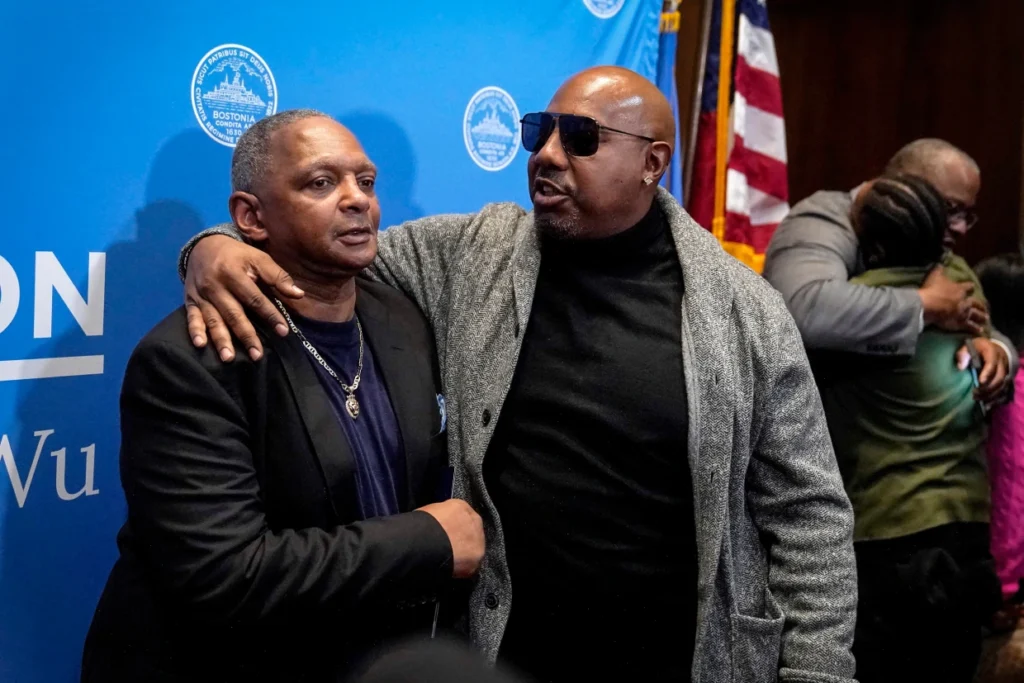
2 Black men wrongly accused in 1989 killing of white woman in Boston get $150K from city
Two Black men, Alan Swanson and Willie Bennett, who were wrongly implicated in the 1989 murder of Carol Stuart, have secured a $150,000 settlement from the City of Boston. Although neither was ever formally charged, both were arrested and publicly branded as suspects amid a racially charged police and media response. Bennett will receive $100,000, and Swanson $50,000.
The wrongful allegations stemmed from the narrative propagated by Stuart’s husband, Charles Stuart, who claimed that a Black man attacked them in a carjacking. That story later unraveled: Charles himself orchestrated the killing, and his brother admitted to helping conceal the murder weapon. After the deceit came to light, Charles Stuart committed suicide.

In 2023, Boston Mayor Michelle Wu issued a formal apology to Swanson and Bennett, acknowledging the city’s role in inflicting unjust cruelty, racial harm, and personal suffering. Her statement invoked the broader historic abuses against Black residents in Boston.
The agreement comes after years of public scrutiny reignited by renewed attention — including from media and documentary treatment — to the case, which has long been considered a profound miscarriage of justice and a flashpoint in Boston’s racial history. The settlement is a tangible acknowledgment, but many see it as just one step in repairing institutional harm.

Why It Matters
-
Recognizes and compensates wrongful treatment: the settlement is a formal acknowledgement of the harms caused by racialized policing and public vilification.
-
Restores dignity and reparation: for Swanson, Bennett, and their families, compensation is symbolic and material redress for decades of trauma.
-
Institutional accountability: Boston’s payment and prior apology offer a precedent for how cities can confront past racial injustice.
-
Public trust & community healing: this helps rebuild trust between Black communities and law enforcement, particularly in cities with troubled racial policing histories.
-
Reminder for systemic reform: the case underscores the need for oversight, bias checks in criminal investigations, and safeguards against rushing to judgment based on race.
Key Social Outcomes
-
Increased public awareness and dialogue about historical racial injustice in the criminal justice system, especially in Boston.
-
Pressure for further reforms in policing protocols, suspect treatment, and media reporting on race and crime.
-
Empowerment for other wrongly accused or marginalized groups seeking redress and recognition.
-
Encouragement for municipalities to review other old cases of possible racial misattribution or wrongful arrests.
-
Boost in community morale: affected communities may feel seen and heard, which contributes to social cohesion and healing.
-
Cultural and media impact: the case may continue to be revisited in documentaries, academic treatment, and civic education.
-
Shift in how trust is negotiated between city institutions and marginalized residents: past failures are harder to ignore or deny.
Publication date & Live Link
-
Publication date: September 23, 2025 AP News
-
Live link: 2 Black men wrongly accused in 1989 killing of white woman in Boston get $150K from city — AP / NBC coverage (also covered by NBC/Reuters) Reuters+1
