
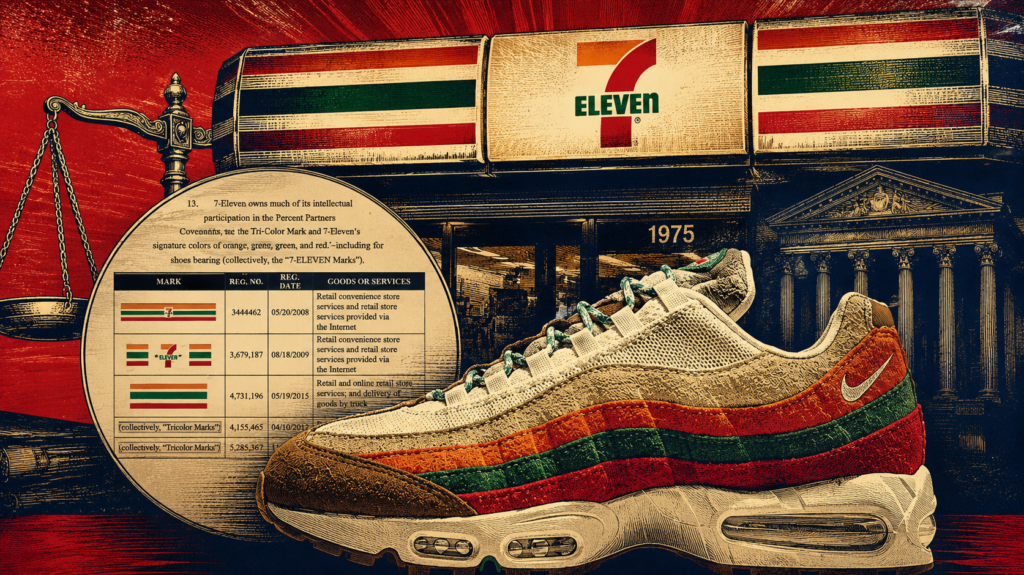
7-Eleven Files Suit Over Nike Air Max Designs
Convenience store chain 7-Eleven has filed a trademark infringement lawsuit against a footwear customization company over the sale of unauthorized Nike Air Max 95 sneakers that allegedly copied the retailer’s iconic branding and trade dress. The case highlights growing legal disputes over customized sneakers that incorporate well-known corporate logos and brand identities without permission.
According to the complaint, 7-Eleven alleges that the defendants marketed and sold customized Nike Air Max 95 sneakers featuring the company’s recognizable green, orange, and red color scheme, along with design elements that closely resemble 7-Eleven’s trademarks and overall brand image. The retailer argues that consumers could mistakenly believe the sneakers were officially licensed, endorsed, or produced in collaboration with the company.
The lawsuit was filed in federal court against the sneaker customization business, which allegedly promoted the shoes through social media and online sales channels. While the shoes were built using authentic Nike Air Max 95 sneakers as the base product, 7-Eleven contends that the extensive modifications unlawfully exploited its intellectual property for commercial gain.
Court filings claim the customized footwear intentionally capitalized on 7-Eleven’s well-established reputation and goodwill by creating the impression of an official collaboration. The retailer argues that the defendants sought to profit from the popularity of both Nike sneakers and the 7-Eleven brand without obtaining authorization or licensing rights.
The complaint includes claims for trademark infringement, trademark dilution, false designation of origin, unfair competition, and related violations under the federal Lanham Act. According to 7-Eleven, the defendants’ use of its protected branding is likely to cause consumer confusion regarding the source, sponsorship, or affiliation of the sneakers.
The retailer also points to its history of legitimate branded merchandise and collaborations, arguing that consumers have become accustomed to seeing official 7-Eleven products released in partnership with other companies. As a result, the company claims the unauthorized sneakers are even more likely to mislead buyers into believing they are genuine collaborative products.

The lawsuit reflects a broader trend in the sneaker industry, where brands have increasingly challenged unauthorized customizers that modify existing footwear using protected logos, trademarks, and trade dress. While sneaker customization itself is generally legal, companies often object when modifications prominently feature another business’s intellectual property in a way that suggests endorsement or sponsorship.
Notably, the lawsuit is not directed at Nike. Instead, it focuses on the third-party business responsible for creating and selling the customized shoes. Because the underlying Nike Air Max 95 sneakers were authentic, the dispute centers on the alleged misuse of 7-Eleven’s trademarks rather than counterfeit Nike products.
7-Eleven is asking the court to permanently prohibit further sales of the sneakers, order the destruction of infringing products, award monetary damages, and require the defendants to surrender profits allegedly earned from the sales. The company also seeks attorneys’ fees and any additional relief the court considers appropriate.
Legal experts note that the outcome could influence future disputes involving custom sneaker businesses that incorporate recognizable corporate branding into limited-edition designs. A ruling in favor of 7-Eleven may reinforce trademark owners’ ability to stop unauthorized commercial uses of their brand identity, while a defense victory could provide greater clarity regarding the legal limits of artistic customization and resale.
As the case moves forward, it underscores the increasing value companies place on protecting their intellectual property in fashion, footwear, and lifestyle products. The litigation also serves as a reminder that even creative custom designs may face legal challenges when they closely imitate or capitalize on another company’s established trademarks.

Key Legal Outcomes
- 7-Eleven filed a federal trademark infringement lawsuit over customized Nike Air Max 95 sneakers.
- The retailer alleges the sneakers unlawfully copied its branding and trade dress.
- The complaint includes claims under the Lanham Act, including trademark infringement and unfair competition.
- 7-Eleven seeks an injunction to stop sales and destruction of the allegedly infringing products.
- The company is also seeking damages, profits, attorneys’ fees, and other legal relief.
Why This Matters
- The case highlights the legal risks of using corporate branding in custom sneaker designs.
- It reinforces the importance of trademark protection in the fashion and footwear industries.
- The lawsuit could shape future disputes involving sneaker customization businesses.
- The outcome may clarify when custom products cross the line into trademark infringement.
- The litigation underscores that unauthorized collaborations can expose creators to significant legal liability.
