
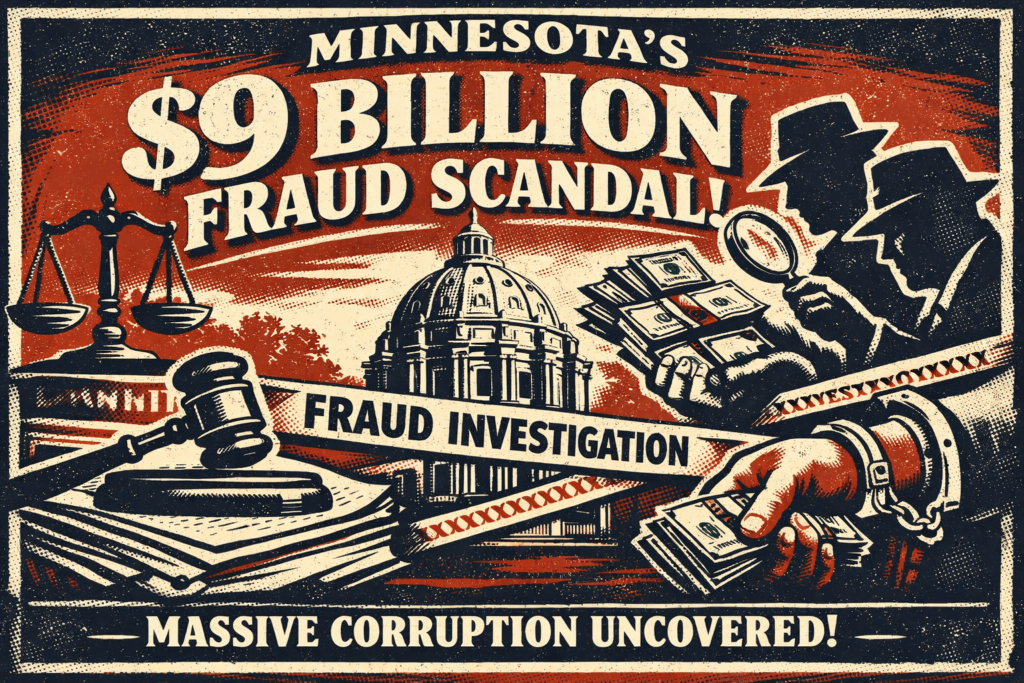
YouTuber to Testify in Minnesota Fraud Probe
A viral‑video creator and freelance journalist will appear before a U.S. congressional hearing to discuss what lawmakers describe as one of the largest suspected fraud networks in Minnesota — a probe that federal prosecutors say could involve up to $9 billion in fraudulent claims tied to public benefit programs. The hearing, scheduled for January 21, 2026, is being convened by the House Judiciary Committee’s Subcommittee on Crime and Federal Government Surveillance and is titled “When Public Frauds are Abused: Addressing Fraud and the Theft of Taxpayer Dollars.”
The individual set to testify is Nick Shirley, a YouTuber and freelance journalist whose online investigations and viral videos helped bring attention to alleged fraud in Minnesota’s social services programs. Lawmakers credit Shirley with raising public awareness about what they describe as systemic abuse of federal funds in the state — prompting heightened federal law‑enforcement interest and the deployment of additional prosecutors to support ongoing investigations.
Shirley’s work goes back to late 2025, when his video alleging widespread fraud at Somali‑run daycare and other social service centers in Minnesota quickly garnered tens of millions of views on platforms including YouTube and X (formerly Twitter). His footage showed facilities that appeared inactive or empty despite receiving taxpayer money, and included on‑scene interviews with local residents who said they had never seen services actually provided. Although authorities have not publicly confirmed specific criminal wrongdoing at those exact facilities, the viral videos sparked scrutiny from the Department of Homeland Security and the FBI, which heightened investigative activity across multiple suspected fraud fronts.

Federal prosecutors have indicted dozens of individuals as part of broader investigations into alleged “COVID‑era fraud” schemes, such as the collapse of Feeding Our Future — a nonprofit once described by officials as a major player in one of the nation’s largest fraud cases connected to pandemic relief programs. In that probe alone, authorities documented approximately $250 million in fraudulent claims, resulting in criminal charges against at least 78 defendants; the full scope of connected allegations could expand toward an estimated $9 billion, according to congressional sources.
In addition to Shirley’s testimony, the hearing will also feature other voices including Jennifer Larson, CEO of the Holland Autism Center and Clinic, and Scott Dexter, a former Minnesota police officer and fraud investigator. Lawmakers have framed the hearing as a crucial opportunity to examine how fraud occurred, evaluate safeguards against taxpayer abuse, and explore policy reforms to prevent similar large‑scale misuse of public funds.
The hearing will be led by Rep. Andy Biggs (R‑Ariz.), chair of the subcommittee, with participation from Judiciary Committee Chairman Rep. Jim Jordan (R‑Ohio) and Rep. Laurel Lee (R‑Fla.) Among the issues lawmakers intend to explore are the mechanics of complex fraud, oversight lapses that allowed the schemes to propagate, and the role of social media and open‑source journalism in uncovering abuses. The panel is also considering whether statutory or regulatory changes are needed to strengthen federal fraud detection and to ensure that tax dollars intended for vulnerable populations are protected from diversion to unscrupulous actors.
While the hearing’s focus is federal oversight and prevention, the proceedings come amid broader political debates in Minnesota and nationally about fraud, immigration enforcement, and state capacity to manage social services — issues that have drawn sharp partisan responses and fueled ongoing controversies over governance and accountability.

💡 Why It Matters
-
Breaks new ground in oversight: A YouTuber’s testimony highlights how nontraditional journalists and online investigators can influence high‑level federal inquiries.
-
Taxpayer protection focus: The hearing aims to expose alleged misuse of billions in federal and state funds intended for social services.
-
Policy implications: Congress may consider new fraud‑prevention laws or oversight mechanisms based on evidence presented.
-
Role of viral media: The case illustrates how viral videos and social media can bring issues to urgent national attention, for better or worse.
-
Broader political debate: The topic intersects with broader debates on governance, public trust, and the structure of social safety net oversight.
⚖️ Key Legal Outcome / Context
(Note: There is no specific judicial ruling in this story — but there are significant legal and oversight developments tied to Congressional action.)
-
Congressional hearing scheduled: A Jan. 21, 2026 hearing will examine suspected fraud and taxpayer abuse.
-
YouTuber called to testify: Nick Shirley will provide first‑hand perspectives gleaned from his investigations.
-
Federal prosecution ongoing: Dozens of fraud indictments tied to pandemic relief and social service claims are underway.
-
Oversight remit expanded: Lawmakers may consider policy responses based on testimony about systemic issues.
-
Interagency investigations: DHS and FBI involvement underscores legal complexities in multi‑jurisdiction fraud probes.
