
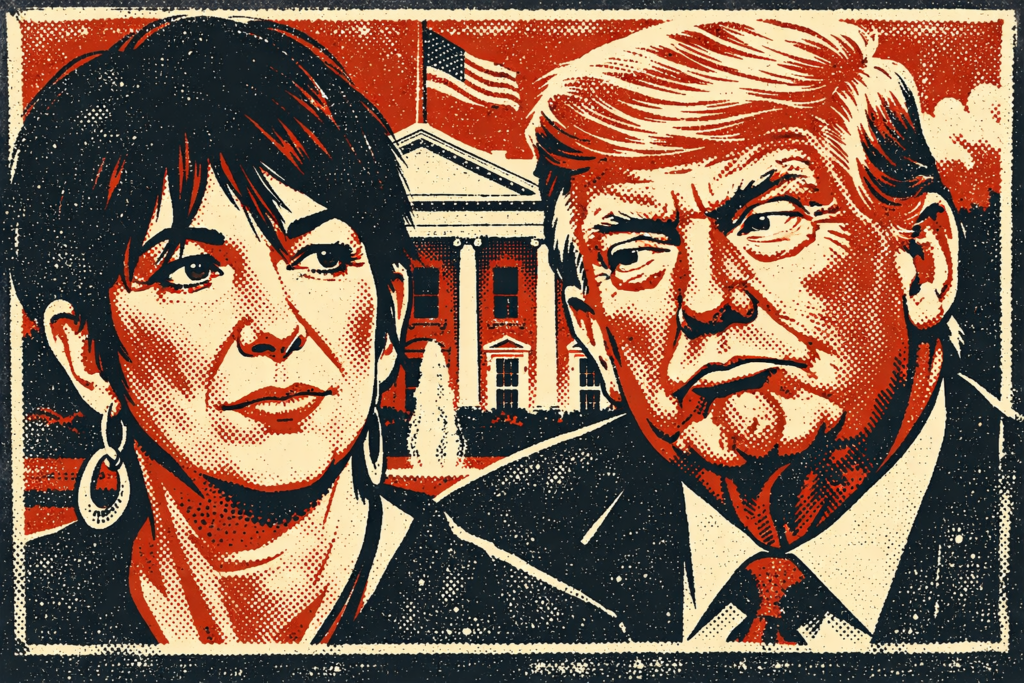
Maxwell Silent Unless Trump Grants Clemency
Ghislaine Maxwell — the convicted sex trafficker and longtime associate of Jeffrey Epstein — invoked her constitutional rights and refused to answer lawmakers’ questions in a deposition with the U.S. House Oversight Committee on Monday, February 9, 2026. In a brief virtual appearance from the federal prison camp in Bryan, Texas, Maxwell repeatedly asserted her Fifth Amendment right against self-incrimination, declining to respond to queries from members of Congress probing her knowledge of Epstein’s network, co-conspirators, and the broader handling of the case by government authorities.
Maxwell’s attorney, David Oscar Markus, explained after the deposition that she would be willing to “speak fully and honestly” if granted clemency by President Donald Trump — a highly unusual offer that immediately drew national attention and bipartisan criticism. Markus argued that Maxwell “alone can explain why” key figures such as Donald Trump and former President Bill Clinton are “innocent of any wrongdoing,” and that she could provide the “complete account” of the Epstein case if afforded clemency.
The session, which was supposed to help illuminate unanswered questions about Epstein’s sex-trafficking operation and his circle of associates, instead produced almost no new information due to Maxwell’s refusal to answer any substantive questions. House Oversight Chairman Rep. James Comer (R-Ky.) expressed disappointment and frustration, noting that lawmakers had hoped to gain insights into both Maxwell’s role in the crimes and the identities of potential co-conspirators. The committee’s investigation into the Epstein files has already included demands for unredacted government documents and depositions from other key figures.
Maxwell’s plea of the Fifth came after months of negotiation with the committee. She was subpoenaed last year to testify, but her legal team insisted she would invoke her rights unless granted immunity or other legal protections. Prior cooperation with the Department of Justice — including a lengthy July 2025 interview with Deputy Attorney General Todd Blanche — occurred under limited immunity and did not involve invoking the Fifth Amendment. This shift in Maxwell’s approach underscores the highly sensitive legal and political context surrounding her testimony.

The backdrop to Maxwell’s deposition is the recent release of millions of pages of Epstein-related documents by the Department of Justice, a move mandated by the Epstein Files Transparency Act. These documents have intensified public scrutiny of Epstein’s associates and raised questions about whether powerful individuals may have been involved or had knowledge of the crimes. Maxwell’s silence during the deposition — particularly her conditions for testifying only if clemency were granted — has drawn sharp criticism from lawmakers, survivors, and legal experts alike.
Democrats on the committee characterized Maxwell’s stance as strategic obstruction. Rep. Robert Garcia (D-Calif.) suggested that her refusal to answer questions and her conditions for speaking are designed to protect others, rather than serve the interests of justice or victims. Some lawmakers also expressed concern about reports of preferential treatment Maxwell may have received in her prison placement and transfer.
Meanwhile, survivors of Epstein’s abuse and their advocates have condemned Maxwell’s decision to invoke the Fifth, arguing that her testimony could be crucial in uncovering additional wrongdoing and providing long-overdue accountability. Many have emphasized that Maxwell’s silence only prolongs their trauma and prevents a full understanding of the criminal network at the center of one of the most notorious sex-trafficking cases in recent U.S. history.
Maxwell remains incarcerated serving a 20-year federal sentence for her role in assisting and facilitating Epstein’s trafficking of minors. She has also pursued legal appeals of her conviction, including a habeas petition alleging irregularities in her original trial — a context cited by her lawyer as one reason for her refusal to answer lawmakers’ questions without legal protections.
As the Oversight Committee’s investigation continues, more depositions are expected, and pressure is mounting on both the Justice Department and lawmakers to balance competing demands for transparency, legal due process, and accountability for victims. Maxwell’s silence has only raised the stakes of that debate.

⚖️ Key Legal Outcomes
-
Maxwell invoked her Fifth Amendment right and declined to answer questions during a House Oversight Committee deposition.
-
Her attorney stated she would testify fully only if granted clemency by President Donald Trump.
-
Maxwell suggested she could clear Trump and Clinton of alleged wrongdoing if allowed to speak freely.
-
Her refusal halted the committee’s effort to obtain testimony about Epstein’s network and potential co-conspirators.
-
Maxwell is serving a 20-year sentence for her role in Epstein’s sex-trafficking operation and has pending legal appeals.
❗ Why It Matters
-
Maxwell’s silence hinders congressional efforts to fully investigate Epstein’s network and abuse ring, delaying transparency.
-
Her condition for testimony (clemency) raises ethical and political questions about accountability and justice.
-
Statements implying she could absolve political figures amplify public debate over high-profile associations with Epstein.
-
The episode spotlights broader concerns about the limits of congressional oversight when key witnesses refuse to cooperate.
-
Survivors and advocacy groups argue that Maxwell’s silence denies victims closure and potential justice for crimes committed.
RELATED:
