
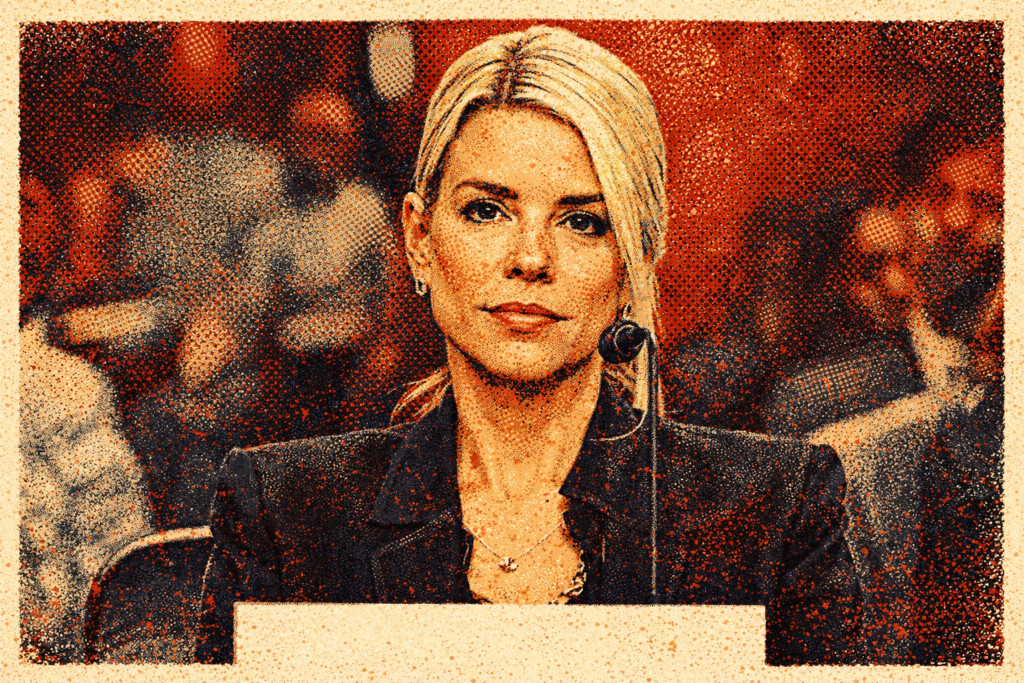
Bondi Defies Subpoena, Congress Eyes Contempt Charges
A developing political standoff in Washington has intensified as Democrats vow to hold former U.S. Attorney General Pam Bondi in contempt of Congress after she refused to appear before the House Oversight Committee to testify about the Department of Justice’s handling of Justice Department files related to convicted sex offender Jeffrey Epstein. Bondi’s rejection of a subpoena has ignited fresh partisan tensions and renewed debate over congressional oversight powers, accountability, and executive branch compliance with subpoenas.
The controversy stems from a subpoena issued by the House Oversight and Government Reform Committee for Bondi to appear on April 14, 2026, and testify under oath about her role in the controversial release—or alleged withholding—of files tied to Jeffrey Epstein and his associates. Bondi’s testimony was seen by lawmakers as a key component of broader inquiries into whether the Justice Department mishandled crucial evidence or failed to address questions about powerful individuals connected to Epstein during her tenure as attorney general.
However, Bondi, who was recently fired by President Donald Trump, will not comply with the subpoena, according to the Justice Department. Officials argued that since she was subpoenaed in her official capacity, the subpoena is no longer valid now that she no longer holds the office of attorney general. Despite that position, members of the House Oversight Committee, including both Democrats and some Republicans, assert that Bondi remains legally obligated to appear before the panel and answer questions about her actions while serving in office.
Democrats—led by Rep. Robert Garcia (D‑Calif.), the committee’s top Democrat—say Bondi’s refusal to comply creates a constitutional crisis over the balance of powers. They argue that individuals can be subpoenaed for conduct while serving in office even after they leave that position and that ignoring congressional subpoenas undermines the legislative branch’s oversight authority. Democrats have also emphasized that Epstein survivors deserve transparency and accountability after years of controversy surrounding the release of DOJ records tied to the Epstein investigation.
In addition to Garcia, bipartisan voices including Rep. Ro Khanna (D‑Calif.) and Rep. Nancy Mace (R‑S.C.) have stressed the importance of Bondi testifying. They sent a letter to Oversight Committee leadership reaffirming that the subpoena remains in effect and that Bondi should comply with the deposition request. They argue that the committee’s oversight interests and need for sworn testimony about the withheld or redacted files remains strong, particularly in light of incomplete DOJ transparency.

Republican committee chair James Comer has expressed caution in enforcing the subpoena aggressively; however, the prospect of contempt proceedings is on the table if Bondi continues to refuse. Democrats believe holding Bondi in contempt would send a broader message about accountability, even if success depends on navigating a politically divided House.
Bondi’s refusal comes amid broader political backlash related to her handling of the Epstein files and her combative testimony before Congress earlier in the year, which featured intense exchanges with lawmakers and criticism from both sides of the aisle. Her tenure at the DOJ was controversial, and her handling of the Epstein files, including delays and heavy redactions that exposed victims’ identities, was a central point of contention among lawmakers and survivors.
This issue taps into broader debates about congressional oversight, separation of powers, and the enforcement mechanisms of subpoenas. Historically, enforcement of contempt citations can involve multiple steps: a committee vote, a vote by the full chamber, and possible referral for prosecution. Additionally, inherent contempt powers of Congress—whereby the legislative chamber could, in theory, detain individuals who defy subpoenas—exist but have rarely been used in modern times.
Democrats’ vow to pursue contempt charges reflects broader frustrations with perceived executive branch resistance to congressional oversight and transparency. Even though practical enforcement of contempt may face hurdles—especially in a divided government—the move underscores critical questions about accountability of former officials, the power of congressional subpoenas, and whether individuals can evade oversight by stepping down from office.
As the story develops, Republicans’ position on Contempt and oversight—versus Democrats’ push for transparency and survivor accountability—remains a central flashpoint. The clash highlights how deeply partisan and legal procedural battles are shaping how Congress exercises its oversight authority in high-profile investigations and how former officials may be held accountable for their actions in government.

⚖️ Key Legal Outcomes
- Former Attorney General Pam Bondi refuses to comply with a congressional subpoena to testify about the DOJ’s handling of Epstein-related files.
- DOJ argues the subpoena is invalid because Bondi no longer holds the office at the time it was to be enforced.
- House Oversight Committee Democrats vow to hold Bondi in contempt if she continues to defy the subpoena.
- Bipartisan lawmakers reaffirm that they can still demand her testimony even as a private citizen.
- Contempt proceedings could further strain checks and balances between Congress and the executive branch.
📌 Why It Matters
- Raises fundamental questions about congressional subpoena enforcement and oversight authority.
- Highlights tensions between executive power and legislative accountability.
- Could set precedent for how former officials are compelled to testify about their actions in office.
- Highlights ongoing disputes over the Justice Department’s handling of high‑profile investigations.
- Touches on issues of victim advocacy and survivor transparency in the Epstein case.
