
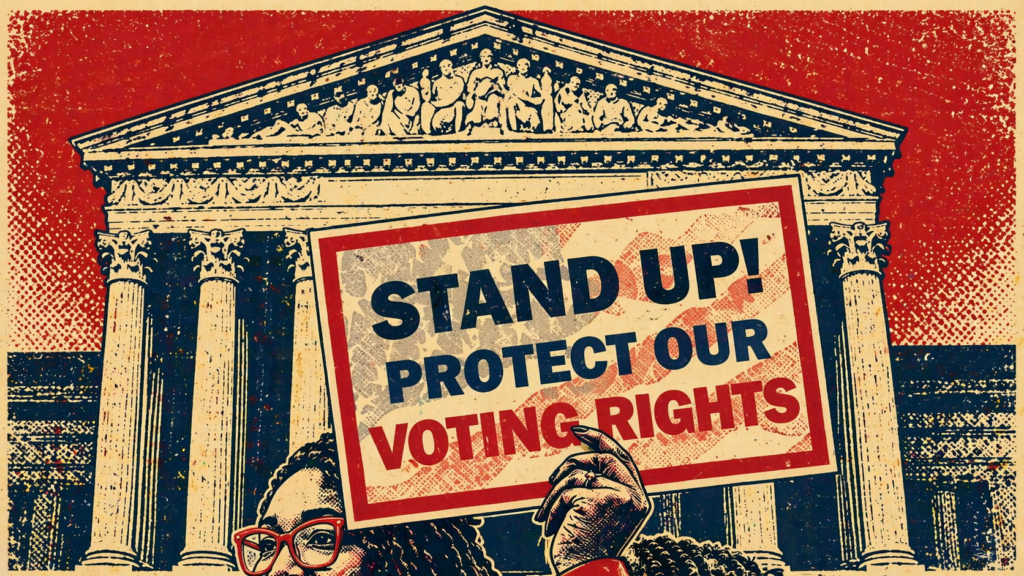
Voting Rights Groups Sue Trump Over Voter Purge Fears
Voting rights advocates have filed a federal lawsuit accusing the administration of Donald Trump of laying the groundwork for potential voter purges ahead of the upcoming U.S. midterm elections, raising serious concerns about election integrity and voter disenfranchisement.
The lawsuit, led by civil rights groups including the American Civil Liberties Union, challenges a federal effort to obtain voter registration data from states across the country. According to the complaint, the Department of Justice has sought access to statewide voter rolls as part of a broader review of election systems. However, the plaintiffs argue that the scope and intent of this request go far beyond routine oversight.
At the heart of the case is the allegation that the federal government’s actions could be used to facilitate voter purges—processes in which names are removed from voter registration lists. While voter roll maintenance is a standard administrative practice intended to remove outdated or duplicate registrations, critics warn that overly aggressive or improperly conducted purges can result in eligible voters being wrongly removed.
The lawsuit claims that the federal data request could enable such purges on a large scale, particularly in closely contested elections where even small changes in voter rolls could influence outcomes. Advocacy groups argue that this creates a risk of illegal disenfranchisement, especially among historically underrepresented communities who may already face barriers to voting.
Plaintiffs are asking a federal judge in Washington, D.C., to intervene by blocking the Department of Justice from accessing or using state voter registration data. They are also requesting that any data already obtained be deleted, citing concerns about misuse and lack of clear legal authority.

The legal challenge is grounded in both statutory and constitutional arguments. The plaintiffs contend that the federal government does not have explicit authority to compel states to hand over comprehensive voter data in this manner. They also argue that election administration is primarily a state responsibility under the U.S. Constitution, and that federal overreach in this area threatens the balance of power between state and federal governments.
In addition to jurisdictional concerns, the lawsuit raises significant privacy issues. Voter rolls can include sensitive personal information such as names, addresses, and voting history. Centralizing this data at the federal level, the plaintiffs argue, increases the risk of misuse, unauthorized access, or data breaches.
Federal officials, however, have defended the effort as part of a legitimate initiative to ensure election integrity. Supporters argue that reviewing voter rolls can help identify outdated registrations, duplicate entries, or other inconsistencies that may undermine confidence in election systems. They maintain that transparency and oversight are necessary to maintain accurate and secure voter databases.
The case highlights a longstanding tension in U.S. election law between efforts to prevent voter fraud and the need to protect voting rights. While instances of widespread voter fraud are rare, concerns about election security remain politically significant, particularly in the lead-up to national elections.
Legal experts note that the outcome of the case could have far-reaching implications. A ruling in favor of the plaintiffs could limit federal involvement in voter data collection and reinforce state control over elections. Conversely, a ruling in favor of the government could expand federal authority and set a precedent for future election oversight initiatives.
Ultimately, the lawsuit underscores the high stakes surrounding election administration in the United States. As the midterm elections approach, the case is likely to play a key role in shaping how voter data is managed and how voting rights are protected.

⚖️ Key Legal Outcomes
- Voting rights groups, including the American Civil Liberties Union, filed a lawsuit against the Trump administration.
- The case challenges DOJ efforts to access and use state voter registration data.
- Plaintiffs seek a court order to block data access and delete collected voter information.
- The lawsuit alleges risk of illegal voter purges removing eligible voters.
- Raises constitutional questions about federal authority over state-run elections.
📌 Why It Matters
- Could impact voter access ahead of closely contested midterm elections.
- Raises serious concerns about potential voter disenfranchisement.
- Tests limits of federal power in election administration.
- Highlights tension between election integrity and voting rights protections.
- May influence future policies on voter roll maintenance and data use.
