
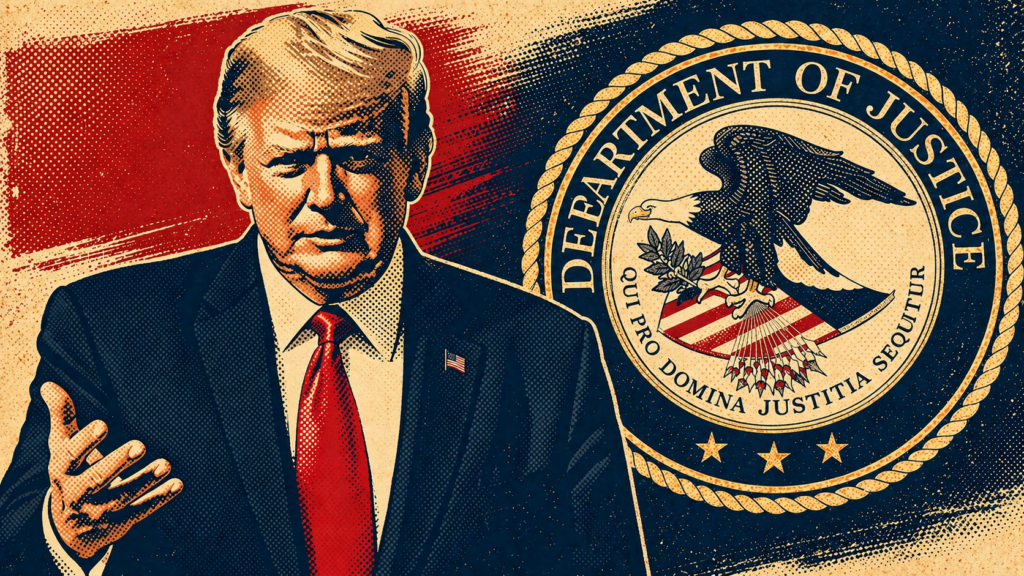
Trump Administration Sues New Jersey Over Police Mask Law
New legal clash between the Trump administration and the state of New Jersey over a controversial law regulating law enforcement conduct—specifically, the use of masks and identification by officers. The lawsuit, filed by the U.S. Department of Justice in federal court in Newark, challenges New Jersey’s recently enacted “Law Enforcement Officer Protection Act,” marking another escalation in ongoing tensions between federal and state authorities.
At the center of the dispute is a New Jersey law that prohibits law enforcement officers—including federal agents—from wearing masks during most operations and requires them to provide identification when conducting arrests or detentions. State officials argue that the law promotes transparency, accountability, and public safety, especially in situations where anonymous policing could create fear or confusion among the public.
However, the Trump administration strongly opposes the law, arguing that it unlawfully interferes with federal authority. In its complaint, the Justice Department claims that New Jersey is attempting to regulate federal law enforcement activities, which violates the U.S. Constitution’s Supremacy Clause. This clause establishes that federal law takes precedence over state law when the two conflict, and the administration argues that states cannot impose operational restrictions on federal officers.
The federal government is seeking an injunction to block enforcement of the law as it applies to federal agents, including those working for agencies such as Immigration and Customs Enforcement (ICE). Officials argue that requiring agents to reveal their identities and prohibiting masks could expose them to serious risks, including harassment, threats, or even physical harm. The Justice Department specifically warned that such rules could increase the likelihood of “doxxing,” where personal information is publicly exposed online, potentially endangering officers and their families.
From the federal perspective, anonymity in certain operations—especially those involving immigration enforcement or sensitive investigations—is critical for officer safety and effectiveness. Officials contend that the New Jersey law ignores these operational realities and imposes a blanket rule that could compromise federal missions.

On the other side, New Jersey officials, including the state attorney general, defend the law as a necessary measure to ensure accountability in policing. They argue that allowing officers to operate anonymously can erode public trust and make it difficult for individuals to identify or report misconduct. The state maintains that the law still allows exceptions when masks are operationally necessary, suggesting that it strikes a reasonable balance between safety and transparency.
The lawsuit also reflects a broader pattern of legal conflicts between the Trump administration and various states over immigration enforcement and federal authority. In recent months, multiple states—including New Jersey—have either sued the federal government or been sued themselves over policies related to ICE operations, detention centers, and enforcement practices. These disputes often center on the limits of state power to regulate or restrict federal agencies operating within their borders.
Legal experts note that the outcome of this case could have significant implications for federalism—the balance of power between state and federal governments. If the court sides with the federal government, it could reinforce the principle that states cannot impose rules on federal law enforcement operations. Conversely, if New Jersey prevails, it could open the door for states to adopt similar regulations aimed at increasing transparency and oversight of federal agents.
The case also touches on a broader societal debate about policing practices. In recent years, there has been growing public concern about anonymous law enforcement, particularly during protests or immigration raids. Advocates for reform argue that requiring identification is essential for accountability, while opponents warn that it could endanger officers and hinder effective law enforcement.
Notably, this is not the first time courts have addressed similar issues. A federal judge previously blocked a comparable law in California that sought to restrict federal agents from wearing masks, suggesting that courts may be inclined to side with federal authority in such cases.
Ultimately, the lawsuit sets up a significant legal battle over constitutional authority, law enforcement practices, and public safety. As the case moves through the courts, it will likely serve as a key test of how far states can go in regulating federal agents operating within their jurisdictions.

Key Legal Outcome
- The Trump administration filed a federal lawsuit against New Jersey challenging its law regulating law enforcement conduct.
- The Justice Department argues the law violates the Constitution’s Supremacy Clause by restricting federal agents.
- Federal officials are seeking an injunction to block enforcement against federal officers.
- The law requires officers to remove masks and provide identification during arrests and detentions.
- The case could determine whether states can regulate federal law enforcement operations.
Why It Matters
- Tests the limits of state authority versus federal power under the Constitution.
- Raises safety concerns about exposing federal officers’ identities during operations.
- Highlights tensions between transparency in policing and operational security.
- Could influence similar laws across other states regulating anonymous law enforcement practices.
- May set a precedent for future disputes involving immigration enforcement and federal agencies.
