
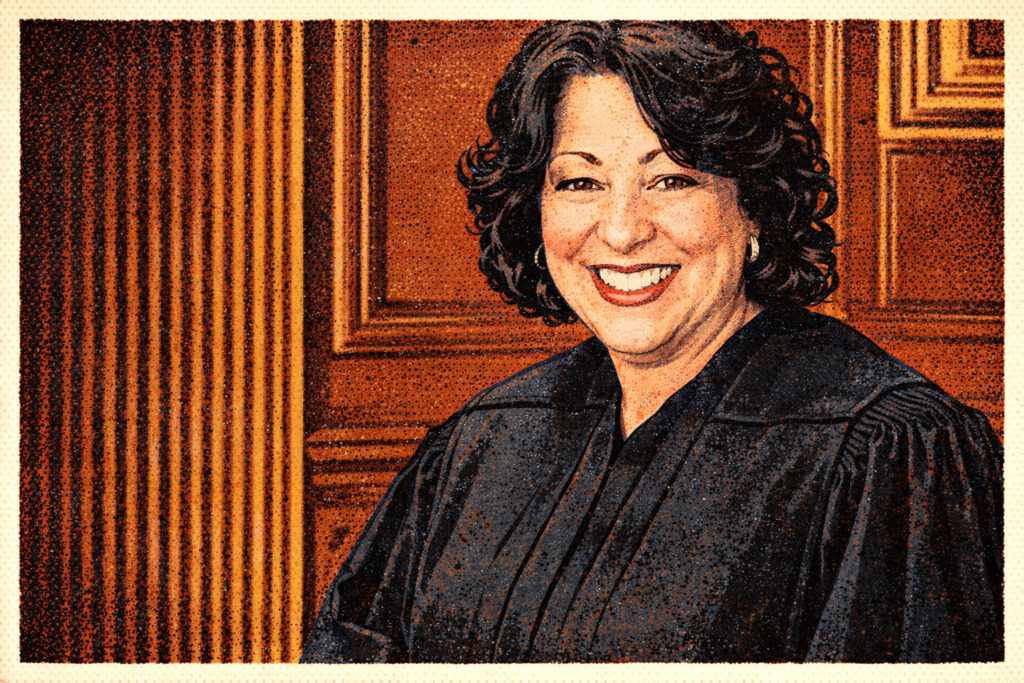
Sotomayor Wants Supreme Court to Reverse Presidential Immunity Ruling
U.S. Supreme Court Justice Sonia Sotomayor has publicly expressed hope that the nation’s highest court will eventually reverse some of its previous decisions, specifically identifying its landmark 2024 ruling on presidential immunity. Speaking during a public discussion about civic education at George Washington’s Mount Vernon estate in Virginia on November 7, 2026, Sotomayor criticized several changes in the Court’s recent legal decisions and said she hopes some opinions will be overturned during her lifetime. Her remarks have renewed attention on the continuing debate over presidential power, constitutional accountability and the role of the Supreme Court.
During the event, Sotomayor acknowledged that she frequently disagrees with the Court’s majority opinions and often writes dissents. She initially delivered her criticism with a joking tone, saying she hoped the Court would take back some of the “crazy things” it had done. However, she quickly clarified that she was serious about wanting certain decisions reconsidered. She specifically identified the presidential-immunity ruling as one of the decisions she hopes will eventually be overturned.
The ruling she referenced came from the 2024 case Trump v. United States. In a 6-3 decision issued on July 1, 2024, the Supreme Court established that former presidents have absolute immunity from criminal prosecution for conduct within their exclusive constitutional authority, at least presumptive immunity for other official presidential acts, and no immunity for unofficial acts. The decision addressed President Donald Trump’s challenge to criminal charges connected to his efforts to overturn the results of the 2020 presidential election.
Sotomayor strongly disagreed with the majority’s reasoning and joined the dissent alongside Justices Elena Kagan and Ketanji Brown Jackson. In her dissent, she warned that the decision could weaken the constitutional principle that no individual, including a president, is above the law. She argued that granting broad criminal immunity for official presidential conduct could have serious consequences for the country’s system of checks and balances. Her recent comments reflect the position she expressed in that dissent, although they do not change the Court’s existing ruling.
Chief Justice John Roberts wrote the majority opinion defending the decision. The majority maintained that the Constitution requires protection for certain presidential functions to preserve the independence and effectiveness of the executive branch. The opinion did not establish complete immunity for every action a president might take. Instead, it distinguished between conduct involving core constitutional powers, other official acts and unofficial behavior. That distinction remains central to legal debates about the limits of presidential authority.
Sotomayor also discussed the broader condition of the American legal system and the challenges facing educators who teach constitutional law. She expressed sympathy for teachers who must explain changes in Supreme Court jurisprudence to students while legal standards and constitutional interpretations continue to develop. She described the Court’s recent decisions as reflecting systemic changes in several areas of law. Her remarks highlighted the difficulty of teaching constitutional principles when major judicial rulings reshape how those principles are applied.
The justice also addressed concerns about the rule of law in the United States. She described the country as going through a difficult period and said the current moment represents a critical point in American history. Sotomayor acknowledged that democratic institutions face challenges on multiple levels, but she expressed confidence that the country would eventually find a way forward. She suggested that the legal system and public understanding of constitutional government would eventually settle into a new order, although she did not predict when that would happen.

Another major subject of her appearance was civic education and public participation in elections. Sotomayor emphasized that citizens should not treat voting as an unimportant responsibility. Referring to voter participation during the November 2026 midterm elections, she said there was no excuse for apathy and encouraged people to remain engaged in the democratic process. Her comments focused on the importance of understanding how government works and recognizing that elections can influence the direction of public institutions.
Sotomayor’s interest in civic education is also reflected in her involvement with iCivics, an educational organization founded by the late Supreme Court Justice Sandra Day O’Connor. The organization works to help students understand government, constitutional principles and their responsibilities as citizens. Sotomayor serves on its board and has frequently emphasized the importance of helping younger generations understand the legal and political systems that shape their lives. Her remarks at Mount Vernon connected the Supreme Court’s work with the broader need for public education about democracy.
Her comments have also renewed discussion about whether the Supreme Court could eventually reconsider its presidential-immunity decision. The Court can overturn its own precedents, but doing so generally requires a future case presenting an appropriate legal question and a majority of justices willing to change the existing interpretation. Sotomayor’s statement represents her personal hope as a member of the Court, not an announcement that the justices have agreed to reconsider the decision. No reversal has been scheduled or announced.
The presidential-immunity ruling remains particularly important because it affects how criminal investigations involving presidential conduct are evaluated. It established legal protections for certain official actions while leaving unofficial conduct outside those protections. The decision has influenced discussions about executive authority, criminal accountability and the separation of powers. Any future effort to overturn or narrow it would require careful consideration of constitutional text, precedent and the practical consequences for the presidency.
Ultimately, Sotomayor’s remarks offer a public look at the continuing disagreements within the Supreme Court over presidential authority and constitutional accountability. Her criticism does not alter the law, but it demonstrates that the debate surrounding the 2024 immunity decision remains active among the justices themselves. By connecting the issue to civic education, voting and public confidence in democratic institutions, she also emphasized that constitutional government depends on more than court decisions. It requires citizens who understand their rights, participate in public life and remain informed about the institutions exercising government power.

Key Legal Outcomes
- 2024 presidential-immunity ruling remains in effect: The Supreme Court’s 6-3 decision in Trump v. United States continues to establish immunity protections for certain official presidential acts.
- Sotomayor maintains her dissenting position: She previously joined Justices Elena Kagan and Ketanji Brown Jackson in opposing the ruling.
- No reversal has been announced: Her public comments express a personal hope, not a formal decision or indication that the Court has scheduled a review.
- Supreme Court precedent can change: A future case and a majority willing to reconsider the legal reasoning would be necessary to overturn the existing decision.
- Presidential accountability remains a legal issue: The distinction between official and unofficial presidential conduct continues to shape discussions about criminal prosecution and executive power.
Why It Matters
- Limits of presidential power: The immunity ruling affects how far criminal investigations can reach when presidential conduct is involved.
- Supreme Court disagreements: Sotomayor’s remarks reveal continuing differences among justices over constitutional interpretation and executive authority.
- Rule of law: The debate raises fundamental questions about accountability and whether government officials are subject to legal limits.
- Civic participation: Sotomayor emphasized that public understanding of government and participation in elections are essential to democracy.
- Future legal precedent: Any future challenge to presidential immunity could influence the balance of power between the executive branch and the judicial system.
