
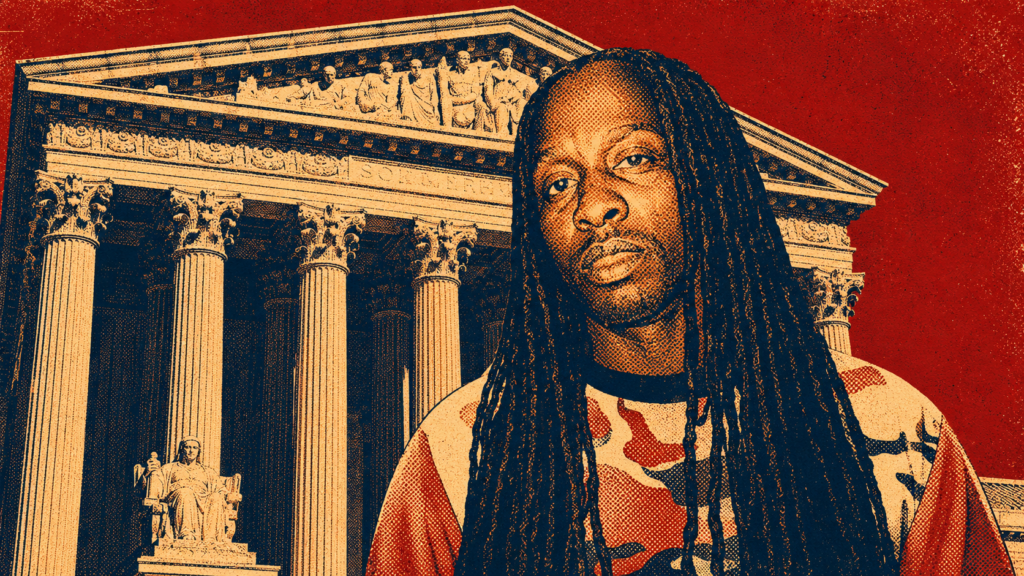
High Court Rejects Lawsuit Over Prison Dreadlocks Removal
The U.S. Supreme Court ruled 6-3 against former Louisiana inmate Damon Landor, holding that he cannot sue prison officials for monetary damages after they forcibly shaved his dreadlocks in violation of his Rastafarian religious beliefs. The decision represents a significant ruling on the limits of legal remedies available under federal religious freedom protections for incarcerated individuals and highlights an ongoing debate over accountability for government officials who violate constitutional or statutory rights.
Landor, a practicing Rastafarian, had grown his dreadlocks for nearly two decades as part of his religious faith. Rastafarianism regards dreadlocks as an important expression of religious identity and spiritual commitment. When Landor entered Louisiana’s prison system in 2020, he carried documentation, including a copy of an earlier federal court ruling, showing that prison officials were required to accommodate his religious practice and allow him to keep his hair.
For much of his incarceration, prison officials honored those protections. However, when he was transferred to the Raymond Laborde Correctional Center in Louisiana, the situation changed dramatically. According to court records, a prison guard allegedly discarded the court order Landor had brought with him. Shortly afterward, prison officials ordered that his dreadlocks be removed. Records indicate that while two guards restrained him, a third officer shaved his head down to the scalp despite his objections and despite the existing legal protections for Rastafarian inmates.
After his release, Landor filed a lawsuit under the Religious Land Use and Institutionalized Persons Act (RLUIPA), a federal law enacted to protect the religious rights of incarcerated individuals and others confined in government institutions. Landor argued that prison officials had clearly violated the statute and sought monetary damages from the individual officers responsible for the forced haircut.
The legal dispute was not centered on whether Landor’s religious rights had been violated. In fact, neither the state nor the courts seriously disputed that the forced shaving conflicted with established protections for religious prisoners. Instead, the key question before the Supreme Court was whether RLUIPA allows inmates to seek financial compensation from individual prison officials who violate those rights.
Writing for the majority, Neil Gorsuch concluded that the statute does not authorize lawsuits seeking money damages against individual government employees. The Court reasoned that because RLUIPA was enacted under Congress’s Spending Clause authority, states receiving federal funds must agree to certain conditions. However, individual prison employees are not parties to that funding agreement and therefore cannot be held personally liable for damages unless Congress explicitly provides such a remedy.

The ruling upheld decisions by lower courts that had dismissed Landor’s claims. The majority declined to extend reasoning from a separate 2020 Supreme Court case involving religious freedom claims under a related federal statute. As a result, Landor was left without a monetary remedy despite the acknowledged violation of his religious rights.
The decision drew a strong dissent from Ketanji Brown Jackson, joined by the Court’s other liberal justices. Jackson argued that the ruling weakens enforcement of federal religious protections and reduces incentives for prison officials to comply with the law. She noted that Landor’s experience illustrated precisely why Congress enacted legislation to protect the religious rights of inmates. According to Jackson, denying a damages remedy leaves victims of clear violations with little meaningful recourse and risks undermining accountability for government misconduct.
An unusual aspect of the case was that the U.S. Department of Justice supported Landor’s position, arguing that inmates should be able to pursue damages against officials who violate federally protected religious rights. Nevertheless, the Supreme Court rejected that interpretation.
The case is significant because it limits the remedies available to incarcerated individuals whose religious rights are violated. While prisoners may still seek court orders to stop unlawful practices, the ruling makes it much harder to obtain compensation after violations have already occurred. Legal experts say the decision may influence future litigation involving prison conditions, religious liberty, and government accountability.
Ultimately, the ruling reinforces the Supreme Court’s increasingly restrictive approach toward lawsuits seeking damages against government officials while raising important questions about how federal religious freedom protections can be effectively enforced when violations occur.

⚖️ Key Legal Outcomes
- The Supreme Court ruled 6-3 against former inmate Damon Landor.
- The Court held that RLUIPA does not authorize monetary damages against individual prison officials.
- Justice Neil Gorsuch authored the majority opinion.
- Justice Ketanji Brown Jackson authored a dissent joined by the Court’s liberal justices.
- Lower court decisions dismissing Landor’s lawsuit were upheld.
📌 Why It Matters
- Limits legal remedies available to prisoners whose religious rights are violated.
- Clarifies the scope of the Religious Land Use and Institutionalized Persons Act.
- Strengthens protections for government officials from personal liability lawsuits.
- Highlights ongoing tensions between religious liberty protections and sovereign immunity principles.
- Could affect future prisoner-rights and religious-freedom litigation nationwide.
