
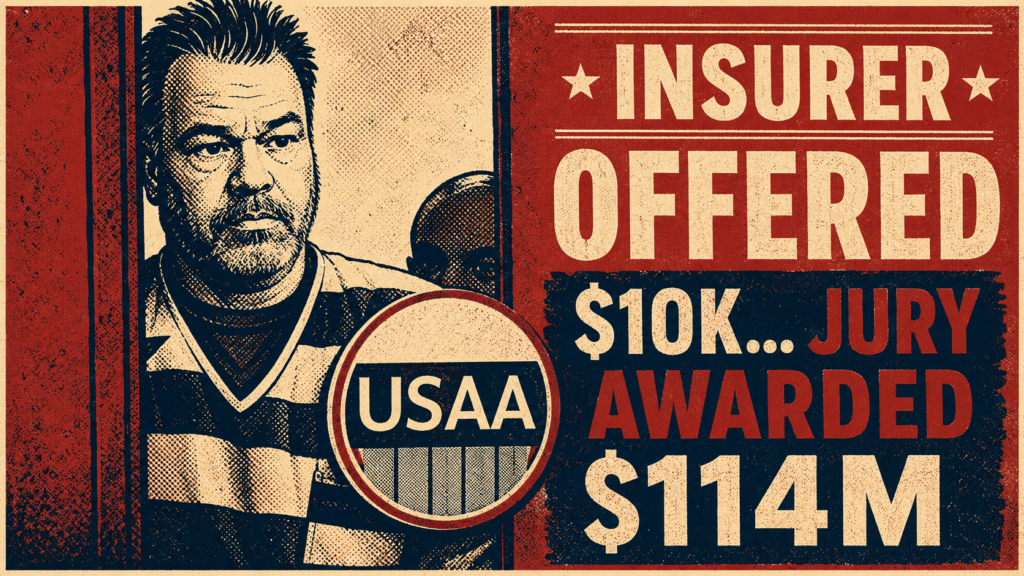
USAA Hit With $114 Million Decision Over Bad Faith
A Texas jury has awarded more than $114 million against USAA in a major insurance bad-faith lawsuit, finding that the insurer failed to properly handle a claim and acted in a manner that violated its obligations to its policyholder. The verdict represents one of the largest recent bad-faith awards against an insurance company and underscores the significant financial risks insurers face when juries conclude that claims were improperly denied, delayed, or mishandled.
The dispute arose from allegations that USAA failed to act fairly and in good faith while handling an insurance claim submitted by one of its insureds. Under Texas law, insurance companies have a duty to investigate claims reasonably, communicate honestly with policyholders, and make claim decisions based on a fair evaluation of the available evidence. Plaintiffs argued that USAA failed to meet those obligations and engaged in conduct that justified substantial damages.
After reviewing the evidence presented during trial, the jury concluded that USAA acted in bad faith. The verdict included compensatory damages as well as significant punitive damages designed to punish misconduct and deter similar conduct in the future. The total award exceeded $114 million, making it one of the most notable insurance-related verdicts issued in Texas in recent years.
Bad-faith insurance claims differ from ordinary contract disputes because they focus not only on whether benefits were owed under a policy but also on how the insurer handled the claim. Courts have long recognized that insurers possess considerable power over policyholders, especially when claimants are dealing with significant losses, medical issues, property damage, or other hardships. As a result, many states impose heightened duties on insurers and allow extra-contractual damages when companies fail to handle claims fairly.
According to reports on the case, the plaintiff argued that USAA’s conduct went beyond a simple disagreement over coverage. Instead, the lawsuit alleged that the insurer knowingly failed to fulfill its obligations and placed its own financial interests ahead of those of its insured. The jury ultimately agreed with that position and returned a substantial verdict in favor of the plaintiff.

USAA is one of the largest insurance providers serving military members, veterans, and their families. The company has historically promoted its reputation for customer service and loyalty to military communities. Because of that reputation, the verdict has drawn attention across the insurance industry and among consumer advocates who closely monitor insurer conduct.
The case also highlights the broader legal concept of insurer bad faith, which has become an increasingly important area of litigation. Policyholders who believe their claims were improperly denied or delayed often pursue bad-faith claims in addition to breach-of-contract allegations. Successful plaintiffs may recover damages that significantly exceed the value of the original insurance claim, particularly when juries determine that the insurer’s conduct was intentional, reckless, or malicious.
Legal experts note that large verdicts can place pressure on insurers to review claims-handling procedures and strengthen compliance programs. Insurance companies routinely train adjusters, claims managers, and legal teams on bad-faith exposure because adverse verdicts can result in substantial financial liabilities and reputational harm.
USAA is expected to challenge the verdict through post-trial motions and potentially on appeal. Large jury awards are frequently subject to judicial review, and appellate courts often examine whether punitive damages are legally justified and proportionate to the underlying misconduct. As a result, the final amount ultimately paid could differ from the amount announced by the jury.
The verdict arrives amid heightened scrutiny of insurance practices nationwide. Regulators, consumer advocates, and courts continue to examine whether insurers are fulfilling their obligations to policyholders, particularly in cases involving significant financial losses. The outcome may encourage additional litigation by policyholders who believe their claims were mishandled and could influence how insurers evaluate future claims.
Ultimately, the $114 million verdict serves as a reminder that juries can impose substantial penalties when they conclude that insurance companies have acted in bad faith. Whether the award survives appellate review remains to be seen, but the case already stands as a significant development in insurance litigation and a cautionary example for insurers operating in highly regulated markets.

⚖️ Key Legal Outcomes
- A Texas jury awarded more than $114 million against USAA.
- Jurors found that USAA acted in bad faith in handling an insurance claim.
- The verdict included both compensatory and punitive damages.
- The case highlights insurers’ legal duty to treat policyholders fairly.
- USAA is expected to pursue post-trial motions and potential appeals.
📌 Why It Matters
- Represents a major bad-faith verdict against a national insurer.
- Reinforces legal obligations governing insurance claims handling.
- May influence future bad-faith litigation nationwide.
- Could prompt insurers to reevaluate compliance and claims practices.
- Demonstrates the significant financial consequences of adverse jury findings.
