
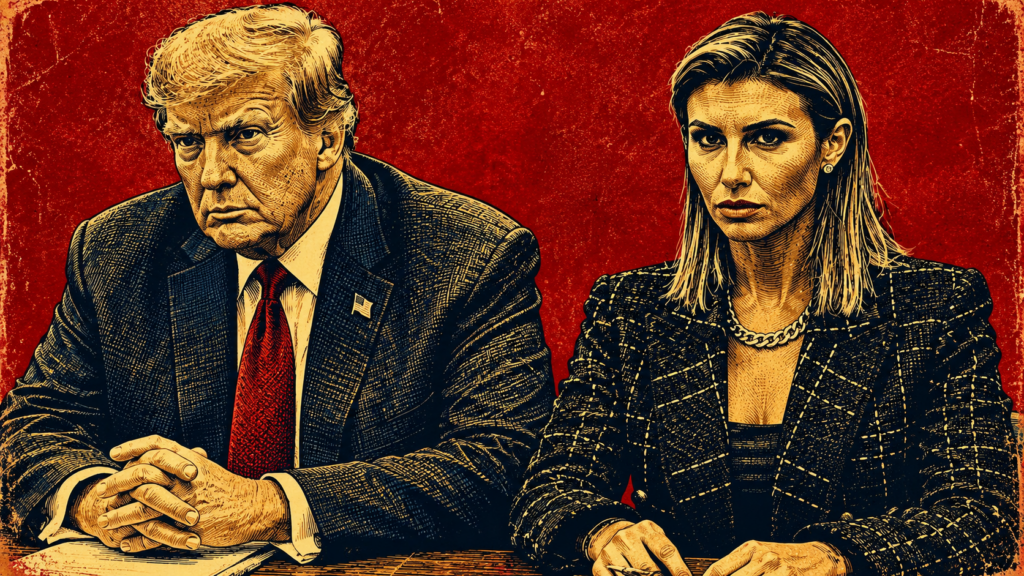
Habba Denies Role in Billionaire’s Trump Pardon
President Donald Trump’s decision to pardon Venezuelan-Italian banker Julio Herrera Velutini has come under renewed scrutiny following reports that the banker’s family arranged a lucrative employment deal for Alina Habba, Trump’s former personal attorney. The agreement reportedly guaranteed Habba more than $50 million over four years, including a base salary and bonuses. The arrangement became controversial because Herrera received a full presidential pardon shortly after Habba began working for a company established by his daughter. The timing has raised questions about possible access and influence in the clemency process, although no evidence cited in the reporting establishes that the employment agreement was exchanged for a pardon.
Herrera Velutini had faced federal criminal charges stemming from an alleged scheme involving former Puerto Rico Governor Wanda Vázquez Garced. Prosecutors accused the banker of participating in an arrangement intended to influence the governor’s handling of a banking regulator who was investigating his financial institution. The case also involved former FBI agent Mark Rossini. The original allegations included serious federal offenses, and the prosecution attracted attention because it involved a prominent political figure, a wealthy international banker, and alleged efforts to influence government decisions.
In August 2025, Herrera reached a plea agreement with federal prosecutors and pleaded guilty to a misdemeanor campaign finance violation. The agreement allowed him to avoid the more serious felony charges originally brought against him. Vázquez and Rossini also entered plea agreements involving misdemeanor offenses. The reduced charges reportedly disappointed some career prosecutors who had sought more substantial penalties. Even after the plea agreement, Herrera continued pursuing a presidential pardon because he wanted to remove the remaining criminal conviction from his record.
Herrera’s legal team included Christopher Kise, a former Florida solicitor general who had previously worked on Trump’s personal legal defense team. Kise helped negotiate the plea agreement and later assisted Herrera in seeking clemency. Meanwhile, Herrera’s daughter, Isabela Herrera, made substantial political contributions to a Trump-supporting political action committee. Reports put her contributions at a combined $3.5 million. Those donations, alongside the family’s efforts to obtain a pardon, have contributed to questions about the role that money, political relationships, and well-connected legal representatives may play in presidential clemency requests.
The Herrera family subsequently hired Habba, who had previously represented Trump and held a senior position within the Justice Department. The reported employment package offered her $10 million annually for four years, plus bonuses, bringing the total guaranteed compensation to more than $50 million. She was appointed general counsel of Concord Partners, a company established by Isabela Herrera in Florida in late October 2025. The company reportedly had little public presence, and its business activities were not clearly understood by some people associated with the family’s wider business interests.

The timing of the employment agreement has become a central feature of the controversy. Habba finalized the deal shortly after Concord Partners was registered, while she was still serving as U.S. attorney for the District of New Jersey. She formally began working for Concord Partners on January 1, 2026. On January 15, Trump granted Herrera a full and unconditional pardon. The short interval between Habba’s start date and the pardon prompted questions about whether the family expected her to help obtain clemency. People familiar with the employment agreement reportedly believed that securing the pardon was part of the reason she had been hired, but that belief is not itself proof of an improper arrangement.
Habba has firmly denied that her employment had anything to do with Herrera’s pardon. She said the suggestion that she helped secure clemency was false and stated that her employment arrangement had been reviewed and disclosed to the Justice Department. She has also declined to publicly detail the specific work she performed for Concord Partners. The Justice Department stated that Habba did not speak to anyone about a pardon, while a White House official said she was not connected to the clemency decision. The administration maintains that presidential pardons are handled through a process involving the White House Counsel’s Office and the Justice Department.
The employment arrangement has drawn additional attention because Habba held a government position during part of the period in which the deal was negotiated. She had served as U.S. attorney for New Jersey before resigning in December 2025 after federal judges ruled that her appointment had been unlawful. She subsequently continued as a special government employee and senior adviser within the Justice Department. That designation can permit certain individuals to maintain outside employment while performing temporary government service, subject to applicable restrictions. The circumstances have raised questions about how outside financial relationships are reviewed when government employees retain access to senior officials or sensitive government functions.
The pardon also came amid broader scrutiny of political contributions and the growing market for clemency-related legal and lobbying services. Wealthy defendants seeking presidential pardons may hire attorneys, lobbyists, and advisers to present their cases to the administration. Such representation is not automatically unlawful, and the president has broad constitutional authority to grant pardons for federal offenses. However, the legal distinction between legitimate advocacy and an improper exchange for official action is significant. Whether any conduct crosses that line depends on evidence of the parties’ actions and intentions, not simply on the size of a contract or the timing of a pardon.
Questions have also been raised about the source of Isabela Herrera’s political contributions. Campaign finance watchdog Campaign Legal Center previously asked federal election regulators to investigate whether her $3.5 million in contributions were genuinely funded by her or were made on behalf of her father. Federal law prohibits foreign nationals from contributing to U.S. elections and restricts contributions made in another person’s name. The request for an investigation raises issues for regulators to examine; it does not establish that the donations were illegal. The available reporting likewise does not establish that the contributions determined Trump’s decision to pardon Herrera.
Trump’s administration has defended the pardon and described the original prosecution as politically motivated. Habba, the Justice Department, and the White House have denied that she played a role in securing clemency. Herrera and his daughter did not respond to multiple requests for comment reported by journalists. No finding cited in the reporting establishes that Habba’s employment was payment for a pardon or that Trump’s clemency decision was part of a corrupt exchange. The central issue is whether further evidence supports the concerns raised by the timing and financial arrangements. The controversy may prompt additional scrutiny of pardon practices, political donations, and potential conflicts of interest, but the reported sequence of events must be distinguished from proven misconduct.

Key Legal Outcomes
- Full presidential pardon granted: Trump pardoned Herrera Velutini in January 2026 after his misdemeanor campaign finance plea.
- Earlier felony charges resolved through plea deals: Herrera, former Puerto Rico Governor Wanda Vázquez, and former FBI agent Mark Rossini pleaded guilty to misdemeanor offenses.
- Employment deal under scrutiny: Reports describe a compensation package for Habba worth more than $50 million over four years, but no finding establishes that it was exchanged for a pardon.
- Political donations questioned: A campaign finance watchdog requested an investigation into the source of Isabela Herrera’s $3.5 million in political contributions.
- No established finding of a corrupt exchange: Habba and the White House deny her involvement in obtaining the pardon; the reported timing alone does not prove wrongdoing.
Why It Matters
- Presidential clemency: The case raises questions about transparency and decision-making in the federal pardon process.
- Potential conflicts of interest: The reported employment agreement highlights concerns about outside financial arrangements involving people serving in government.
- Campaign finance oversight: The source of large political donations matters because federal law restricts foreign-national contributions and contributions made in another person’s name.
- Access and influence: The case illustrates how wealthy defendants may use legal representatives and political networks when seeking clemency.
- Public accountability: The controversy reinforces the importance of distinguishing documented events, allegations, official denials, and proven legal violations.
