
The Supreme Court’s Most Worrisome Non‑Decision on Racial Gerrymandering
📝 Summary:
On July 15, 2025, The New Republic revealed a seismic shift in the Supreme Court’s approach to the Voting Rights Act by spotlighting the Court’s decision to rehear Louisiana v. Callais, a pivotal redistricting case. Despite being buried in the docket, the order signals the conservative majority’s strategic momentum toward dismantling crucial protections against racial gerrymandering.
Louisiana v. Callais began in the aftermath of the 2020 census when the state legislature redrew 2023 congressional maps under a Republican agenda. The map had packed Black voters into a single district, prompting civil‑rights groups to sue under Section 2 of the Voting Rights Act (VRA), claiming it diluted Black voting power. Federal courts agreed, mandating a second majority‑minority district, which the legislature implemented in 2024 .

However, a competing lawsuit emerged from “non‑African American voters,” arguing that the corrective map itself constituted illegal racial gerrymandering. A federal court agreed, invalidating the remedial map – despite it being a judicially compelled fix – setting the stage for Supreme Court review .
Instead of issuing an opinion, the Court abruptly ordered reargument in fall 2025. This unexpected move strongly hints the Court might seize the opportunity to restrict or eliminate Section 2’s applicability to legislative gerrymandering—effectively incapacitating federal courts from rectifying race‑based districting imbalances.

This decision arrives on the heels of a major gerrymandering victory in Allen v. Milligan, where a conservative‑liberal coalition upheld a second majority‑Black district in Alabama. Still, the conservatives hinted at rolling back remedial powers under Section 2, underscoring internal tensions within the Court.
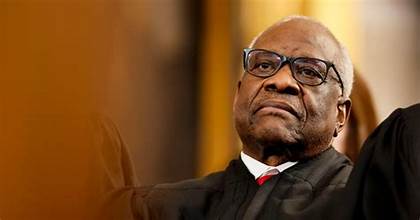
Sr. Justice Clarence Thomas dissented from the order to rehear, insisting the Court should have resolved the case outright. He argued that Section 2’s remedial measures—mandating race‑based redistricting—are unconstitutional, and federal courts should be barred from intervening. His stance underscores a rigid color‑blind reading of the Constitution that removes judicial recourse for racial claims in redistricting .
The implications are profound: Should the Court ultimately declare Section 2 unconstitutional in this context, Republican-led states could redraw maps without fear of judicial correction, effectively undoing decades of civil‑rights progress. States like Texas and Louisiana—where demographics still warrant multiple majority‑minority seats—would be empowered to dilute minority voting strength under the guise of partisan fairness.
Legal scholars trace this approach back to foundational cases like Shaw v. Reno, reaffirmed by Cooper v. Harris and Miller v. Johnson, which hold that racial gerrymandering triggers strict scrutiny. Thomas’s view bucks this consensus, arguing that district‑drawing is a political, not judicial task.
This potential rollback emerges amid a growing push from conservative power brokers, including Roberts and Kavanaugh, to reevaluate federal courts’ remedial authority under Section 2—a concept they appeared open to in Milligan.
As the Court prepares for reargument, the stakes could not be higher. A reversal would strip civil‑rights enforcers of a major tool to challenge racial vote dilution. It would also send ripples across the legislative landscape, emboldening state lawmakers to entrench partisan advantage through racial manipulations.
The New Republic warns this non‑decision is anything but neutral—it’s the calm before a legal storm that could reshape U.S. democracy and redefine the fight for voting equality.
⚖️ Key Legal Outcomes
-
Supreme Court orders reargument in Callais case
-
Potential ruling to restrict Section 2 of Voting Rights Act
-
Thomas dissents, labeling Section 2 unconstitutional
-
Court seizes moment to challenge federal court’s redistricting power
❗ Why It Matters
-
Could endanger judicial remedies against racial gerrymandering
-
Undermines decades of civil‑rights jurisprudence (e.g., Shaw, Cooper, Milligan)
-
Empowers partisan legislatures to redraw maps freely
-
Erodes protections for Black and minority voters
-
Sets precedent reshaping future civil‑rights enforcement
The New Republic – Read full article
Published: July 15, 2025
🔍 Tags
supreme court, louisiana callais, voting rights act, racial gerrymandering, clarence thomas, section 2, redistricting, democracy
