
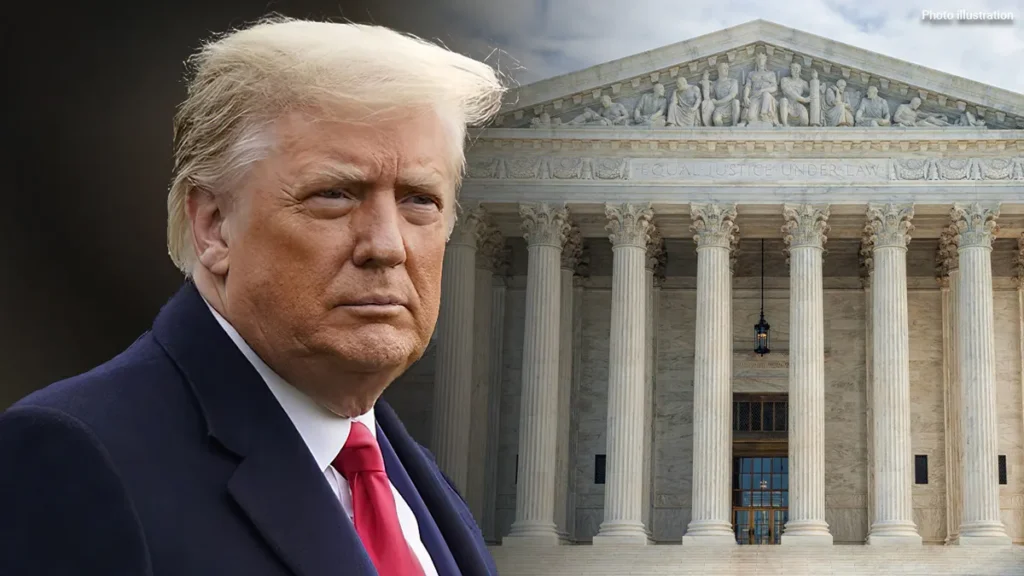
Supreme Showdown: Trump Urges High Court to Define “U.S. Border” in Asylum Fight
📝Summary:
On July 15, 2025, The Washington Times reported on former President Donald Trump’s appeal to the U.S. Supreme Court asking it to define precisely where the “U.S. border” lies for the purpose of determining legal eligibility for asylum.
The case stems from a challenge to a Biden Administration policy requiring asylum seekers to present themselves at official ports of entry—not simply enter the country between ports. A lower federal court ruled that migrants who cross illegally between designated entry points—but later present themselves—are eligible for asylum. Justice Department attorneys, supporting the policy, argue that the decision would upend immigration enforcement and discourage legal entry.

Trump’s filing argues that the term “United States” under the Immigration and Nationality Act (INA) should include all territory within U.S. jurisdiction—even interior points—meaning that presenting oneself anywhere inside the country should fulfill the legal requirement. But his brief takes the opposite stance: that “entry” must occur at official ports, consistent with executive authority to control immigration and enforce laws.
Trump’s involvement escalates the domestic frontline in the border and asylum debate. He is spotlighting the case as emblematic of national sovereignty and security—core themes of his political brand. The Supreme Court’s decision is poised to affect not only asylum policy but wider executive authority over borders.

Legal analysts are watching closely: a ruling in favor of Trump could constrain courts from granting broad injunctions against federal immigration policies. Conversely, a rejection might further empower migrant advocacy groups and shape a more generous asylum regime.
The Biden Administration, meanwhile, supports the lower court’s broad interpretation. It asserts that Congress intended to offer protection to vulnerable asylum seekers regardless of where they present themselves inside U.S. territory. Critics argue such an approach invites mass illegal border crossings, by effectively lowering legal barriers.
The case’s timing—amid rising migrant encounters at the southern border—adds urgency. Border patrol statistics show a spike in crossings, overwhelming local resources. The legal outcome will have ripple effects on detention protocols, funding, and broader immigration reforms under debate in Congress.
Justice Department officials and civil rights advocates believe this issue could define the balance between humanitarian obligations and preserving national integrity. The Supreme Court’s ruling is expected in the next calendar year and could define immigration enforcement for decades.
⚖️ Key Legal Outcomes
-
Trump asks Supreme Court to define “U.S. border” for asylum laws
-
Lower court ruled migrants presenting anywhere inside can qualify
-
Ruling may limit judicial ability to block immigration enforcement
-
Could shift asylum eligibility and executive border control powers
❗ Why It Matters
-
Clarifies executive vs. judicial roles in shaping asylum policy
-
Could impact migrant flows and border enforcement funding
-
Influences future legal battles over immigration law interpretations
-
Shapes political messaging on national security and sovereignty
-
Sets precedent for judicial oversight of executive policies
The Washington Times – Read full article
Published: July 15, 2025
🔍 SEO Tags
trump supreme court, asylum policy, u.s. border definition, immigration law, biden administration, supreme court case, immigration enforcement, legal asylum
