
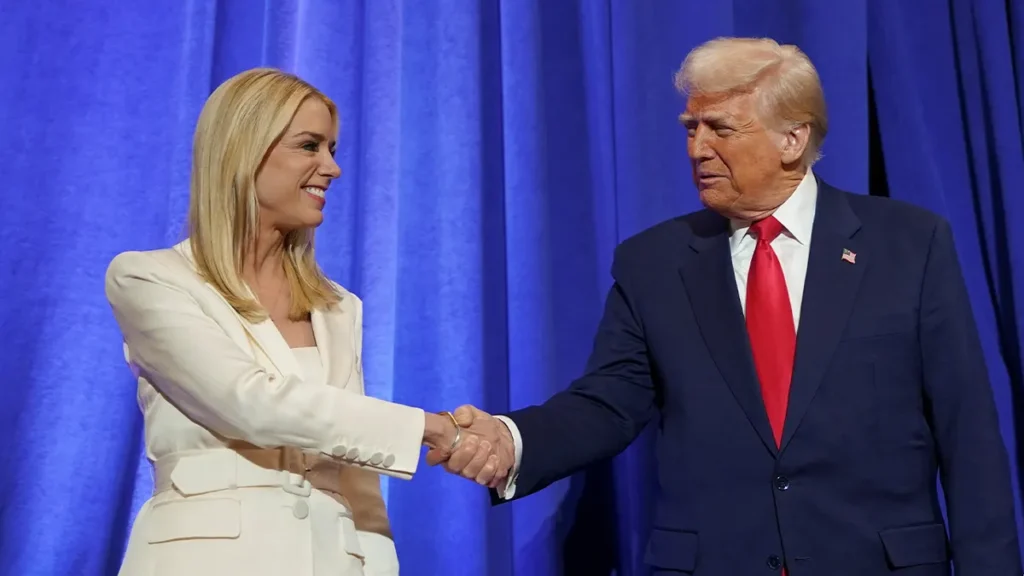
Bondi/Trump Pulls Nomination, Installs Habba Anyway
President Donald Trump initially appointed Alina Habba, his former personal attorney, as the Interim U.S. Attorney for the District of New Jersey in March. When her 120-day term expired, federal district judges exercised their authority under federal law to appoint Desiree Leigh Grace, a seasoned prosecutor and Habba’s former first assistant, to the position.
In response, the White House withdrew Habba’s formal nomination and reappointed her as Acting U.S. Attorney—a move that seemingly circumvents the judicial appointment by restarting the appointment clock under the Federal Vacancies Reform Act (FVRA). The DOJ under Attorney General Pam Bondi immediately fired Grace, calling the judges’ action a challenge to the president’s Article II powers.
Both Habba and Grace have made public statements: Habba framed the situation as a fight for justice and vowed to continue, while Grace stated she would serve in accordance with the law and expressed pride in being selected on merit.

KEY LEGAL & POLICY OUTCOMES
- Federal Vacancies Reform Act (FVRA) Use
- Trump’s administration invoked the FVRA to reappoint Habba as “Acting” U.S. Attorney without Senate confirmation.
- FVRA permits acting appointments for 210 days if no nomination is pending—raising legal questions since Habba’s nomination was withdrawn only after the judges appointed Grace.
- Judicial Authority Under 28 U.S.C. § 546(d)
- Federal law allows district judges to appoint a U.S. Attorney if a presidential nominee isn’t confirmed within 120 days.
- The judges exercised this power by appointing Grace, which the DOJ under Trump rejected.
- Dismissal of a Judicial Appointee
- DOJ fired Grace shortly after her judicial appointment—an unprecedented move that raises constitutional concerns about separation of powers and executive authority over prosecutors.
- Undermining Norms of Prosecutorial Independence
- Replacing a merit-selected prosecutor with a politically connected appointee challenges norms surrounding the impartiality and independence of U.S. Attorneys.

WHY IT MATTERS
- Separation of Powers Crisis
This case pits Article II executive power against the judiciary’s statutory authority, potentially setting a new precedent on whether judges can be overridden via administrative maneuvers. - Politicization of U.S. Attorneys
The firing of a career prosecutor chosen by judges in favor of a political loyalist highlights growing concerns about the erosion of institutional independence in federal law enforcement. - FVRA Exploitation Risk
If upheld, this interpretation of the FVRA could allow perpetual acting appointments to bypass Senate oversight, undermining the Appointments Clause and Congressional intent. - Legal Uncertainty in Prosecutions
Questions about who is lawfully in charge could jeopardize ongoing cases, creating confusion and opening grounds for legal challenges in federal prosecutions originating in New Jersey.
Tags
Pam Bondi Attorney General, Federal judicial appointments, U.S. District Court New Jersey,
DOJ internal power struggle, Senate confirmation bypass, Acting U.S. Attorney legal loophole,
Trump legal news 2025, DOJ vs judiciary conflict, Political interference in prosecutions,
Rule of law crisis United States, Trump administration legal battles,
