
Alabama Rep. Givan Vows Bill to Let Death Penalty Target Politically Motivated Attacks
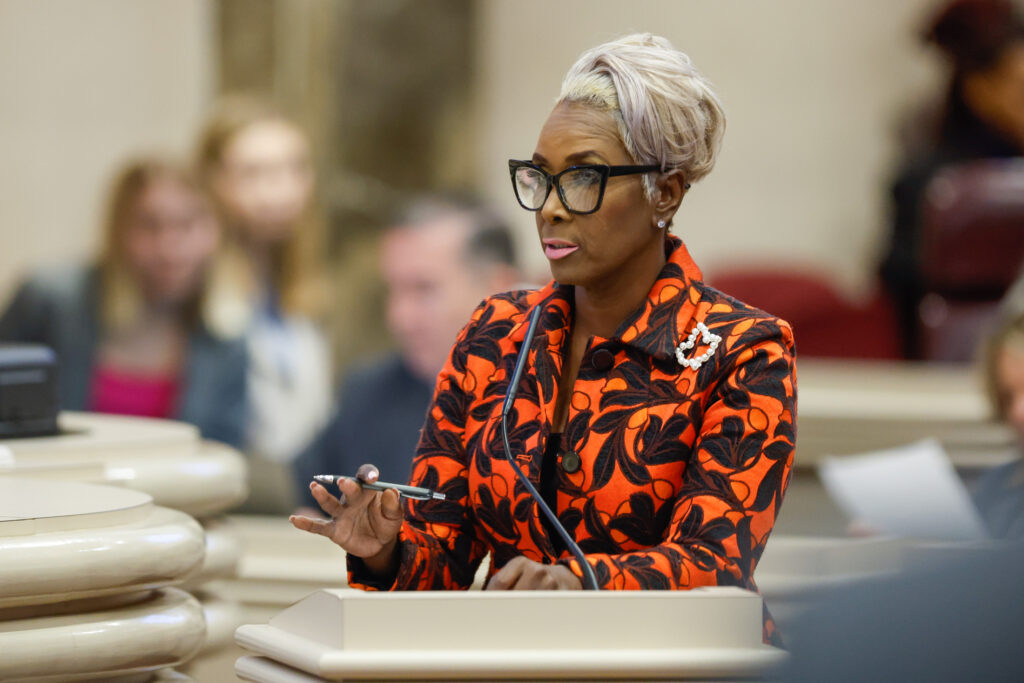
State Representative Juandalynn Givan (D-Birmingham) says she plans to introduce legislation in the upcoming 2026 Alabama legislative session that would expand the circumstances under which the death penalty may be imposed — specifically to include politically motivated attacks. Under current law, Alabama allows capital punishment when a public official is murdered in connection with their official role; Givan’s proposed bill would extend that to local public officials and make politically motivated attacks an aggravated circumstance in capital cases.
Givan frames this expansion as necessary to respond to escalating threats against political figures. She cites recent incidents — including the Sept. 10 assassination of conservative activist Charlie Kirk, the June murder of Minnesota legislative leader Melissa Hortman, and the 2024 assassination attempt on Donald Trump — saying that “public officials being murdered because of their political beliefs is an attack on all Americans.” She said that extreme acts demand extreme penalties and that the proposed law sends a message that political violence will no longer be tolerated.
The draft legislation is still being written, but Givan says she expects to prefile it ahead of the 2026 session, which begins January 13. She also notes that existing Alabama law covers murders of state and federal officials tied to their duties, but her bill would expand both the class of protected officials and the criteria (political motivation) under which the death penalty could be sought.

Givan’s proposal reflects growing legislative momentum nationally to criminalize politically motivated violence more harshly. In Ohio, lawmakers recently proposed a bill to allow prosecutors to seek the death penalty in politically motivated killings. But such efforts are controversial: critics warn that labeling violence “political” opens danger for misuse, bias, or selective application.
The debate ahead will likely focus on how “politically motivated” is legally defined, protections against abuse, and the constitutional limits of expanding capital punishment. Whether Givan’s bill gains sufficient support in Alabama’s legislature is uncertain, but it signals a broader trend of states wrestling with political violence, free speech, and punitive lawmaking.

Why It Matters
-
It marks a bold shift: making political animus an explicit aggravating factor justifying death penalty.
-
Sets a precedent for states to expand capital punishment laws in the name of deterrence against political violence.
-
Opens up serious risks of abuse or selective enforcement if definitions are vague or politically tilted.
-
Reflects growing anxiety over threats to public officials and political actors.
-
Could inflame broader debates over the balance between security, free expression, and proportional justice.
Key Social Outcomes
-
Chill on political speech or activism: fear that expression could be labeled “politically motivated” violence.
-
Deepening polarization: perception that one side’s attacks get punished more harshly than the other.
-
Heightened distrust in the justice system: accusations of weaponizing laws for political ends.
-
Escalation of punitive norms: more support for harsh penalties in political conflict contexts.
-
Pressures on local governments to confront threats against public servants more aggressively.
Publication / Source Info
- Source: Alabama Daily News — “Givan says she’ll bring bill to allow death penalty for politically motivated attacks.” Alabama Daily News
- Also reported by ABC 33/40: “Alabama lawmaker proposes expanding death penalty for politically-motivated attacks.” WBMA
- Publication: “1h ago” / “2 days ago” (recent) per Alabama Daily News article Alabama Daily News
