
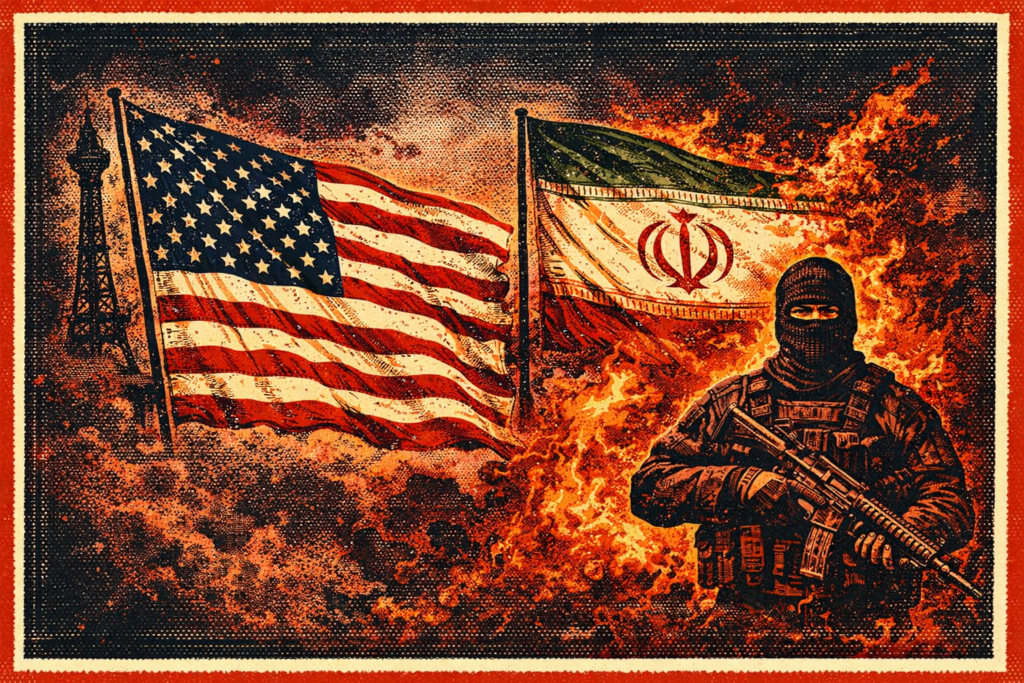
Are the US attacks on Iran legal?
The legality of the United States’ military attacks on Iran has become a central question in international law and U.S. constitutional law following the start of a major military operation in early March 2026. The operations, conducted in coordination with Israeli forces, have involved hundreds of strikes against Iranian targets inside Iran and in waters far beyond the Middle East. Questions raised by legal scholars, government officials, and world leaders focus on whether these actions are justified under domestic U.S. law, particularly the U.S. Constitution and the War Powers Resolution, as well as international law under the United Nations Charter.
On March 4, 2026, Reuters published an explanatory piece examining these legal issues in detail, noting that U.S. President Donald Trump has publicly framed the strikes as pre-emptive self-defense in response to perceived Iranian threats — including nuclear development and missile capabilities. However, Trump’s assertions of imminent danger rest on claims that are not fully corroborated by publicly available evidence.
Under U.S. law, the Constitution gives Congress the authority to declare war. The 1973 War Powers Resolution was enacted to restrain the president’s ability to send troops into hostilities without congressional consent, requiring either a declaration of war, specific statutory authorization, or actual attack on U.S. forces or territory. In this case, Congress has not declared war on Iran or passed specific authorization for sustained hostilities. While the administration has notified Congress and begun reporting as required by the War Powers Resolution, many lawmakers argue that the absence of formal congressional approval means the military campaign may be unconstitutional or at least in tension with domestic law.
Under international law, the fundamental rule of the UN Charter is that the use of force by one state against another is prohibited, except in two narrow exceptions: self-defense in response to an actual armed attack, or when force is expressly authorized by the UN Security Council. The U.S. and its allies have repeatedly pointed to the need to prevent Iran from posing future threats, but legal experts widely assert that pre-emptive military action without clear evidence of an imminent attack is not a recognized justification under the Charter. Neither the Security Council has granted force authorization nor has Iran launched an armed attack on U.S. territory or forces that qualifies under Article 51 of the Charter.

Complicating this debate are high-profile incidents such as the killing of Iran’s Supreme Leader Ayatollah Ali Khamenei, a strike reportedly carried out by Israel with U.S. intelligence support. The legality of targeting a head of state depends on whether the action occurred in an official state of war and whether the individual was acting as a military threat at the time. While some legal scholars argue that targeting such figures in active hostilities can be lawful, others say it may constitute assassination, prohibited under U.S. Executive Orders unless part of a recognized armed conflict.
International reaction has been sharply divided. Russia condemned the U.S. actions as based on false pretexts, accusing Washington of using unfounded threats to justify aggression — language echoed by some legal commentators. Similarly, Turkish President Tayyip Erdogan blasted the strikes as a clear violation of international law. On the other hand, the U.S. maintains that its actions are defensive and targeted at reducing potential threats.
Beyond governments, institutions like the United Nations have expressed deep alarm over the consequences of the conflict, particularly after a strike on a school in Iran that killed scores of children, prompting condemnation from UN experts as inconsistent with international humanitarian principles that protect civilians.
Meanwhile, the Vatican’s top diplomat, Cardinal Pietro Parolin, publicly described the U.S. and Israeli strikes as “truly alarming,” expressing broader concern that actions framed as preventive war risk undermining international law and peace. Such comments reflect the unusual level of international scrutiny and opposition to the legal justification for the campaign.
In the U.S., lawmakers are discussing measures under the War Powers Resolution and considering votes that could force a formal debate on Trump’s authority to continue military operations without congressional approval. While it is unlikely that Congress would override a presidential veto, lawmakers argue that accountability and legal clarity are essential in a democratic system, especially given the expanding scope of hostilities.
In summary, the legal debate over the U.S. attacks on Iran centers on a clash between executive action and domestic and international legal constraints. While the Trump administration asserts defense rationales, critics argue the current strikes may exceed both U.S. constitutional authority and the international legal order, raising profound questions about war powers, sovereignty, and the rule of law in modern interstate conflict.

📌 Key Legal Outcomes
-
No formal congressional war declaration exists for U.S. hostilities against Iran, raising constitutional concerns under the War Powers Resolution.
-
The administration’s pre-emptive self-defense justification is disputed and is not widely accepted as legal under the UN Charter.
-
U.S. military actions lacked UN Security Council authorization, meaning force is generally considered unlawful under international law absent imminent self-defense.
-
The legality of specific strikes, including the killing of Iran’s supreme leader, remains legally ambiguous and dependent on whether they occurred in active armed conflict.
-
International reactions, including from allied nations and global institutions, reflect widespread concerns that the attacks violate established legal norms.
❓ Why It Matters
-
Constitutional authority: Raises fundamental questions about the limits of presidential war powers.
-
International law: Could contribute to erosion of international norms against unprovoked use of force.
-
Global stability: Legal disputes may influence diplomatic relations and alliance cohesion.
-
Humanitarian impact: Civilian harm, including school casualties, intensifies scrutiny of legality and ethics.
-
Precedent: Outcomes may shape legal standards for future conflicts and executive military action.

