
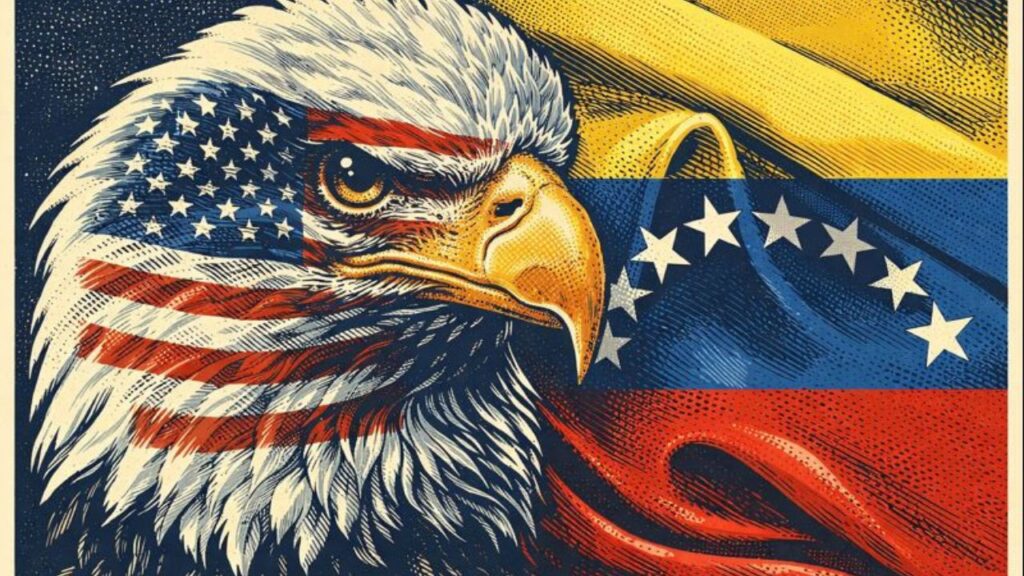
Can U.S. Legally Govern Venezuela?
The short answer is: No, the U.S. cannot legally “run” Venezuela under international law, even after capturing Maduro. Here’s why, explained in detail.
1. Sovereignty is Sacred Under International Law
-
Sovereignty means that every country has full authority over its own territory and government without interference from outside powers.
-
The United Nations Charter (Article 2(4)) explicitly prohibits one country from using force against another’s territorial integrity or political independence.
-
Capturing Maduro with military force violates Venezuelan sovereignty, regardless of his alleged crimes. Simply put, taking over the government of a foreign nation is considered illegal occupation unless sanctioned by international law.
✅ Implication: The U.S. cannot claim Venezuela as its own or directly govern its internal affairs, because that would be a violation of international law.

2. No Legal Basis in Domestic U.S. Law for Running Another Country
-
U.S. law does not give the president authority to govern foreign countries. The Constitution gives the president executive powers over the U.S., not other nations.
-
Military operations against foreign leaders must be justified under self-defense, congressional authorization, or treaty law, none of which allow for governing another country.
✅ Implication: Even if Trump ordered the capture of Maduro, he cannot legally install himself or U.S. officials as the rulers of Venezuela.
3. International Law Requires Legitimate Authority
-
The only legal ways the U.S. could influence Venezuela’s government without breaking the law are:
-
Diplomacy: Negotiating a government transition with Venezuelan authorities.
-
Extradition: Bringing Maduro to the U.S. to face charges via proper legal channels.
-
United Nations Authorization: A Security Council resolution could hypothetically approve intervention—but this is extremely unlikely given global politics.
-
✅ Implication: Running the country directly without Maduro’s consent or international authorization violates both UN law and customary international law.
4. Occupation vs. Administration
-
Even in the rare case where a country temporarily occupies another nation (like post-WWII Germany), there are strict rules under the law of occupation (Geneva Conventions).
-
These rules:
-
Allow administration only to maintain order and protect civilians.
-
Do not allow full governance or exploitation for the occupier’s own benefit.
-
-
Unilaterally declaring that the U.S. “runs” Venezuela would exceed any recognized legal authority.

5. Practical and Political Limitations
-
International backlash is severe. Russia, China, Brazil, and other countries have condemned any U.S. takeover as illegal.
-
Even if the U.S. tries to govern, it would face resistance from Venezuelans, local institutions, and the military, creating instability and potential armed conflict.
-
Legal scholars argue that trying to “run” Venezuela could expose U.S. officials to charges of aggression or violations of international humanitarian law.
6. What the U.S. Can Do Legally Instead
-
Prosecute Maduro and his associates in U.S. courts for crimes like drug trafficking or narco-terrorism.
-
Impose sanctions and pressure the Venezuelan government to comply with international standards.
-
Support a legitimate transitional government chosen or approved by Venezuelans, not impose U.S. rule directly.
📌 Why This Matters
-
Violation of sovereignty: U.S. forces captured a sitting head of state without the host country’s consent.
-
International law precedent: The operation may violate the UN Charter and rules governing the use of force.
-
Regional stability at risk: Latin American countries expressed concern over potential escalation and unrest.
-
Impact on U.S. foreign policy: Signals a dramatic shift in Trump administration policy toward direct intervention in foreign nations.
-
Global rule-of-law questions: Raises questions about the legality of arresting foreign leaders through military operations versus extradition.
✅ Conclusion
Legally, the U.S. cannot and should not “run” Venezuela. Even after capturing Maduro:
-
Doing so violates UN law, sovereignty, and domestic legal principles.
-
The only lawful U.S. options are legal prosecution, diplomacy, sanctions, and support for a legitimate Venezuelan transition.
-
Any attempt to govern Venezuela directly would be considered illegal occupation or aggression, with massive geopolitical consequences.
