
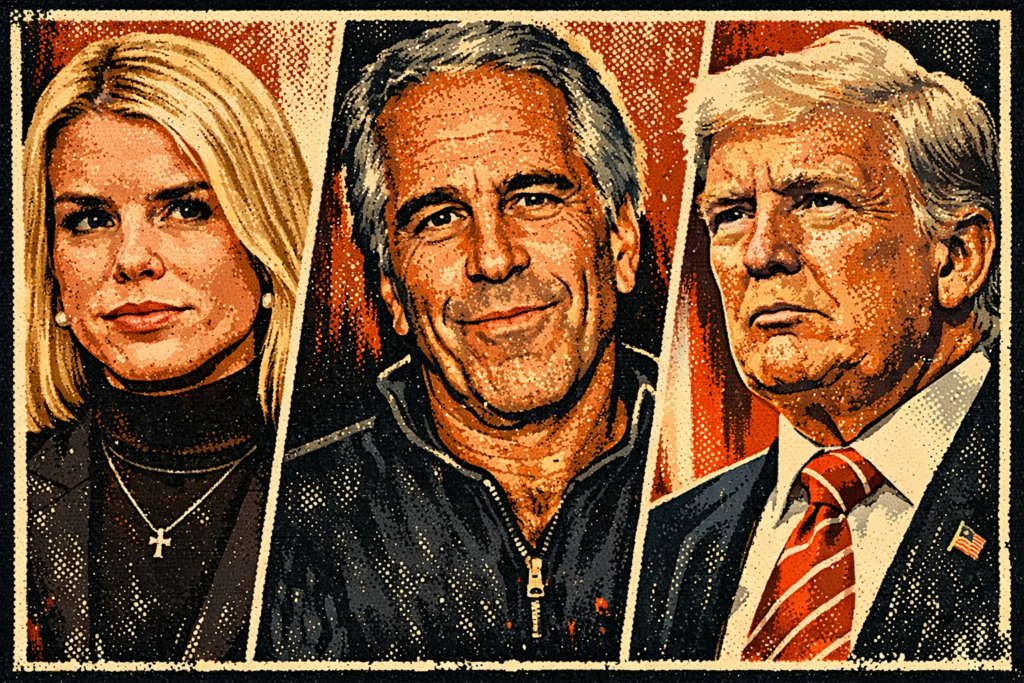
DOJ Accused of Redacting Trump Epstein Emails
The U.S. Department of Justice (DOJ) under President Donald Trump is facing renewed criticism for how it has redacted and released documents tied to the long-running Jeffrey Epstein investigation after lawmakers discovered that emails involving Trump’s lawyers were improperly obscured in the public file release.
More than 3 million pages of internal DOJ files related to Epstein’s crimes have been disclosed under the Epstein Files Transparency Act — a law requiring the government to publish investigative records subject to appropriate redactions to protect victims and ongoing investigations. However, while certain information was blacked out to shield victim identities and legitimately sensitive details, members of Congress and press freedom advocates have raised concerns that at least some redactions go far beyond what is legally required.
Rep. Jamie Raskin (D-Md.), the top Democrat on the House Judiciary Committee, has sharply criticized the redactions, calling them “baffling” and accusing the DOJ of concealing potentially politically sensitive material. After reviewing unredacted versions made available to lawmakers under supervision, Raskin highlighted one email from Epstein’s files that was redacted for the public release but appears to contradict a public claim President Trump has made concerning his connection to Epstein.
According to Raskin, the hidden email was forwarded by Epstein to his associate Ghislaine Maxwell and quoted Trump’s lawyers stating that Epstein had not been asked to leave the Mar-a-Lago club but was a guest there — a detail that stands in tension with Trump’s past assertions. Raskin argues that redacting this email lacked a legal basis under the transparency act because it did not involve victim information, ongoing investigation details, or other legitimate redaction grounds outlined in the statute.
The release of the Epstein files has already been controversial for multiple reasons, including heavily redacted victim information left unprotected and victims’ names accidentally included in certain documents, forcing the DOJ to temporarily remove and revise portions of the release. Those earlier mistakes prompted victims’ lawyers to demand judicial intervention, with some arguing that sloppy redactions have endangered survivors by exposing identifying information.

In response to these broader redaction concerns, Raskin and other lawmakers have called for explanations and accountability from the Justice Department regarding what seems to be over-broad concealment of non-sensitive material. Some observers see the specific redaction of the Trump lawyers’ email as politically driven, while the department maintains it is abiding by the letter of the law in shielding only what the statute authorizes.
The controversy has touched on larger questions about transparency obligations under the Epstein Files Transparency Act and whether the DOJ is fully complying with the law’s requirement to make these documents public with only narrowly tailored redactions. Critics have accused the department of using redactions not just to protect legally sensitive information but to potentially shield President Trump and associates from embarrassment or scrutiny.
Deputy Attorney General Todd Blanche and other DOJ officials have publicly defended the department’s approach, insisting that no politician’s name — including President Trump’s — is being suppressed unless required under law to protect victim privacy or sensitive details, though lawmakers like Raskin dispute that explanation.
The timing of the redaction controversy comes amid a broader political debate over how the Justice Department implements presidential directives and handles high-profile investigations. It also underscores the ongoing political stakes surrounding Epstein’s network, the narrative of the late financier’s connections to powerful individuals, and how revelations from internal files are managed by federal authorities.
As lawmakers continue reviewing unredacted materials and pressing for more complete and legally sound disclosures, the DOJ may face additional scrutiny from Congress and public interest groups over both its redaction decisions and how it balances transparency with legal protections. Whether this debate will lead to changes in how the files are released or to formal inquiries into DOJ practices remains an open question.

⚖️ Key Legal Outcome
-
Lawmakers uncovered redactions of an email involving Trump’s lawyers that appears to contradict former assertions by President Trump about Epstein ties.
-
DOJ has publicly released millions of Epstein file pages with redactions meant to protect victims and sensitive details.
-
Members of Congress argue some redactions exceed legal requirements under the Epstein Files Transparency Act.
-
Victims’ names were mistakenly unredacted in earlier releases, leading to withdrawals of documents for correction.
-
DOJ officials maintain redactions are lawful and do not target any politician merely for being mentioned.
📌 Why It Matters
-
Transparency enforcement — Raises questions about how federal agencies interpret and apply transparency laws.
-
Political accountability — Redactions involving President Trump’s legal statements could impact public trust in the release process.
-
Victim protection concerns — Mishandled redactions previously exposed victims’ identities, prompting legal and ethical criticism.
-
Congressional oversight — Lawmakers may push for greater review of the DOJ’s compliance with the transparency act.
-
Legal interpretation debate — Highlights tension between privacy protections and the public’s right to know in high-profile criminal file releases.
