
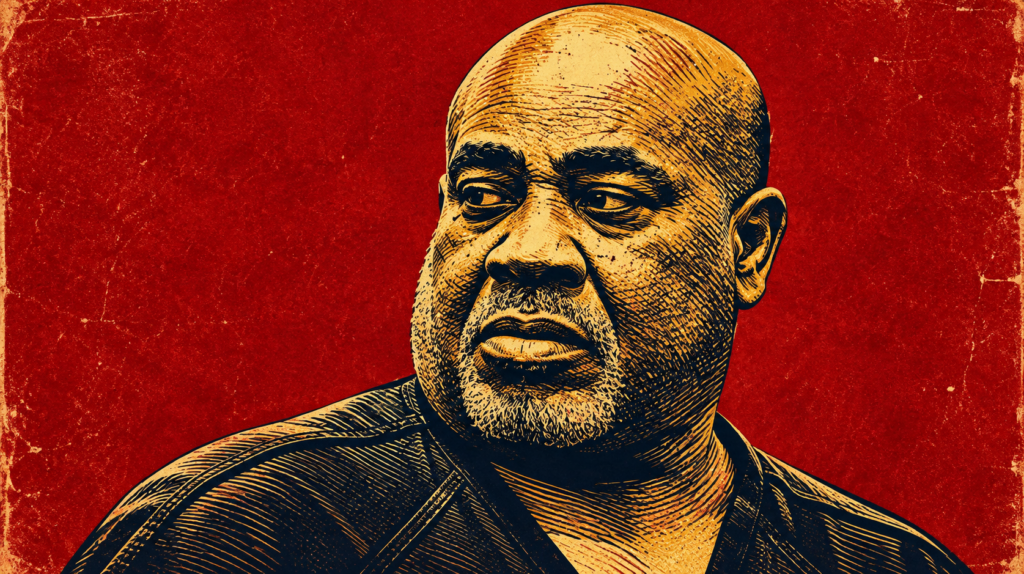
Duane Davis Sentenced in Tupac Shakur Murder Case
Duane “Keffe D” Davis, a former gang leader from California, has been sentenced to 40 years to life in prison for his role in orchestrating the 1996 murder of influential rapper Tupac Shakur. The sentence was handed down on October 13, 2026, in Las Vegas, Nevada, following Davis’s conviction for first-degree murder in August. The ruling represents a major development in a criminal investigation that remained unresolved for nearly three decades and drew sustained public attention because of Shakur’s cultural influence and the circumstances surrounding his death.
Shakur was 25 years old when he was fatally shot in a drive-by attack on September 7, 1996. The shooting occurred in Las Vegas after a heavyweight boxing match and an altercation involving members of rival street groups. Shakur was traveling in a vehicle driven by music executive Marion “Suge” Knight when a white Cadillac approached and gunfire erupted. Shakur sustained multiple gunshot wounds and died in hospital six days later. Knight survived the incident, while the killing became one of the most closely followed unsolved cases associated with American hip-hop.
Investigators struggled for years to establish sufficient evidence to bring a murder charge. The case was complicated by the passage of time, the reluctance of some potential witnesses to cooperate, and the wider atmosphere of gang rivalry surrounding the shooting. The killing was connected to tensions between the South Side Compton Crips and a rival group associated with Shakur’s musical circle. The violence also became linked in public discussion to the broader conflicts that shaped the hip-hop scene during the 1990s, although the circumstances of the individual crime required specific evidence to establish criminal responsibility.
Prosecutors argued that the fatal attack was motivated by revenge following an earlier confrontation at the MGM Grand casino. Davis’s nephew, Orlando “Baby Lane” Anderson, had been involved in a physical altercation with Shakur and members of the rapper’s entourage. According to the prosecution’s account, Davis and associates subsequently sought retaliation. Davis was accused of helping organize the attack and supplying the firearm used by others in the vehicle. The prosecution maintained that his involvement in planning and facilitating the killing made him criminally responsible even though he was not identified as the person who fired the fatal shots.
A significant breakthrough came from Davis’s own statements about the shooting. Over the years, he discussed his alleged involvement in interviews and publicly described events connected to the killing. He also published a memoir in which he recounted his version of the incident. Investigators drew on these statements, along with material from earlier interviews with law enforcement, to develop a case against him. Authorities arrested Davis in 2023, marking a turning point in an investigation that had remained without a murder charge for almost 27 years.

During the trial, prosecutors presented Davis’s public accounts as evidence that he had participated in arranging the attack. They argued that his statements described a retaliatory plan and his role in making the shooting possible. The defense challenged the reliability of those accounts, contending that Davis had exaggerated or embellished his story and that his public descriptions were not necessarily trustworthy. His attorneys also emphasized the absence of physical evidence, including a recovered murder weapon, directly connecting him to the shooting. The competing arguments placed considerable weight on the credibility and interpretation of Davis’s own words.
The jury ultimately found Davis guilty of first-degree murder in August 2026. The conviction established his criminal responsibility for the killing under the legal standard applied at trial. It did not, however, conclusively resolve every outstanding question about the shooting, including the identity of the person who fired the weapon. Anderson, whom Davis had identified as the gunman, died in 1998. The other men reportedly present in the Cadillac have also died, leaving Davis as the only person charged in connection with Shakur’s murder. The verdict therefore resolved a central question of legal responsibility while leaving aspects of the historical record unsettled.
At the October sentencing hearing, Judge Carli Kierny imposed a sentence of 40 years to life in prison. The punishment comprised a prison term for first-degree murder and an additional consecutive term associated with the use of a deadly weapon. The judge stressed that the passage of time did not erase the seriousness of the offense or the lasting harm caused by taking a person’s life. The sentence reflects the court’s determination that Davis should face substantial punishment for his role in a killing that deprived Shakur’s family, friends and audience of decades of his potential life and work.
Members of Shakur’s family addressed the court during the sentencing proceedings, describing the enduring personal consequences of his death. His sister, Sekyiwa Shakur, spoke about the loss experienced by the family and the future she believed her brother could have had. Her remarks emphasized the difference between Shakur’s public image as a celebrated musician and his private identity as a son and sibling. The family’s statements also illustrated how the case remained emotionally significant long after the shooting, with the legal process offering an opportunity to acknowledge the lasting grief caused by the murder.
Despite the conviction and sentence, important limitations remain. Davis has indicated that he intends to appeal, meaning the case may continue through the appellate process. His conviction does not establish that every allegation made during the investigation or trial is proven, nor does it settle claims involving other individuals. Public allegations concerning a possible financial incentive or the involvement of other figures have not resulted in additional charges in this case. Prosecutors have indicated that further action against others would depend on the emergence of sufficient evidence. The distinction between allegations, evidence presented at trial and established legal findings remains essential to an accurate account.
The sentencing marks a major milestone in the effort to bring legal accountability for Shakur’s murder, but it does not eliminate every uncertainty surrounding the crime. For Shakur’s family, the ruling represents a formal response to a loss endured for 30 years. For the justice system, the case demonstrates how a cold investigation can develop when new statements and evidence become available, while also highlighting the difficulties of assessing decades-old accounts. For music history and popular culture, the case remains a reminder of the human cost of violence surrounding the entertainment industry during a turbulent period in hip-hop. The outcome closes one important chapter, while any appeal and the possibility of new evidence could shape what follows.

Key legal outcomes
-
Prison sentence imposed: Davis received 40 years to life in prison for his role in Shakur’s murder.
-
First-degree murder conviction: A jury found Davis guilty in August 2026, establishing his criminal responsibility for the killing.
- Deadly weapon enhancement: The sentence includes an additional consecutive prison term associated with the use of a deadly weapon.
-
Appeal expected: Davis has indicated that he intends to challenge his conviction through the appellate process.
-
Other potential suspects remain uncharged: Davis is the only person convicted in connection with the murder; further charges would depend on sufficient additional evidence.
Why it matters
-
Accountability after decades: The case demonstrates that an unresolved homicide can still result in prosecution when investigators obtain sufficient evidence.
-
Impact on the victim’s family: The sentencing hearing gave Shakur’s relatives an opportunity to express the continuing emotional consequences of his death.
-
Importance of admissions and credibility: The prosecution’s reliance on Davis’s public statements highlights how a defendant’s own accounts can become significant evidence in a criminal trial.
-
Legal responsibility beyond the trigger puller: The conviction illustrates how a person accused of organizing or facilitating a murder may be held responsible even if prosecutors do not establish that the person fired the weapon.
-
Continuing public and cultural significance: The case renews attention to the violence and rivalries associated with the 1990s hip-hop scene, while underscoring that unresolved questions must remain distinct from proven findings.
