
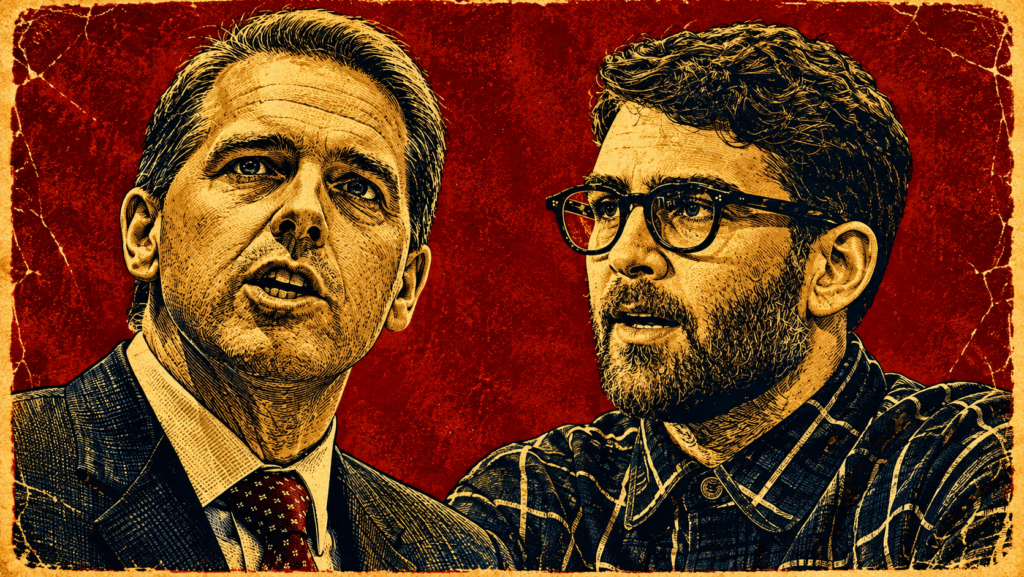
Hasan Piker Sues Scott Jennings for $72.5 Million
Political streamer Hasan Piker has filed a $72.5 million defamation lawsuit against conservative political commentator Scott Jennings, alleging that Jennings falsely portrayed him as supporting the lynching of Black Americans. The lawsuit was filed on October 27, 2026, in federal court in Washington, D.C. It centers on an August broadcast in which Jennings played an edited video of Piker’s earlier livestream comments and accused him of advocating racial violence. Piker argues that the video removed crucial context and that a quotation attributed to him was fabricated. The allegations have not yet been tested in court, and Jennings has not been found liable.
Piker, a prominent Twitch streamer known for progressive political commentary, says the dispute began with a video circulating online in August 2026. According to his complaint, the clip combined fragments from three separate livestreams recorded in 2024. The edited material allegedly removed portions of the original discussion, making Piker’s sarcastic remarks about another commentator appear to be his own political position. Piker contends that the changes transformed criticism of another person’s argument into an apparent endorsement of racist violence.
The underlying remarks reportedly came from an October 2024 livestream in which Piker was reacting to a debate between two Black political commentators, one liberal and one conservative. During the discussion, the conservative participant criticized prosecutors associated with criminal justice reform. Piker says he responded sarcastically by exaggerating what he understood the commentator’s position to imply, referring to an imagined return to an era when lynchings occurred. The lawsuit maintains that Piker was ridiculing the argument rather than advocating the violence he described.
According to the complaint, important words and contextual details were removed from the original footage. Piker alleges that the edited video cut out his introductory phrase identifying the remarks as someone else’s position, as well as his laughter and surrounding commentary. The lawsuit argues that these omissions changed the meaning of the clip. Piker’s legal team says viewers who saw the shortened version could reasonably interpret the comments as a direct statement of Piker’s beliefs, rather than sarcasm directed at another speaker.
The dispute escalated on August 11, 2026, when Jennings reportedly aired the clip on his program, The Scott Jennings Show. According to the lawsuit, Jennings presented an on-screen caption reading, “Let’s go back to a better time when lynchings were happening,” as though it were a direct quotation from Piker. The complaint asserts that Piker never uttered that sentence as a statement of his own beliefs and that the caption did not appear in the original livestream. Piker further alleges that Jennings used the clip to claim he was calling for Black voters to be lynched.
Jennings also posted about the controversy on social media, linking Piker to Michigan Democratic Senate candidate Abdul El-Sayed and accusing Piker of supporting a return to lynchings. Piker’s complaint says the post reached approximately 2.5 million views by the time the lawsuit was filed. The case therefore involves both the original broadcast and the online distribution of the disputed claims. Piker argues that the accusations spread widely enough to damage his professional reputation and threaten the commercial relationships that support his streaming career.

The lawsuit seeks at least $27.5 million in compensatory damages and $45 million in punitive damages, for a total of $72.5 million. Compensatory damages are intended to address losses allegedly suffered by a plaintiff, while punitive damages, when legally available, are intended to punish particularly wrongful conduct and deter similar behavior. Piker alleges that the statements harmed his reputation, caused public humiliation and emotional distress, and damaged business opportunities involving sponsorships, partnerships and audience growth. The requested amount is what Piker seeks, not money the court has awarded.
Piker’s legal team has brought claims involving defamation per se, defamation by implication and false light. Defamation generally concerns false statements of fact that harm another person’s reputation. Defamation by implication can involve a presentation that conveys a false and damaging meaning even if individual excerpts are technically accurate. False-light claims concern portraying someone in a misleading way that is highly offensive, subject to applicable legal requirements. The court will need to assess the specific claims, evidence and relevant legal standards before deciding whether any of them can succeed.
Because Piker is a public figure, his defamation case faces a demanding legal standard. In the United States, public figures generally must establish “actual malice” for defamation claims involving matters of public concern. That term does not simply mean hostility or an intention to criticize someone; it means the defendant knew a challenged statement was false or acted with reckless disregard for whether it was false. Piker alleges that Jennings knowingly used misleading footage or ignored serious doubts about its accuracy. Those allegations will require evidence and judicial review.
The complaint also states that Piker’s lawyers sent Jennings a written demand for a retraction on August 31, 2026. According to the filing, Jennings’ legal representatives acknowledged the demand, but Piker alleges that no meaningful correction or retraction followed. The lawsuit further argues that the disputed material remained publicly available. The absence of a retraction may be relevant to the plaintiff’s argument, but it does not automatically establish actual malice or prove defamation. Jennings will have an opportunity to respond through the legal process, and the court has not ruled on the merits of Piker’s allegations.
The dispute has broader implications for political media, online video editing and the responsibilities of commentators who use viral clips to criticize public figures. Short clips can circulate rapidly, often reaching viewers who never see the original conversation. Editing may be necessary to summarize long broadcasts, but removing context can create disputes over whether a presentation accurately represents what a speaker meant. The legal question is not simply whether a clip generated controversy; it is whether the challenged statements meet the legal requirements for defamation or other claims. Political commentary remains protected, but that protection does not automatically resolve disputes over allegedly false factual assertions.
The case remains at an early stage. Jennings had not publicly responded to the lawsuit in the reports available at the time of filing, and no court has determined whether he is liable. The next steps may include formal service, a response from the defense, motions addressing the legal sufficiency of the complaint and, if the case proceeds, discovery into the original footage, editing process, communications and publication decisions. Any settlement, dismissal, trial or damages award would depend on later developments. For now, the lawsuit presents Piker’s account of what happened and seeks judicial relief; it is not a final finding that either party’s version has been proven.

Key Legal Outcomes
- Defamation lawsuit filed: Hasan Piker filed suit against Scott Jennings in federal court in Washington, D.C., on October 27, 2026.
- $72.5 million sought: Piker requests $27.5 million in compensatory damages and $45 million in punitive damages.
- Three legal theories raised: The complaint includes claims of defamation per se, defamation by implication and false light.
- Public-figure standard applies: Piker generally must establish actual malice for his defamation claims involving public-interest commentary.
- No liability finding yet: The lawsuit remains unresolved, and the allegations have not been established by a court.
Why It Matters
- Context in political media: The case highlights the consequences that can follow when edited clips are presented without the context needed to understand a speaker’s remarks.
- Online reputation: Accusations of advocating racial violence can have serious professional and reputational consequences if shown to be false.
- Freedom of expression: The dispute raises questions about the boundary between protected political criticism and actionable false statements of fact.
- Social media reach: Viral posts can spread controversial claims to millions of viewers before the original material is examined.
- Accountability and evidence: The case will test the allegations through legal procedures rather than treating either side’s public statements as a final determination.
