
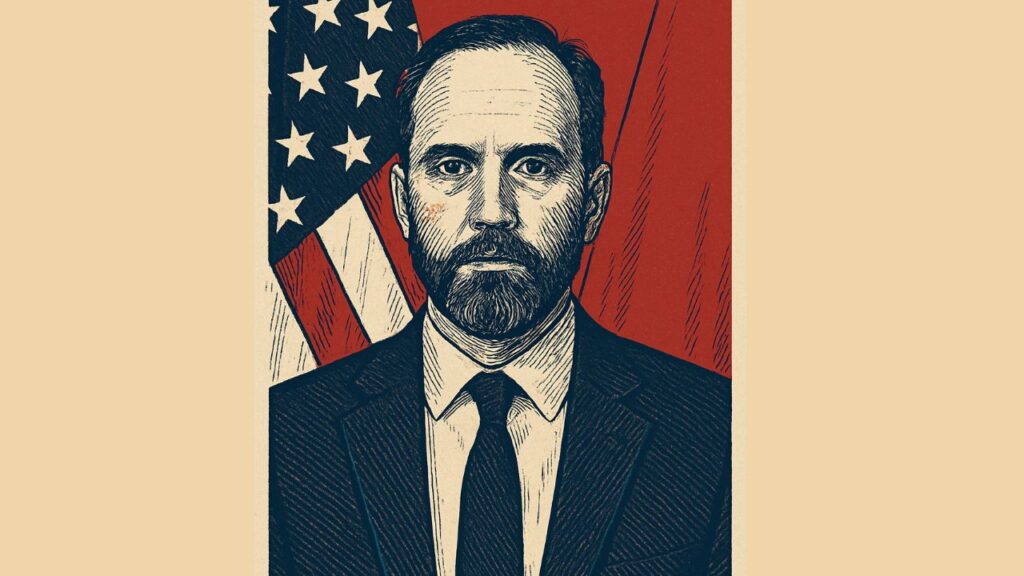
Jack Smith Is Expected To Privately Testify Before House Judiciary Committee In Mid-December
On December 3, 2025, the House Judiciary Committee — led by Jim Jordan (R‑Ohio) — formally issued a subpoena for former special counsel Jack Smith to testify in a closed‑door deposition and to turn over materials relating to his two federal investigations into Donald J. Trump. The deposition is scheduled for December 17, 2025, and documents must be submitted by December 12.
Smith led high‑profile DOJ probes into Trump’s alleged mishandling of classified documents (e.g., at Mar‑a‑Lago) and alleged efforts to overturn the 2020 election — including actions related to the January 6 Capitol riot.
Earlier this year, after Trump won re‑election, Smith dropped both cases, citing DOJ policy that bars indicting a sitting president.
Smith’s legal team had previously offered to testify publicly, arguing that this would best address what they see as “many mischaracterizations” of the investigations. But now, the Judiciary Committee — with Republican control — has opted for a closed‑door deposition instead of a public hearing.
The subpoena demands not only testimony but also all relevant documents and communications from Smith’s tenure, including grand‑jury materials and internal memos.
Smith’s camp has warned that without formal authorization from the DOJ, testifying about grand‑jury and classified evidence could carry legal risk. Indeed, under DOJ rules, former officials must get clearance before disclosing certain types of non‑public information.
Whether the DOJ will grant such authorization — and how much Smith will actually be allowed to say — remains unclear. Meanwhile, the subpoena intensifies political scrutiny of how the Justice Department handled the Trump investigations.
In effect: after months of public posturing, the showdown is becoming real — the former special counsel will appear before Congress under subpoena, but under conditions that limit transparency. The legal and political stakes remain high for both sides.

✅ Why This Matters
-
Oversight of presidential‑era investigations: Congress is demanding accountability and transparency over two of the most consequential investigations in recent U.S. history — those into possible election interference and classified‑documents mishandling. This could shape public understanding of whether those probes were lawful, politicized, or botched.
-
Precedent for executive and DOJ accountability: How this plays out may set precedents for how former prosecutors — especially special counsels — can be questioned by Congress after dropping or closing politically sensitive cases.
-
Risks for DOJ confidentiality norms: The demand for grand‑jury materials and sensitive communications raises questions about how long doctrine of secrecy holds post‑investigation, and whether political oversight can override those protections.
-
Political leverage & narrative control: Even though the deposition is closed to the public, what emerges could influence public discourse, legal strategy, and political narratives — especially ahead of a potential 2026 election cycle.
-
Balance between transparency and national‑security secrecy: The case spotlights tension between Congress’s oversight role and the need to safeguard classified and grand‑jury information — a perennial challenge for democratic governance and separation of powers.

📌 Key Legal/Procedural Outcomes
-
The House Judiciary Committee issued a formal subpoena to Jack Smith, requiring him to testify on December 17, 2025, and to produce documents by December 12.
-
Smith is being asked to provide all communications, files and materials from his tenure as special counsel — potentially including grand‑jury and classified‑evidence documents.
-
The testimony will be closed‑door, not public — despite prior offers by Smith to testify publicly.
-
Smith’s attorneys have requested guidance from the U.S. Department of Justice (DOJ) about what is permissible to disclose, warning that revealing grand‑jury or classified information without authorization might breach federal rules.
-
The subpoena represents a renewed congressional push to scrutinize former special‑counsel investigations — possibly signaling further oversight, hearings, or legislation regarding prosecutorial and executive‑branch norms.
🧭 Broader Significance & Context
-
The move underscores a deepening clash between Congress and the Justice Department over oversight powers and secrecy — especially concerning politically charged investigations. How these norms evolve will matter for future special counsels, whistleblowers, and accountability mechanisms.
-
For supporters of the original Trump investigations, this may be seen as an effort to bury or undermine legacy evidence. For critics, it could be viewed as a legitimate attempt to reevaluate possible overreach or prosecutorial misconduct. Either way, public trust in such investigations could hinge on how this plays out.
-
This could influence DOJ policy on how long non‑public investigative materials remain sealed after cases are closed — and under what conditions they may be disclosed to Congress or the public.
-
Broader political implications abound: given the former president’s continued influence and possible future aspirations, what emerges from Smith’s testimony could shape campaign narratives, public perception, and even future policy debates.
-
Finally — beyond just Smith or Trump — this episode is about institutional norms: how democracies deal with powerful individuals, classified information, and the balance between secrecy and accountability in the name of justice.
