
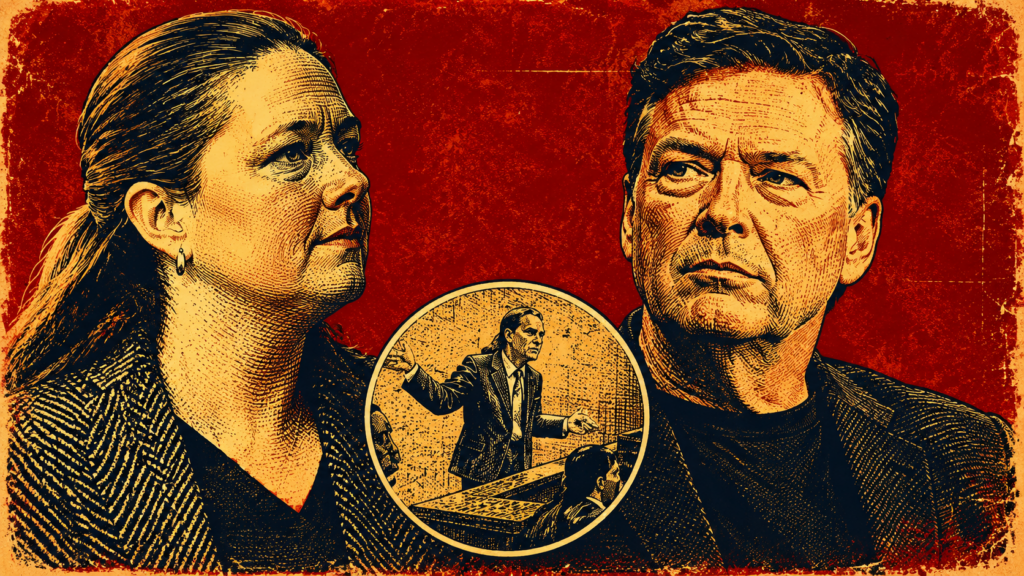
Judge Rules Trump Administration Unlawfully Fired Maurene Comey
A federal judge has ruled that the Trump administration unlawfully fired Maurene Comey, a former federal prosecutor in New York and the daughter of former FBI Director James Comey. The decision, issued on October 26, 2026, represents a significant development in the legal debate over presidential authority, civil service protections, and the independence of federal law enforcement. U.S. District Judge Jesse M. Furman concluded that the government violated legal and constitutional limits when it dismissed Comey from her position in July 2025. The ruling also provides a measure of relief to a prosecutor whose dismissal had become part of a broader controversy over personnel changes within the Justice Department.
Maurene Comey served for nearly a decade as an assistant U.S. attorney in the Southern District of New York. During her tenure, she worked on several high-profile criminal cases, including prosecutions involving Jeffrey Epstein associate Ghislaine Maxwell and music executive Sean “Diddy” Combs. Court records described her as having received strong performance evaluations and positive assessments from supervisors and colleagues. Despite that professional history, she received a termination notice from Justice Department officials in Washington on July 16, 2025. The notice cited presidential authority and federal law but did not provide a specific explanation for her dismissal.
Following her termination, Comey filed a lawsuit against the Justice Department and other government officials. She argued that her firing violated the constitutional separation of powers, federal civil service protections, and her rights under the Fifth Amendment’s Due Process Clause. She also raised a First Amendment claim. Comey alleged that her dismissal was motivated, at least substantially, by her relationship to her father, who had become a longstanding political adversary of President Donald Trump, or by perceptions about her political affiliation and beliefs. Those claims formed the basis of her challenge to the legality of the government’s decision.
The Justice Department defended the dismissal by arguing that federal prosecutors exercise executive authority on behalf of the president and can therefore be removed by the president or attorney general without the restrictions Comey invoked. Government lawyers relied on statutory language providing that assistant U.S. attorneys are subject to removal by the attorney general. They also maintained that the executive branch must retain sufficient control over lawyers who represent the federal government in criminal proceedings. The dispute placed two competing principles at the center of the case: the president’s authority to supervise executive officials and Congress’s power to establish legal protections for certain federal employees.

Judge Furman rejected the administration’s broad argument that Congress cannot place meaningful limits on the removal of federal prosecutors. His opinion explained that the government’s position conflicted with longstanding Supreme Court precedent recognizing that Congress may regulate the removal of certain executive officers. The judge concluded that accepting the administration’s interpretation would upset the constitutional balance between the branches of government. His decision emphasized that the executive branch does not necessarily possess unrestricted authority to dismiss every federal official who performs work connected to presidential powers. The ruling therefore challenges the government’s effort to treat career prosecutors as employees who can be removed without regard to applicable statutory and constitutional protections.
The court found that Comey’s termination violated the constitutional separation of powers, the Administrative Procedure Act, and her rights under the Fifth Amendment and relevant federal employment protections. The decision addressed the legality of the government’s actions rather than simply expressing disagreement with the administration’s personnel choices. By finding that the dismissal was unlawful, the court established that executive authority must be exercised within the boundaries set by the Constitution and federal law. The ruling did not, however, resolve every claim raised in Comey’s lawsuit, and the parties may continue to dispute the remaining issues.
As part of the remedy, Judge Furman ordered Comey to be retroactively reinstated through December 20, 2025, the date associated with the end of the employment period relevant to her request. The court also ordered back pay for that period. Comey had requested retroactive reinstatement so that the termination would not improperly affect her employment record and eligibility for retirement benefits. She has since entered private practice, joining the law firm Patterson Belknap Webb & Tyler in February 2026. The remedy was designed to address the consequences of the unlawful dismissal without requiring her to return to a government job she no longer holds.
The judge did not finally resolve Comey’s First Amendment claim in the same way as her other claims. Instead, he reserved judgment while indicating that further argument was needed and expressing the view that the claim might be dismissed because she was now working in private practice and no longer sought actual reinstatement. This distinction matters because the ruling should not be interpreted as a final determination that every allegation in Comey’s lawsuit was proven. The court ruled that the firing was unlawful on specified legal grounds, while leaving a separate constitutional issue subject to further consideration.
The case has attracted wider attention because the Trump administration has dismissed multiple career government employees, including prosecutors and FBI personnel, whose work was connected to investigations involving Trump or who were perceived as opposing his administration’s agenda. Critics argue that politically motivated dismissals can weaken the independence of law enforcement and discourage officials from carrying out their duties impartially. The administration, in contrast, has asserted broad executive authority over personnel within the executive branch. Comey’s case provides a concrete judicial examination of those competing positions, particularly when the employee involved is a career prosecutor rather than a political appointee.
The ruling also comes amid separate legal proceedings involving Comey’s father, James Comey, who has faced federal criminal cases during Trump’s second term and has pleaded not guilty to the charges against him. One earlier case against the former FBI director was dismissed after a judge found that the prosecutor who secured the charges had not been lawfully appointed. A separate case has involved allegations of threatening the president, which James Comey has also contested. These proceedings are distinct from Maurene Comey’s employment lawsuit. The family connection is relevant to the context of her allegations about possible political motivation, but it does not by itself establish why the government dismissed her.
The Justice Department has indicated that it disagrees with Judge Furman’s decision and intends to appeal. However, the judge’s ruling did not immediately resolve every issue necessary for an appeal to proceed, leaving further court proceedings possible. The case may become an important reference point in future disputes over the president’s power to remove career officials and the protections available to federal employees. For now, the court has determined that Maurene Comey’s dismissal was unlawful and ordered retroactive reinstatement and back pay for the relevant period. The broader legal debate over executive power, civil service protections, and prosecutorial independence is likely to continue.

Key Legal Outcomes
- Firing declared unlawful: Judge Jesse Furman ruled that the Trump administration violated legal and constitutional limits when it dismissed Maurene Comey in July 2025.
- Separation of powers violation: The court rejected the government’s argument that federal prosecutors can be removed without regard to congressional restrictions.
- Back pay ordered: Comey received an order for retroactive reinstatement through December 20, 2025, and back pay for the relevant period.
- First Amendment claim remains unresolved: The judge reserved judgment on that separate claim while seeking further consideration of its status.
- Justice Department plans to appeal: The government disagrees with the decision, and further litigation may follow.
Why It Matters
- Limits on presidential authority: The ruling reinforces the principle that executive power remains subject to constitutional and statutory constraints.
- Protection for career employees: The case highlights legal safeguards that may apply when federal workers are dismissed.
- Independence of prosecutors: The decision raises important questions about whether career law enforcement officials can perform their duties without improper political pressure.
- Checks and balances: The court’s reasoning underscores the judiciary’s role in resolving disputes between Congress and the executive branch over government authority.
- Consequences for future dismissals: The ruling may influence similar lawsuits involving career prosecutors, FBI employees, and other federal workers who challenge their termination.
