
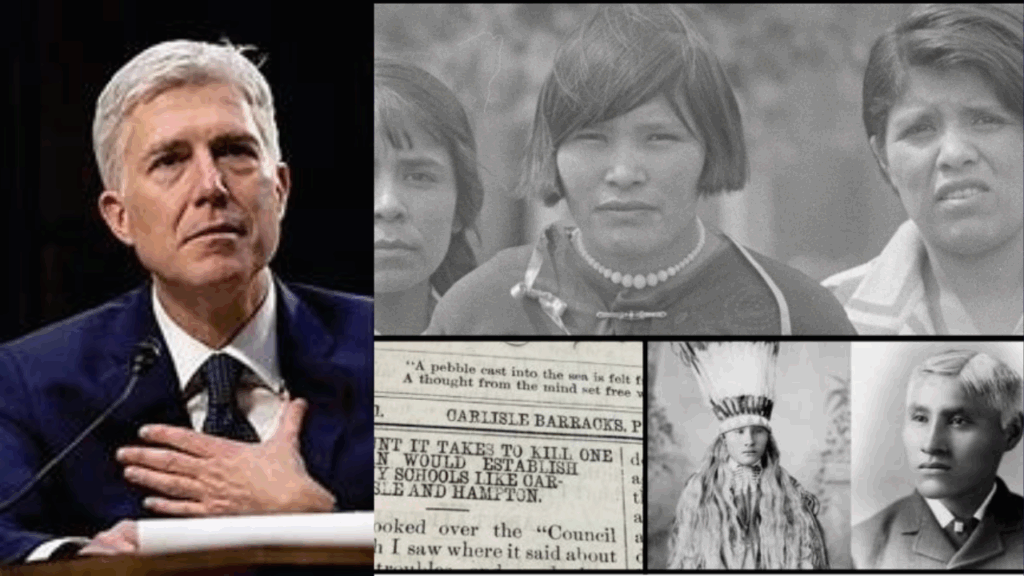
Justice Gorsuch and What Is Owed to American Indians
Justice Neil Gorsuch has long established himself as one of the Supreme Court’s most vocal defenders of Native American rights, grounded in both constitutional text and historical context. In Haaland v. Brackeen—a 7–2 decision upholding the Indian Child Welfare Act (ICWA)—he joined the majority in reaffirming tribal sovereignty. Gorsuch’s concurrence invoked the “Indian-law bargain struck in our Constitution,” underscoring that tribes exist as independent sovereigns with the power to govern internal matters, especially those affecting their children.
Shortly after, the Court addressed Lac du Flambeau Band v. Coughlin, involving tribal immunity under the Bankruptcy Code. In contrast to the majority, Gorsuch dissented, cautioning against attributing Congressional intent to undermine tribal sovereignty absent explicit direction. For Gorsuch, the absence of specific language targeting tribes meant that the law should not apply to them, reinforcing the principle that statutory ambiguity should not be used to erode tribal governance.

These positions are consistent with his broader jurisprudence defending tribal rights. For example, in McGirt v. Oklahoma, he authored the majority opinion affirming that certain reservation lands must be treated as Indian country for purposes of criminal jurisdiction. He has also consistently expressed that treaties with tribes are solemn commitments, and tribal sovereignty endures unless Congress clearly acts to void it.
Gorsuch’s record reflects a jurisprudential philosophy steeped in originalism and textual fidelity. He strives to align modern rulings with historical and legal understandings of tribal sovereignty, rejecting judicial shortcuts that diminish the rights of Native nations embedded in treaties and constitutional provisions.
In sum, Gorsuch’s consistent pattern—across multiple cases and legal questions—signals a principled and unwavering commitment to upholding Native American self-governance. His approach places tribes on equal constitutional footing, greater than that often granted by other justices, and reinforces the foundational role of federal treaties and doctrines in preserving tribal autonomy.

Key Legal Outcomes
-
Reaffirmed tribal sovereignty in Haaland v. Brackeen via ICWA’s constitutionality.
-
Preserved sovereign immunity by dissenting in bankruptcy-related disputes affecting tribes.
-
Honored historical treaties, upholding them as binding legal agreements.
-
Applied originalist methodology, interpreting laws based on framers’ intent concerning tribes.
-
Established consistent jurisprudence, reinforcing tribal rights across diverse cases.
Why It Matters
-
Legal protection for tribes: Gorsuch’s rulings reinforce the legal foundation of tribal self-governance.
-
Judicial consistency: His consistent approach supports predictability and legitimacy in how the Court treats Native issues.
-
Echo of treaty commitments: Upholds the principle that U.S. law must respect treaty-based obligations.
-
Strategic jurisprudence: Offers a model for interpreting legislative ambiguity in favor of underserved, sovereign communities.
-
Long-term boundaries: Sets a precedent limiting potential overreach by federal and state authorities into tribal affairs.
Publication Date: August 21, 2025
Outlet: SCOTUSblog — Commentary by Zachary Shemtob SCOTUSblog+1
