
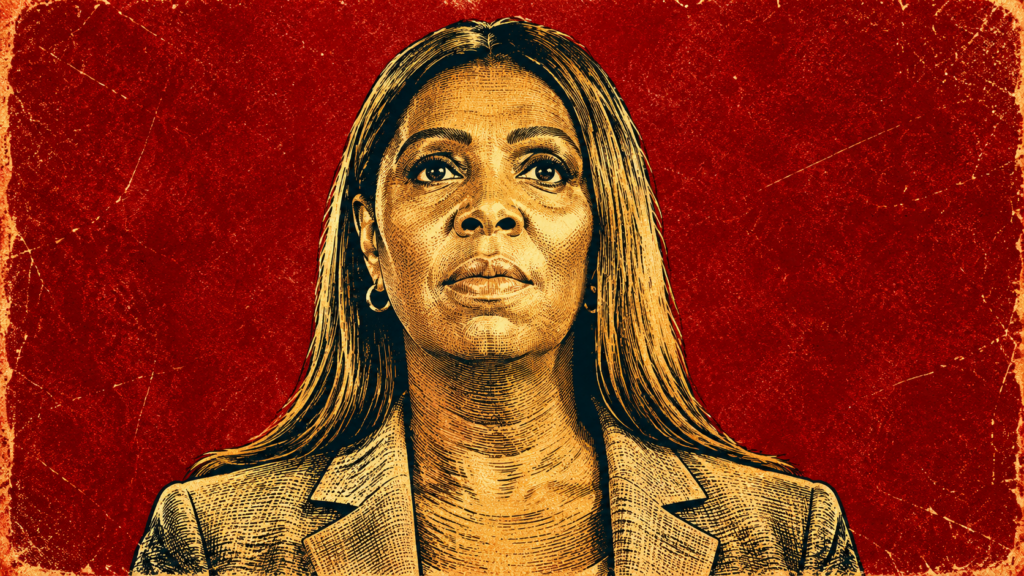
Letitia James Fights Effort to Remove Her From Cornell Case
New York Attorney General Letitia James has asked a state court to dismiss a legal challenge seeking to remove her from a criminal investigation into allegations of sexual assault involving students at Cornell University. In a court filing submitted on October 22, 2026, James and attorneys representing New York Governor Kathy Hochul argued that the challenge lacks legal merit and is premature. The dispute centers on James’s appointment as special prosecutor and whether public comments she made before taking the assignment raise legitimate concerns about her impartiality.
The investigation concerns allegations that a woman identified in court documents as Jane Doe was sexually assaulted at a Cornell fraternity house in October 2024. The woman later filed a civil lawsuit alleging that several fraternity members sexually assaulted her after she became intoxicated and was allegedly given drugs. Seven men have been named in the civil case, and all have denied the allegations. The accusations have prompted renewed scrutiny of how the university, campus police, and local prosecutors handled the matter. The allegations remain allegations and have not been established as criminal convictions.
The case initially failed to result in criminal charges when the original investigation was closed in 2024. The woman subsequently brought a civil lawsuit that raised questions about the response to her allegations. New information later prompted renewed attention to the matter and concerns about whether the investigation had been handled appropriately. New York Governor Kathy Hochul said she had lost confidence in the local district attorney’s handling of the case and decided that state-level intervention was necessary to restore public confidence and ensure the allegations received further examination.
On October 1, Hochul appointed James as special prosecutor through an executive order. The appointment authorized James’s office to investigate the allegations and, if warranted, pursue criminal charges and present evidence to a grand jury. The decision gave the state attorney general a central role in reviewing a case that had generated public criticism over its earlier handling. James said her office would examine the evidence and follow the law. The appointment does not mean criminal charges have been filed or that any of the men accused in the civil lawsuit have been found guilty.
Gillio Lopes, one of the men named in the civil lawsuit, challenged the appointment in court. His attorney, Andrew Miltenberg, argued that James had demonstrated bias before she was formally assigned to the investigation. The challenge points to a September 28 social media post in which James expressed support for the woman and other sexual assault survivors, describing what the woman had allegedly experienced as horrific and unacceptable. Lopes’s legal team contends that the statement could suggest James had already accepted the allegations before independently reviewing the evidence.
In her response, James argued that the petition should be dismissed because it raises claims that are not appropriate for judicial review at this stage. Her office maintained that the governor has legal authority to appoint a special prosecutor and that the challenger has not demonstrated a concrete legal injury. The state also argued that the challenge depends on speculation about what James might do during an investigation or in any future prosecution. Because criminal charges have not been filed, the state contends that the court should not intervene based on predictions about possible future proceedings.
The legal dispute involves an important distinction between expressing support for people who report sexual assault and prejudging the guilt of specific individuals. Lopes’s attorney argues that James’s public comments create a reasonable concern about whether she can assess the evidence impartially. James’s office, by contrast, maintains that a statement expressing empathy for a potential victim does not establish that she has prejudged the case. The court must consider the applicable legal standards for challenging a public prosecutor’s appointment and whether the petition provides a sufficient basis for intervention.

The state’s filing also argues that New York law establishes procedures for addressing a prosecutor’s potential disqualification, and that Lopes has not followed the appropriate route for obtaining the relief he seeks. The attorney general’s office maintains that allowing the challenge to proceed in its current form would improperly interfere with the governor’s discretionary appointment authority and with prosecutorial decision-making. The filing asks the court to reject the petition rather than prevent James from continuing her work. The judge has not, merely by receiving the filing, ruled that James is free from every possible challenge to her role.
The controversy has drawn wider attention because the underlying case raises questions about the responsibilities of universities and law enforcement agencies when students report sexual assault. The woman’s civil lawsuit criticized the handling of her allegations and raised questions about whether relevant information was adequately communicated to prosecutors. Cornell has faced scrutiny over its response and has taken internal disciplinary action, according to reports. However, university discipline, a civil lawsuit, and a criminal prosecution are separate processes, each with different standards and possible outcomes. The absence of criminal charges to date does not itself establish that the allegations are false.
The legal challenge also highlights the safeguards that apply when public officials are appointed to investigate potentially criminal conduct. Prosecutors are expected to evaluate evidence independently and make charging decisions based on the law, not political pressure or public opinion. At the same time, removing a prosecutor can disrupt an investigation and requires a legally sufficient basis. The court will need to weigh the arguments about James’s public statement, the governor’s authority, the applicable disqualification procedures, and whether the challenge is sufficiently developed for judicial intervention.
As of the latest reporting, James is seeking dismissal of the challenge, while Lopes’s legal team continues to question whether she can conduct the investigation impartially. The court’s decision on the petition will determine whether this particular effort to block her appointment can proceed or must be dismissed. Separately, the underlying allegations remain under investigation, and no criminal charges have been reported against the seven men in connection with the alleged 2024 incident. The central questions are whether James may continue as special prosecutor and whether investigators ultimately find evidence that supports criminal prosecution.

Key Legal Outcomes
- James seeks dismissal: The New York attorney general’s office has asked the court to reject the petition challenging her appointment as special prosecutor.
- Appointment remains contested: Gillio Lopes argues that James’s earlier public statement raises concerns about impartiality.
- State defends the governor’s authority: Attorneys for Hochul and James contend that the governor acted within her legal powers when appointing a special prosecutor.
- No criminal charges reported: The dispute over James’s appointment is separate from the underlying investigation, and the seven men have denied the allegations.
- Court decision remains pending: The filing is a request for dismissal, not a final ruling resolving the challenge.
Why It Matters
- Prosecutorial impartiality: The case raises questions about how public statements by prosecutors may affect perceptions of fairness.
- Government appointment powers: The dispute tests the limits of judicial intervention in a governor’s decision to appoint a special prosecutor.
- Sexual assault investigations: The underlying case highlights the importance of carefully reviewing allegations and evaluating how institutions respond to reports of sexual misconduct.
- Rights of the accused: Any investigation or prosecution must respect due process and avoid treating unproven allegations as established guilt.
- Public confidence in justice: How the court handles the challenge may influence public debate over accountability, fairness, and the independence of criminal investigations.
Related:
