
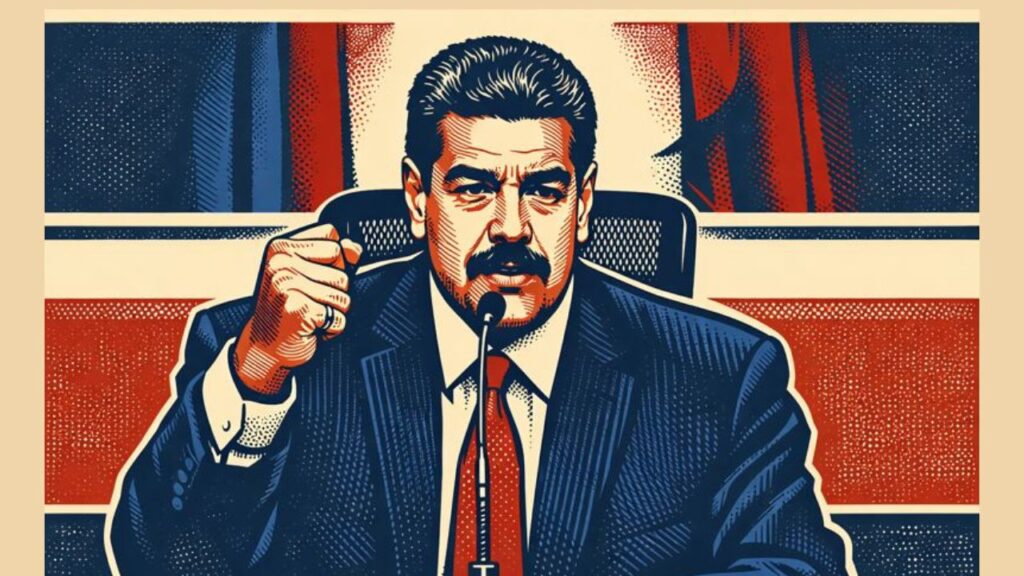
Maduro Pleads Not Guilty as Tensions Rise
In a world‑shaking legal and geopolitical development, Venezuelan President Nicolás Maduro and his wife, Cilia Flores, made their first appearance in a U.S. federal court on January 5, 2026, after being captured by U.S. forces and transported to New York to face criminal charges. The arraignment took place in the U.S. District Court for the Southern District of New York before Judge Alvin K. Hellerstein, where both pleaded not guilty to the indictments against them.
Maduro entered his plea with a translator and declared to the court that he was not guilty and described himself as a “decent man,” even as he asserted through his defense that he was effectively a prisoner of war following his capture at his residence in Caracas during a controversial U.S. military operation. Flores also pleaded not guilty to the charges, which include narco‑terrorism conspiracy, cocaine importation conspiracy, and possession and conspiracy to possess machineguns and destructive devices.
The military operation that brought Maduro and Flores into U.S. custody was ordered by President Donald Trump and executed in Caracas on January 3, 2026, under a campaign known to U.S. planners as “Operation Absolute Resolve” — part of a broader shift in U.S. policy toward direct intervention in Venezuela. Trump has framed the operation as a law‑enforcement action to crack down on alleged decades‑long involvement of Maduro’s leadership in drug trafficking and narco‑terrorism, drawing parallels to past U.S. actions like the 1989 capture of Manuel Noriega in Panama. Counter‑arguments from legal scholars say the intervention likely violates international norms prohibiting use of force against a sovereign nation.
During the court session, lawyers for Maduro stated they would not seek bail at this time. A schedule for the progression of the case — including deadlines for defense motions and potential trial dates — was outlined. Maduro and his wife were formally advised of the charges, basic procedural rights, and appointed legal counsel, although Maduro himself spoke through a court‑provided translator. Legal analysts noted the unusual nature of this appearance — it is rare for a foreign head of state to be arraigned in U.S. criminal court, especially after being removed from power by a foreign military operation.
The situation has triggered significant diplomatic and international reactions. The United Nations Security Council held an emergency meeting where Venezuela’s situation was discussed, with global leaders debating whether the U.S. action constitutes a “crime of aggression” or a lawful counter‑narcotics operation. Many countries, including China, Russia, Brazil, Mexico, Colombia, and Spain, condemned the operation and characterized it as a violation of Venezuelan sovereignty. Meanwhile, the U.S. ambassador defended it as lawful law enforcement rather than a war. The UN Secretary‑General expressed deep concern about regional stability.

In Caracas, Delcy Rodríguez, who had already been sworn in by Venezuela’s Supreme Court as interim president — a position supported by that court’s ruling citing Maduro’s inability to serve — has appealed for a “balanced and respectful” relationship with the U.S. and invited cooperation, while Maduro’s son publicly called for international solidarity against what he termed the “kidnapping” of his father. Diplomatically, countries such as China have called for immediate release of Maduro and Flores, framing the U.S. action as an illegal intervention.
President Trump, for his part, has declared that the U.S. is “in charge” of Venezuela following the removal of Maduro from power and signaled that American oil companies may be involved in rebuilding Venezuela’s devastated oil sector. Trump also issued warnings that Venezuela’s new leader will face consequences if she does not align with U.S. interests. Some U.S. officials have clarified that the U.S. does not intend to formally govern the country but may exert significant influence over policy and transition arrangements.
The charges against Maduro and Flores stem from a long‑running federal case originally unsealed in 2020 that alleges a narco‑terrorism conspiracy involving drug trafficking networks and protection and facilitation of criminal organizations. U.S. authorities claim the Venezuelan leadership provided “cover” and logistical support to narcotics groups and facilitated the trafficking of cocaine into the United States, among other illegal acts. If convicted, these charges carry significant prison terms.

📌 Why This Matters
-
Rare prosecution of a foreign head of state: A sitting/deposed president being arraigned on criminal charges in U.S. federal court is historically unprecedented.
-
International law implications: The U.S. military operation and subsequent prosecution raise complex questions about sovereignty, legality of force, and international norms.
-
Geopolitical tension: Major powers including Russia and China have condemned the action, deepening global diplomatic rifts.
-
Shift in U.S.–Venezuela relations: Trump’s policy signals a dramatic break from past U.S. non‑direct military interventions in Latin America.
-
Economic and strategic stakes: U.S. interest in Venezuela’s oil industry and regional influence shapes the broader context of military and legal actions.
⚖️ Key Legal Developments
-
Nicolás Maduro and Cilia Flores pleaded not guilty to all charges in federal court.
-
Maduro’s arraignment establishes formal judicial proceedings in the U.S. criminal case.
-
Defense has not sought bail for either defendant at this time.
-
FBI/DOJ’s indictments include narco‑terrorism and major drug crimes spanning decades.
-
A future court schedule was set, likely including pretrial motions and evidentiary issues.
