
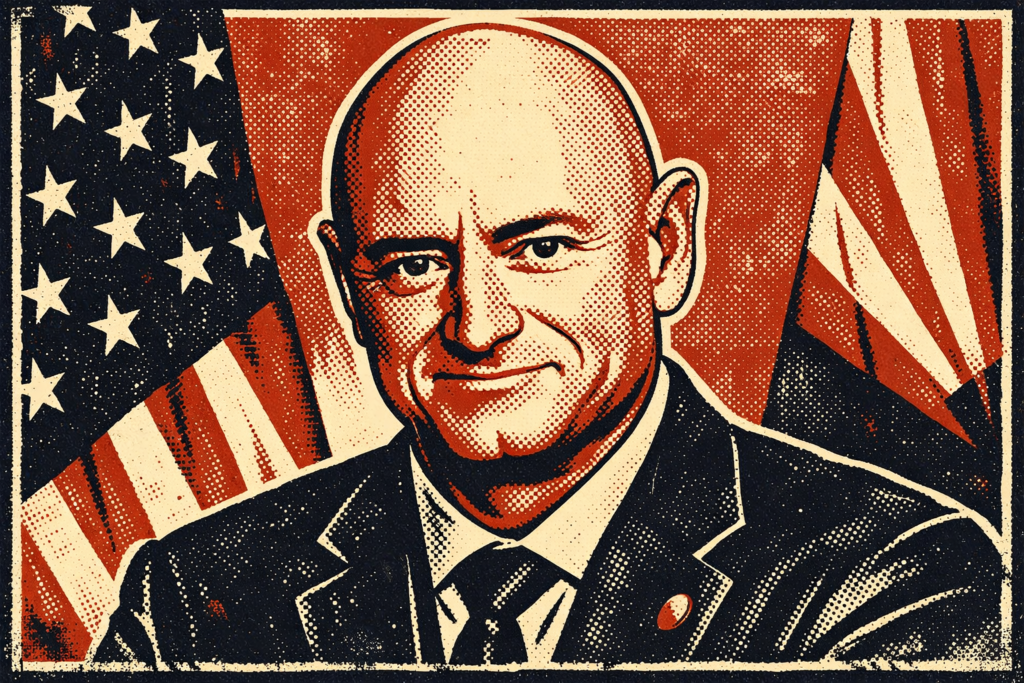
Pentagon Faces Judicial Skepticism Over Mark Kelly Censure Case
A federal appeals court appeared deeply skeptical of the Pentagon’s effort to punish Democratic Senator Mark Kelly over public remarks encouraging military personnel to refuse unlawful orders, in a major constitutional dispute that could reshape the free speech rights of retired military officers in the United States. The closely watched case pits the Trump administration’s claims of military discipline and authority against Kelly’s argument that the government unlawfully retaliated against protected political speech.
The case stems from a November 2025 video featuring Kelly and several Democratic lawmakers with military or intelligence backgrounds. In the video, the lawmakers reminded service members that they are legally permitted to reject unlawful military orders. Kelly, a retired Navy captain and former astronaut, stated: “Our laws are clear: you can refuse illegal orders.” The video emerged amid controversy over President Donald Trump’s use of the National Guard in American cities and military operations targeting suspected Latin American drug-smuggling vessels.
Defense Secretary Pete Hegseth responded aggressively to the video, accusing Kelly and the other lawmakers of undermining military discipline. The Pentagon initiated proceedings to censure Kelly, reduce his retired military rank, and cut portions of his retirement pay. Hegseth and Trump publicly criticized the lawmakers, with some administration allies characterizing the video as “seditious.”
Kelly filed a federal lawsuit in January 2026, arguing that the Pentagon’s actions violated the First Amendment and constituted unconstitutional retaliation for political speech. The lawsuit contends that Kelly, as a retired officer and sitting U.S. senator, retains full constitutional rights to publicly discuss military policy and constitutional obligations. Kelly also argued that warning troops about unlawful orders is not controversial but rather a standard principle taught throughout military education programs, including at West Point and the Naval Academy.
In February, U.S. District Judge Richard Leon issued a preliminary injunction blocking the Pentagon from enforcing its punishment against Kelly while the case proceeds. Leon ruled that Kelly’s speech was “unquestionably protected speech” and described the Pentagon’s actions as a serious constitutional threat to millions of military retirees. The judge emphasized that while active-duty military personnel may face narrower speech protections, courts historically have not applied those same restrictions broadly to retired veterans.
The Pentagon appealed that ruling to the U.S. Court of Appeals for the District of Columbia Circuit. During oral arguments this week, members of the three-judge appellate panel repeatedly questioned the government’s legal position. Judge Florence Pan sharply challenged the Justice Department’s argument that retired military personnel effectively surrender key speech rights unless they abandon their retired military status entirely. She noted that teaching service members to refuse illegal orders is a “textbook example” of lawful military instruction taught at military academies.

Judge Nina Pillard similarly appeared unconvinced by the administration’s reliance on older Supreme Court precedents involving active-duty officers opposing the Vietnam War. Pillard suggested Kelly’s remarks differed substantially because they focused specifically on illegal orders rather than generalized opposition to military operations. Meanwhile, Judge Karen Henderson appeared somewhat more sympathetic to the government’s arguments, noting that retired officers remain technically subject to military recall and court-martial jurisdiction under certain circumstances.
The Justice Department defended the Pentagon’s actions by arguing that retired military officers continue to hold influence over active-duty service members and therefore remain subject to certain military norms and disciplinary authority. Government attorney John Bailey argued that Kelly’s remarks were part of a broader pattern of conduct undermining military discipline rather than merely isolated political commentary. Bailey maintained that speech encouraging disobedience to lawful orders may lose constitutional protection in military contexts, even for retirees.
Kelly’s legal team strongly rejected those claims, describing the Pentagon’s actions as clear political retaliation. Attorney Benjamin Mizer argued that the censure letter itself explicitly targeted Kelly’s public statements and therefore directly violated the First Amendment. Kelly told reporters outside the courthouse that the case involves not only his rights but also “the First Amendment rights of millions of us.”
The dispute has attracted intense national attention because it touches on several politically explosive issues simultaneously: presidential authority, civil-military relations, veterans’ speech rights, and concerns over politicization of the armed forces. Legal scholars note that the Pentagon’s effort to punish a sitting U.S. senator for political speech appears extraordinarily unusual in modern American history. Several experts quoted in earlier reporting warned that allowing such punishment could create a chilling effect discouraging retired military leaders from participating in public debate.
The case also reflects broader tensions between the Trump administration and critics within military and national security circles. In recent months, the administration has faced legal battles involving military policy, Pentagon press restrictions, and alleged retaliation against perceived political opponents. Critics argue the Kelly case represents part of a broader effort to suppress dissent from former military officials and veterans.
If the appeals court ultimately rules in Kelly’s favor, the decision could establish important precedent strengthening constitutional protections for retired military officers engaging in public policy debates. Conversely, a ruling favoring the Pentagon could significantly expand military authority over retirees and potentially reshape the boundaries of protected speech for veterans nationwide.

Key Legal Outcome
- A federal appeals court expressed skepticism toward the Pentagon’s effort to punish Mark Kelly for comments about refusing illegal orders.
- The Pentagon sought to demote Kelly and reduce his retirement pay following a 2025 video statement.
- A lower federal court previously blocked the Pentagon’s punishment, ruling Kelly’s speech was protected by the First Amendment.
- Government lawyers argued retired officers remain subject to military discipline and speech restrictions.
- The appeals court has not yet issued a final ruling on the dispute.
Why It Matters
- Could redefine First Amendment protections for retired military officers.
- Raises concerns about political retaliation against government critics.
- Tests the limits of Pentagon authority over military retirees.
- May shape future civil-military relations and veterans’ speech rights.
- Could establish major constitutional precedent involving political speech and military discipline.
RELATED:
