
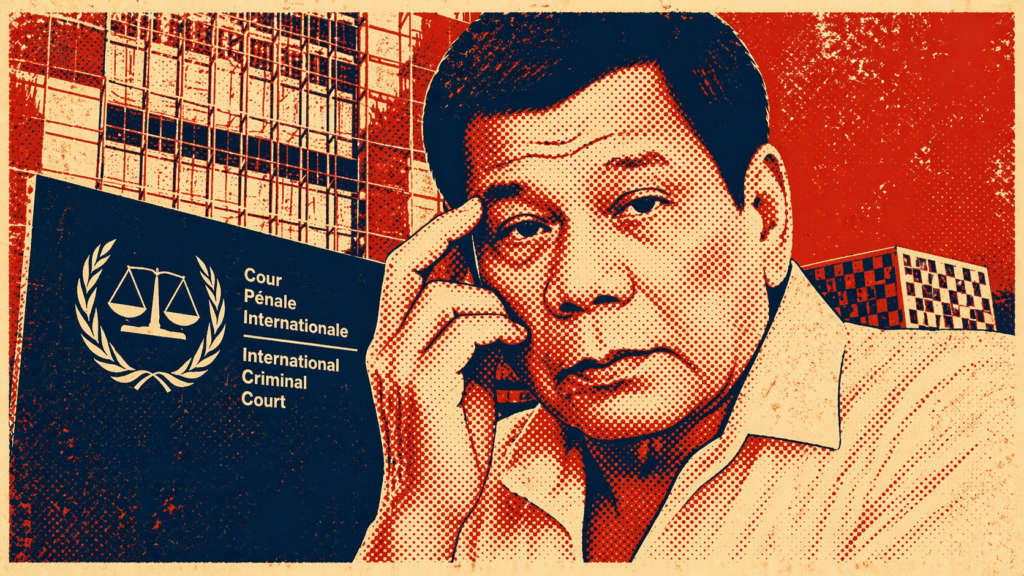
Philippines Ex-President Charged With Crimes Against Humanity
Former Philippine president Rodrigo Duterte is set to stand trial at the International Criminal Court (ICC) after judges formally confirmed charges of crimes against humanity tied to his controversial “war on drugs.” The decision marks a historic moment—not only for the Philippines but also for international justice—placing a former head of state on trial for alleged large-scale human rights violations.
The ICC’s pre-trial chamber unanimously ruled that there are “substantial grounds” to believe Duterte is criminally responsible for crimes including murder and attempted murder. These charges are linked to anti-drug operations carried out during his presidency (2016–2022) and earlier during his tenure as mayor of Davao City. Prosecutors argue that these actions formed part of a “widespread and systematic attack” against civilians, a key legal threshold for crimes against humanity under international law.
The case focuses on multiple incidents of alleged extrajudicial killings. While the ICC charge sheet highlights specific cases involving dozens of victims, human rights groups estimate that the total death toll from Duterte’s anti-drug campaign ranges from over 6,000 officially reported deaths to as many as 30,000. Prosecutors allege that these killings were not random but part of a coordinated policy targeting individuals suspected of drug involvement.
Duterte, now in his 80s, was arrested in 2025 in Manila and transferred to The Hague, where the ICC is based. He has remained in detention since then, with judges recently rejecting his request for release and affirming that the court retains jurisdiction over the case despite the Philippines’ withdrawal from the ICC in 2019. The court ruled that it still has authority because the alleged crimes occurred while the Philippines was still a member.

During earlier hearings, Duterte’s defense team challenged both the ICC’s jurisdiction and the strength of the evidence. They argued that his public statements about killing drug suspects were rhetorical and part of a broader law enforcement strategy rather than direct orders. His lawyers have also cited health concerns and alleged cognitive decline, claiming he may not be fit to stand trial. However, ICC judges rejected these arguments and confirmed that the case should proceed.
Prosecutors, on the other hand, have pointed to Duterte’s own speeches and public statements as evidence of intent. They argue that he not only tolerated but actively encouraged violent crackdowns, allegedly creating or supporting structures such as death squads that carried out killings. The prosecution further claims there was a coordinated plan involving multiple officials to “neutralize” suspected drug offenders.
The confirmation of charges is a critical legal milestone. It does not determine guilt but establishes that there is enough evidence for a full trial. The case will now move to a trial chamber, where evidence will be presented, witnesses will testify, and judges will ultimately decide whether Duterte is guilty beyond reasonable doubt. A trial date has not yet been finalized and could take months or even years to begin.
The ruling has been welcomed by victims’ families and human rights organizations, who see it as a long-awaited step toward accountability. Many families of those killed during the drug war have spent years seeking justice, often without success in domestic courts. International groups describe the ICC proceedings as a rare opportunity to address alleged abuses that were previously shielded by political power.
At the same time, the case remains deeply polarizing within the Philippines. Duterte retains a strong base of support, and his allies continue to argue that his policies were necessary to combat crime and drug trafficking. The Philippine government under President Ferdinand Marcos Jr. has stated that it respects the legal process, while emphasizing the importance of due process for all parties.
Ultimately, the trial of Duterte represents one of the most significant international legal cases in recent years. It raises critical questions about state power, accountability, and the limits of law enforcement policies, especially when they intersect with human rights. The outcome could have lasting implications—not only for Duterte himself but also for how global institutions address alleged abuses by national leaders.

⚖️ Key Legal Outcome
- ICC judges confirmed crimes against humanity charges against Rodrigo Duterte.
- Court found substantial evidence linking him to killings during the drug war.
- Duterte will face a full trial at the International Criminal Court.
- ICC rejected challenges to jurisdiction despite the Philippines’ withdrawal.
- Former president remains in detention in The Hague pending trial.
📌 Why It Matters
- One of the few cases where a former head of state faces ICC trial.
- Sets a global precedent for accountability in anti-drug or security campaigns.
- Highlights limits of state power when human rights violations are alleged.
- Offers potential justice for thousands of victims and their families.
- Could reshape how international law handles extrajudicial killings and state violence.
