
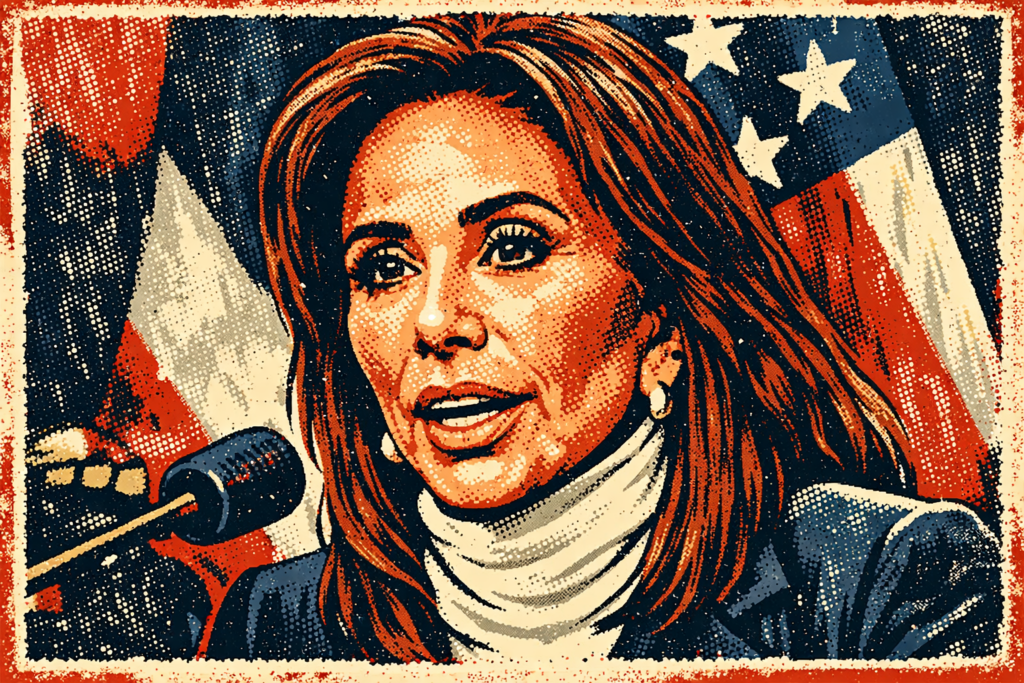
Pirro Abruptly Orders Failed Lawmakers Indictment
According to a new report by The New York Times, Jeanine Pirro, the U.S. Attorney for the District of Columbia and a longtime ally of President Donald Trump, abruptly ordered federal prosecutors to pursue indictments against six Democratic lawmakers — a directive that caught prosecutors off guard and culminated in a rare judicial rebuke.
The lawmakers at the center of the controversy are Senators Elissa Slotkin (D‑MI) and Mark Kelly (D‑AZ) along with Representatives Jason Crow (D‑CO), Maggie Goodlander (D‑NH), Chrissy Houlahan (D‑PA), and Chris Deluzio (D‑PA). They had appeared in a video urging active‑duty service members and intelligence personnel to “refuse illegal orders,” a message that drew harsh criticism from President Trump, who branded the statement as tantamount to sedition and at times suggested it could merit the harshest punishments under law.
Initially, prosecutors in Pirro’s office had been communicating cautiously with the lawmakers’ counsel in mid‑January, describing the inquiry as early‑stage, and not specifying any criminal statute the lawmakers were believed to have violated. The inquiry appeared typical of a preliminary review of potentially sensitive political speech, with prosecutors reportedly emphasizing that more fact‑gathering was required before any criminal charges could be considered.
However, for reasons that remain unclear, Pirro reportedly abruptly instructed her team to seek indictments against the lawmakers — a significant shift in strategy that surprised some prosecutors within her office. Her directive accelerated efforts to present the matter to a federal grand jury, even though no widely recognized criminal offense had been publicly articulated.

This intensified prosecutorial push culminated in a rare outcome: the grand jury declined to indict the lawmakers, concluding the evidence did not support criminal charges. It is exceedingly unusual for federal prosecutors — particularly in politically high‑profile cases — to fail to convince a grand jury to return an indictment, as the standard required (probable cause) is relatively low. The rejection underscored the weakness of the case and the disconnect between Pirro’s directive and the available evidence.
The refusal of the grand jury served as a public rebuke of the prosecution strategy. Lawmakers and critics — both Republican and Democratic — seized on the outcome as evidence of political interference and prosecutorial overreach. Many argued that seeking criminal indictments for lawmakers based on a political video — essentially a form of protected speech — was an inappropriate use of federal criminal law. Senator Mark Kelly publicly called out the effort as a dangerous precedent where expression of political views could be treated as a crime.
Legal observers noted the unusual nature of Pirro’s abrupt directive, saying that federal prosecutions, especially of sitting lawmakers, typically involve prolonged investigations, careful evidence collection, and clear legal theories before any recommendation to seek indictments is made. This sharp turnaround — where prosecutors were initially describing the inquiries as preliminary but then ordered to pursue indictments — struck many former Justice Department officials as irregular and contrary to standard prosecutorial practices.
The episode also highlights growing concerns about political influence in the Department of Justice. Under the Trump administration, Pirro — a former TV host and prominent supporter of Trump’s policies — has been a high‑profile appointee in Washington, D.C., and her prosecutorial decisions have drawn significant public interest and debate. Earlier reporting noted that she was appointed U.S. Attorney following her media career and is widely recognized as a loyal Trump ally.
Pirro’s office reportedly now has set the case aside after the grand jury’s rejection, though it could potentially revisit charges at a later time. For now, the failed indictment attempt stands as a notable episode in the broader narrative of how the Trump administration’s Justice Department is handling politically charged investigations and prosecutions.

⚖️ Key Legal Outcomes
-
An abrupt directive from U.S. Attorney Jeanine Pirro ordered prosecution efforts against six Democratic lawmakers.
-
The lawmakers were investigated in connection with a video urging service members to refuse illegal orders.
-
Federal prosecutors failed to convince a grand jury to indict, a rare outcome reflecting insufficient probable cause.
-
The grand jury’s rejection served as an indirect rebuke of the aggressive prosecutorial strategy.
-
Pirro’s office has paused the case but may revisit it, leaving open future legal options.
🔍 Why It Matters
-
Tests the limits of prosecutorial discretion in politically contentious contexts.
-
Raises questions about political influence in the Justice Department’s decision‑making.
-
Highlights challenges in applying criminal law to political speech and advocacy.
-
The grand jury’s unusual refusal indicates potential disconnect between prosecutors and evidence.
-
May shape future debates on the role of U.S. Attorneys in politically sensitive investigations.
