
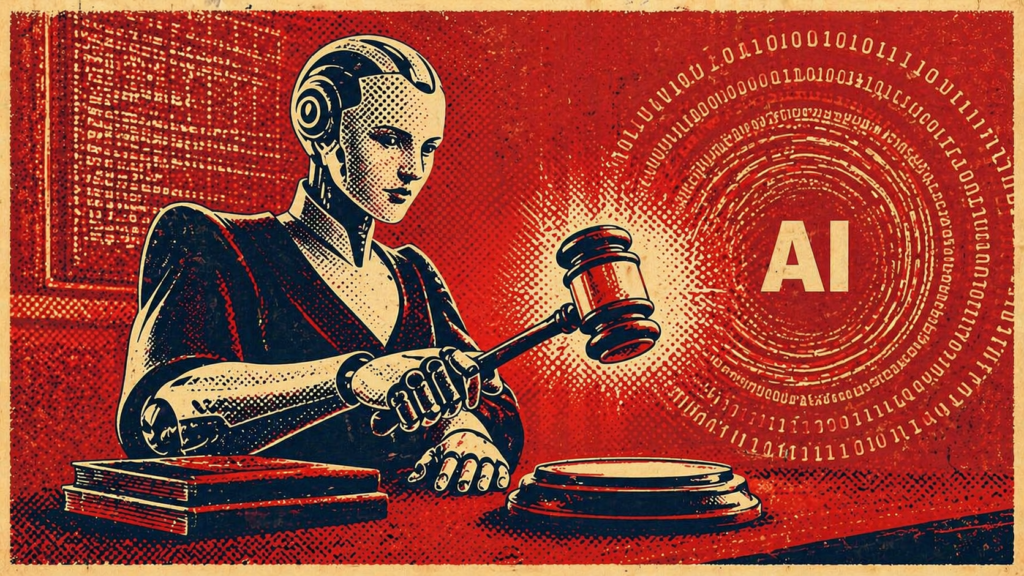
Prosecutor Disciplined Over AI Errors
A Georgia prosecutor has been formally disciplined after a serious legal filing error in a murder case was traced back to the use of artificial intelligence (AI) tools that generated fabricated or incorrect legal citations, according to a ruling by the Georgia Supreme Court. The case highlights growing concerns about the use of AI in courtrooms and the risks it poses to the integrity of the justice system.
The disciplinary action centers on Deborah Leslie, an assistant district attorney in Clayton County, Georgia, who submitted a proposed court order in a murder case that contained multiple legal citations that did not exist or were misattributed. These citations were later discovered to have been generated with the assistance of AI tools, which “hallucinated” case law—producing convincing but entirely fictional references.
The underlying criminal case involves Hannah Payne, who is serving a life sentence plus additional years for murder and false imprisonment. Payne had sought a new trial, but the trial court denied her request. Leslie submitted a proposed order supporting that denial, which was largely adopted by the judge. However, it was later discovered that portions of the order contained fabricated citations, raising serious concerns about the reliability of the legal reasoning used.
The Georgia Supreme Court ultimately found that the inclusion of non-existent case law violated basic legal professional standards. The court emphasized that lawyers are required to verify all citations and cannot rely on AI-generated output without independent confirmation. As a result, the court imposed disciplinary measures on Leslie, including a six-month ban from practicing before the Georgia Supreme Court and mandatory continuing education on ethics, legal writing, and the proper use of AI in legal practice.
The court also vacated the lower court’s ruling and sent the case back for correction, noting that judicial decisions must be based on accurate and verifiable legal authority. Judges further warned that courts should remain cautious when reviewing proposed orders submitted by attorneys, particularly as AI tools become more common in legal workflows.

In its ruling, the Georgia Supreme Court stressed that submitting citations that do not exist “falls far beneath the conduct expected of attorneys” and undermines trust in the judicial system. The justices also urged trial judges to be alert to the possibility that filings may have been generated or assisted by AI systems, even when not explicitly disclosed.
The case is part of a broader national trend in which courts across the United States are increasingly confronting AI-generated legal errors. In several recent incidents, attorneys have been sanctioned for submitting briefs containing fake case law produced by generative AI tools. These tools, while useful for drafting and research, can produce highly convincing but incorrect legal references if not carefully reviewed.
Legal experts say the Georgia case is particularly notable because it involves a prosecutor, not a defense attorney, and because the errors were incorporated into a judicial order that was initially accepted by the court. This raises concerns about how deeply AI-generated mistakes can embed themselves into official legal decisions before being detected.
Courts nationwide are now responding with stricter guidelines and training requirements for attorneys using AI. Some judges have issued warnings that reliance on AI without verification may lead to sanctions, while others are considering formal rules requiring disclosure when AI tools are used in legal drafting.
The incident also reflects a broader challenge in the legal profession: balancing efficiency gains from AI with the need for accuracy and accountability. While AI tools can significantly speed up legal research and drafting, they also introduce risks when users assume outputs are reliable without independent review.
Ultimately, the Georgia Supreme Court’s decision underscores a key principle: AI may assist legal work, but it cannot replace the professional duty of lawyers to verify every legal citation and argument they submit to a court.

⚖️ Key Legal Outcome
- Georgia prosecutor Deborah Leslie disciplined for AI-generated legal citation errors.
- Fake or misattributed case law appeared in a murder case court order.
- Georgia Supreme Court imposed six-month ban from appearing before it.
- Lower court ruling vacated and case remanded for correction.
- Court emphasized lawyers must independently verify all AI-assisted legal work.
📌 Why It Matters
- Marks growing judicial crackdown on AI misuse in legal filings.
- Highlights risks of AI “hallucinations” in serious criminal cases.
- Reinforces attorney responsibility for accuracy in court submissions.
- Could lead to stricter nationwide rules on AI use in law practice.
- Raises concerns about reliability of AI in high-stakes legal decisions.
