
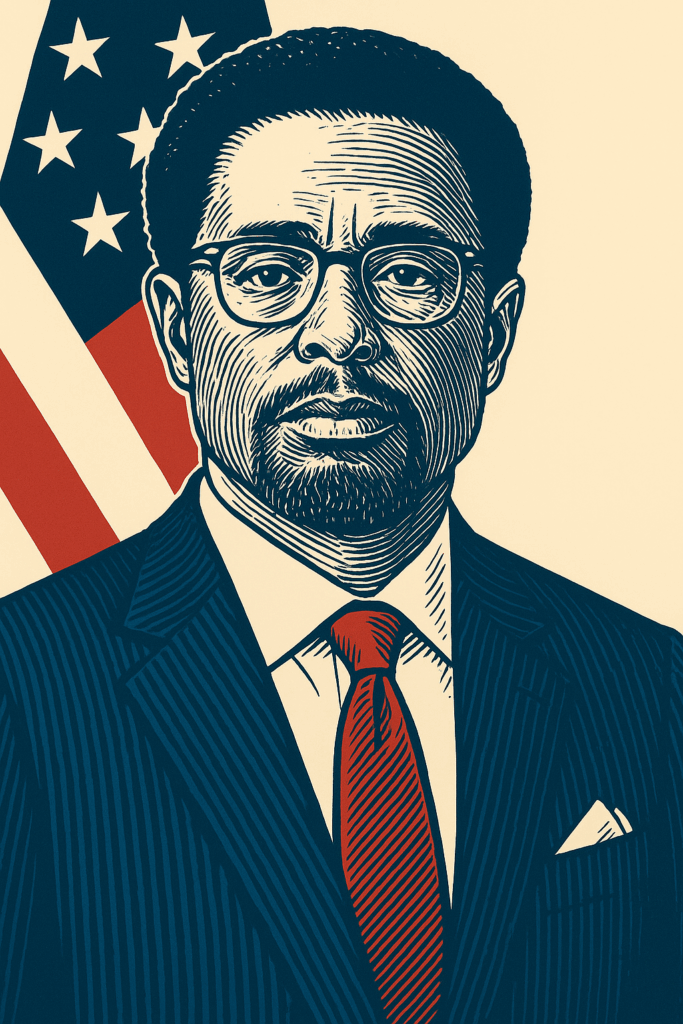
Rail Regulator Sues Trump Over $85 Billion Merger
Key Highlights
-
Robert Primus claims his removal from the Surface Transportation Board was illegal and politically motivated.
-
His firing occurred as the board prepared to review an $85 billion Union Pacific–Norfolk Southern merger.
-
Primus, a career public servant, had served as STB Chair under President Biden.
-
The lawsuit challenges presidential authority over independent regulators.
-
Case could reshape how future presidents control key economic agencies.
Summary and Background
Who Is Robert E. Primus
Robert E. Primus is a veteran public servant and transportation policy expert who spent more than three decades in government before joining the Surface Transportation Board (STB). Originally from Madison, New Jersey, Primus graduated with honors from Hampton University in 1991 with a degree in marketing and later completed executive education at Harvard’s Kennedy School.
Primus began his career in the early 1990s as a congressional staffer for Senator Frank Lautenberg and several House members. Over nearly two decades on Capitol Hill, he served as legislative director and chief of staff to Representative Michael Capuano of Massachusetts, where he developed deep expertise in transportation, infrastructure, and economic development policy. He also advised members such as Nanette Barragán, Tim Ryan, and Tony Cárdenas, focusing on transportation and labor issues.
In 2020, he was nominated to the STB, an independent federal agency that regulates the nation’s freight rail system, overseeing mergers, pricing disputes, and service issues. He was later reconfirmed for a term through 2027 and became vice chair in 2021. In May 2024, President Biden elevated him to Chair of the Board, making him one of the most senior transportation regulators in the country.
Primus earned a reputation as a meticulous and outspoken advocate for balanced rail policy—supporting competition, worker safety, and fair rates for shippers. His approach sometimes clashed with the industry’s largest freight carriers, which sought looser oversight and approval for major consolidations.
The Firing
Primus was abruptly removed from the STB in late August 2025, only weeks before the board was scheduled to review the proposed Union Pacific–Norfolk Southern merger, a deal worth roughly $85 billion. The merger would be the largest in modern rail history, potentially reshaping national freight logistics and impacting thousands of workers.
According to his lawsuit, Primus received an email from the White House informing him that his services were no longer required. He was given no reason that satisfied the statutory requirements for dismissal—namely “inefficiency, neglect of duty, or malfeasance in office.” His departure immediately altered the board’s partisan balance, leaving two Republican members and one Democrat.
Primus’s firing drew swift criticism from labor unions, transportation advocates, and former officials, who saw the move as an attempt by President Trump to clear obstacles to the merger. The president had publicly endorsed the deal after meeting with Union Pacific’s leadership, calling it a “bold step toward American freight dominance.”
The Lawsuit
On October 1, 2025, Primus filed suit in federal court, arguing that his removal violated the law governing independent agencies and the Constitution’s separation of powers. His claim centers on the principle that members of independent boards cannot be dismissed without cause, a safeguard meant to insulate them from political pressure.
Primus is seeking reinstatement to the STB and a judicial declaration that his firing was unlawful. The case, legal experts say, could set a precedent for the limits of presidential authority over regulatory bodies that traditionally operate at arm’s length from the White House.
The lawsuit’s timing is significant: the STB’s merger decision was expected to influence not only the future of rail competition but also broader debates over corporate consolidation in the U.S. transportation sector. By removing a dissenting chair before that review, critics argue, the administration undermined the independence of the board.
Broader Pattern of Removals
Primus’s dismissal is part of a broader trend under President Trump’s second term, in which several Democratic or independent officials at key agencies have been replaced. In recent months, the White House has also removed or replaced members of the Federal Trade Commission, National Labor Relations Board, Amtrak, and National Transportation Safety Board.
Supporters of the president argue that such actions are necessary to align the federal bureaucracy with his “America First” economic agenda, which prioritizes deregulation, infrastructure expansion, and domestic industrial growth. Critics counter that these moves erode the independence of agencies designed to provide nonpartisan oversight and protect public interests.
Implications for the Rail Industry
The STB plays a critical role in shaping competition within the U.S. rail system, which has consolidated significantly over the past several decades. The proposed Union Pacific–Norfolk Southern merger would create a freight behemoth controlling major east–west and north–south corridors, potentially influencing pricing, service reliability, and labor conditions nationwide.
Primus had expressed skepticism about the merger’s potential to reduce competition, increase shipping costs, and disadvantage smaller carriers. His removal, followed by the likely appointment of a more merger-friendly replacement, could pave the way for approval of the deal.
Industry observers note that this fight reflects larger tensions in U.S. economic policy: whether consolidation drives innovation and efficiency or concentrates power in ways that harm workers and consumers.
Legal and Political Significance
The Primus case could become one of the defining legal battles over administrative independence in decades. Courts must decide whether the president’s authority to remove appointees extends fully to members of independent boards like the STB, which Congress intended to function outside direct political control.
If the courts side with Trump, future presidents could have far greater leverage to reshape regulatory agencies quickly, allowing dramatic shifts in policy direction with each administration. If Primus prevails, it would reaffirm limits on executive power and preserve agency autonomy — principles that underpin checks and balances within the U.S. government.
Beyond the legal stakes, the case has symbolic importance. It highlights a deep philosophical divide over how much independence federal regulators should have in overseeing powerful industries — particularly those with vast economic and political influence like rail, energy, and technology.
Why the Story Matters
Robert Primus’s lawsuit is not just about one man’s job. It’s a test of the modern presidency’s reach into supposedly independent institutions and the rules that safeguard fair economic oversight. The timing, coinciding with a transformative $85 billion merger, underscores how questions of governance can directly affect markets, workers, and consumers.
The outcome could influence how all independent agencies — from the Federal Reserve to the FTC — navigate their relationship with the executive branch. It may determine whether future chairs and commissioners can stand up to political interference or whether independence becomes a formality in name only.
For the transportation sector, it could define how far corporate consolidation is allowed to go under the banner of efficiency. For the nation’s governance, it could decide whether independence from the White House remains a cornerstone of regulatory integrity or fades into history.

