
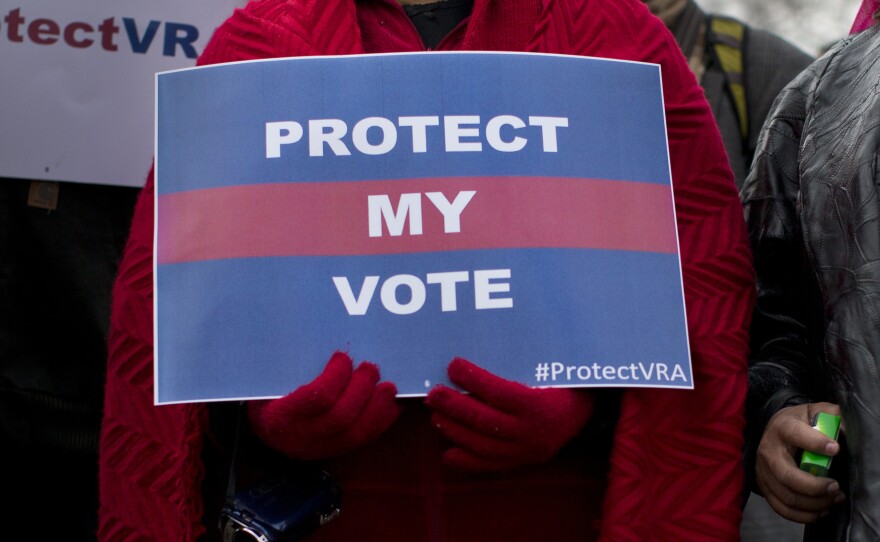
Supreme Court Case Could Shatter Private Enforcement of the Voting Rights Act
📝Summary:
Vox highlights Turtle Mountain Band of Chippewa Indians v. Howe, a pivotal case now before the Supreme Court that may eliminate private citizens’ authority to bring lawsuits under the Voting Rights Act of 1965—one of the Act’s most essential enforcement tools. In May, a three-judge panel on the 8th Circuit (all Republican appointees) ruled that individuals lack an “implied cause of action” to enforce Section 2 of the Act, which prohibits racial discrimination in voting. If upheld at the Supreme Court, only the Department of Justice (DOJ) could enforce these protections—a dramatic limitation given DOJ’s current priorities.
Historically, private suits have been the cornerstone of the Act’s success: over 180 private lawsuits have prevailed in the past four decades, compared to just about 15 enforcement actions by the DOJ, according to federal Judge Lavenski Smith. Without private litigants, constitutional safeguards may fall largely dormant, especially as DOJ enforcement fluctuates with political leadership.

The case dives deeply into “implied causes of action”—the doctrine determining whether a federal statute implicitly allows individuals to sue. In 1969’s Allen v. State Board of Elections, the Supreme Court confirmed that the Voting Rights Act could be privately enforced. However, recent decisions— Talevski v. Health and Hospital Corp. (2023) and Medina v. Planned Parenthood (2025)—have made private enforcement more difficult. Particularly concerning is Justice Gorsuch’s Medina concurrence, which suggests statutes must explicitly reference “rights” to be privately enforceable—a departure from precedent.
The timing is critical: Justice Kavanaugh issued a temporary administrative stay blocking the 8th Circuit decision, keeping the Act’s current protections intact while the Court considers whether to hear the case. Given that Section 2 suits are still pending, including those brought by Native American tribes in North Dakota—whose representation could be directly affected—the outcome will shape whether historically disadvantaged communities retain vital access to legal remedies.

⚖️ Key Legal & Policy Takeaways
-
8th Circuit barred private enforcement of the Voting Rights Act’s Section 2. Vox
-
The Act has historically depended on private lawsuits—~180 private vs. ~15 DOJ cases. Vox+1Turtle Talk+1
-
Supreme Court is reconsidering the 8th Circuit’s ruling; emergency stay issued by Kavanaugh. The Washington Post
-
Precedents like Talevski and Medina are changing how implied private rights are evaluated. Vox+2Vox+2Vox+2
-
If Court strips private enforcement, judicial redress under the Voting Rights Act may vanish
❗ Why It Matters
-
Dilutes one of the most effective modern civil rights tools
-
Converts protections into discretionary DOJ actions, vulnerable to political shifts
-
Weakens democracy in states covered by the 8th Circuit—North Dakota, Missouri, etc.
-
Reduces legal pathways for marginalized communities to challenge discriminatory voting laws
-
Sets precedent that could hollow out citizen-led enforcement across all federal protections
Vox – Read full article
Published: July 22, 2025
🔍 Tags
voting rights act, turtle mountain howe, supreme court, implied cause of action, private enforcement, voting discrimination, section 2 vra, kavanaugh stay, civil rights law
