
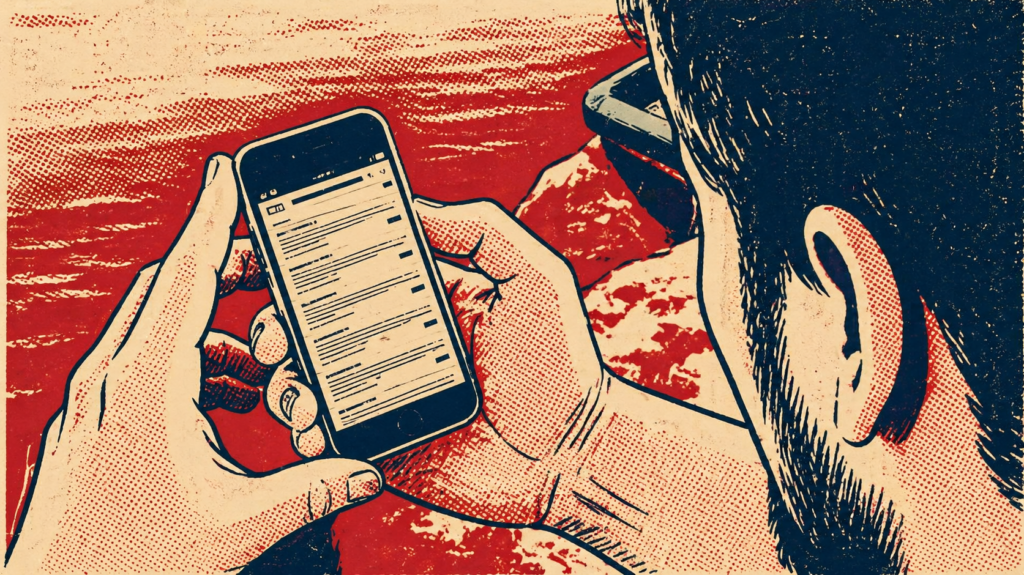
Supreme Court Weighs Police Access To Cellphone Data
The Supreme Court of the United States is currently considering a landmark case that could redefine how law enforcement accesses cellphone location data, focusing specifically on the legality of so-called “geofence warrants.” These warrants allow police to request location data from technology companies—such as Google—covering all devices within a certain geographic area during a specific time window.
At the center of the case is a 2019 armed robbery in Virginia involving defendant Okello Chatrie. Investigators, after exhausting traditional leads, obtained a geofence warrant compelling Google to provide anonymized location data for devices within roughly a 150-meter radius of the crime scene. This initial dataset included multiple individuals—many of whom were not suspects.
Through a multi-step process, authorities narrowed the pool of data to identify potential suspects, eventually linking Chatrie to the robbery. He later pleaded guilty but challenged the constitutionality of the evidence obtained, arguing that the broad data request violated his Fourth Amendment rights against unreasonable searches and seizures.
The legal issue before the Court is whether these broad, location-based data requests amount to unconstitutional “general searches,” which historically have been prohibited under U.S. law. Unlike traditional warrants that target specific individuals, geofence warrants cast a wide net, potentially capturing data from many innocent bystanders. Critics argue this transforms them into digital dragnet searches.
During oral arguments, the justices appeared divided. Some, including Chief Justice John Roberts, raised concerns about the potential for government overreach. Roberts questioned whether such warrants could allow authorities to track individuals attending sensitive locations such as religious services, political meetings, or medical clinics—raising serious civil liberties concerns.
Justice Sonia Sotomayor also expressed skepticism, emphasizing how modern smartphones contain deeply personal information and are nearly inseparable from daily life. She suggested that even short-term location data could reveal intimate details about a person’s behavior and associations.

On the other hand, some justices appeared more sympathetic to law enforcement’s position. They noted that users often voluntarily enable location tracking features on their devices, potentially weakening their expectation of privacy. Justice Samuel Alito and others suggested that individuals who share data with third-party companies may have limited constitutional protections under existing legal doctrines.
The federal government, defending the practice, argues that geofence warrants are a critical investigative tool, especially in cases where traditional methods fail. Prosecutors say the warrants are typically structured in stages—starting with anonymized data and narrowing down to specific individuals—thereby balancing investigative needs with privacy protections.
However, privacy advocates and legal scholars warn that such safeguards may not be sufficient. They argue that even anonymized data can reveal patterns of movement and behavior, and that the initial collection of data from large groups of people is itself a constitutional problem. There are also concerns that these tools could be used for mass surveillance, potentially chilling free expression and association.
This case builds on the Court’s 2018 decision in Carpenter v. United States, which held that police generally need a warrant to access historical cellphone location data. The current case goes further by addressing whether warrants that are broad and non-specific—covering multiple unknown individuals—can meet constitutional standards.
The implications are far-reaching. A ruling in favor of the defendant could significantly restrict law enforcement’s ability to use geofence warrants, requiring more targeted and narrowly tailored requests. Conversely, a ruling in favor of the government could expand police powers to access digital location data, potentially setting a precedent for broader surveillance practices.
Ultimately, the case represents a critical moment in the ongoing effort to reconcile constitutional protections with rapidly evolving technology. As smartphones and digital services continue to track vast amounts of personal data, the Court’s decision will play a key role in defining the boundaries of privacy in the digital age.

⚖️ Key Legal Outcomes
- Supreme Court of the United States is reviewing legality of geofence warrants.
- Case involves Okello Chatrie challenging use of broad cellphone location data.
- Lower courts allowed evidence despite finding constitutional concerns.
- Justices are divided over privacy vs law enforcement needs.
- Final ruling could redefine Fourth Amendment protections in digital age.
📌 Why It Matters
- Could determine limits of police access to cellphone location data.
- Impacts privacy rights of millions of smartphone users.
- May restrict or expand mass data collection by law enforcement.
- Builds on precedent from Carpenter v. United States.
- Will shape future rules on AI, data tracking, and surveillance technologies.
