
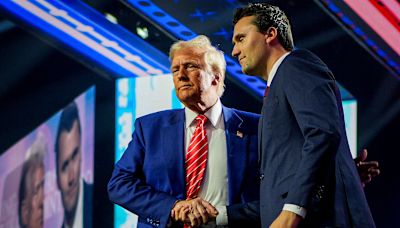
The president and his allies have gone well beyond the evidence in claiming the left was responsible for Kirk’s death
Charlie Kirk, conservative activist and founder of Turning Point USA, was shot dead during a speaking event at Utah Valley University in Orem, Utah, on September 10, 2025. He was speaking on campus before an audience when a sniper-style shot was fired from a nearby rooftop. Authorities later recovered a high-powered bolt-action rifle and arrested 22-year-old Tyler Robinson, who was tied to the murder via DNA evidence.
The FBI revealed that Robinson had written a note threatening Kirk and sent a message suggesting violent intent, though the exact motive is still being investigated. Officials said he acted alone, and there is no evidence yet of ties to any larger network or organization. The killing has shocked political circles across the spectrum, given Kirk’s prominent role in conservative activism and close alignment with the Trump administration.

In the days following the assassination, senior Trump officials — including Vice President JD Vance and Deputy Chief of Staff Stephen Miller — argued that the killing reflected a broader climate of hostility fomented by left-leaning groups. They accused major nonprofit organizations, universities, and media outlets of fostering rhetoric that encourages violence. The administration is weighing aggressive measures, such as revoking tax-exempt status for certain nonprofits and directing DOJ and DHS to investigate “radical networks.”
President Trump himself has leaned into the tragedy, calling Kirk’s death a “dark moment for America” and blaming the “radical left lunatics” for what he described as a campaign of intimidation and violence against conservatives. At rallies, Trump has vowed to “beat the hell out of” those he says are responsible for political unrest, a message that resonates with his base but heightens concerns about escalating rhetoric.
Civil liberties advocates, meanwhile, warn that using Kirk’s killing as justification to crack down on nonprofits and dissenting voices could erode free speech protections. Critics argue that conflating one individual’s actions with broader ideological movements risks politicizing law enforcement and punishing lawful opposition. The case is shaping up as both a criminal prosecution and a flashpoint in America’s debate over political violence, speech, and government power.

Key Legal Outcomes
-
Suspect identified & arrested: Tyler Robinson has been charged and is in custody; tied to evidence from the crime scene (DNA from a towel and a screwdriver) matching him. Reuters+1
-
Notes & threats: Investigators say Robinson wrote a note about “taking out Charlie Kirk” and sent a text message indicating intent. The physical note was destroyed, but its contents were confirmed through interviews and forensic steps. Reuters
-
No motive confirmed: The motive remains unclear; Robinson has no known party affiliation. Authorities are investigating whether ideology played a role. Reuters+1
-
Federal government response: Vance, Miller, and other senior administration figures are pushing action through DOJ, DHS, and oversight of nonprofit & foundation operations. Politico+1
Why It Matters
-
Raises tensions around political violence in the U.S. and how quickly rhetoric can lead to real-world harm.
-
Spotlights concerns about free speech & due process if critics are blamed or punished without evidenced wrongdoing.
-
Could lead to policy changes or legal actions targeting nonprofit groups or media entities, especially those involved in political discourse.
-
May deepen polarization — both in how people interpret Kirk’s death and in how leaders use it politically.
Publication Details & Source
- Publication Date: mid-September 2025 (initial reporting began September 10) Reuters+2Reuters+2
- Major Sources: Reuters, AP News, Politico Reuters+2AP News+2
