
Trump administration asks Supreme Court to intervene in dispute over sex markers on passports
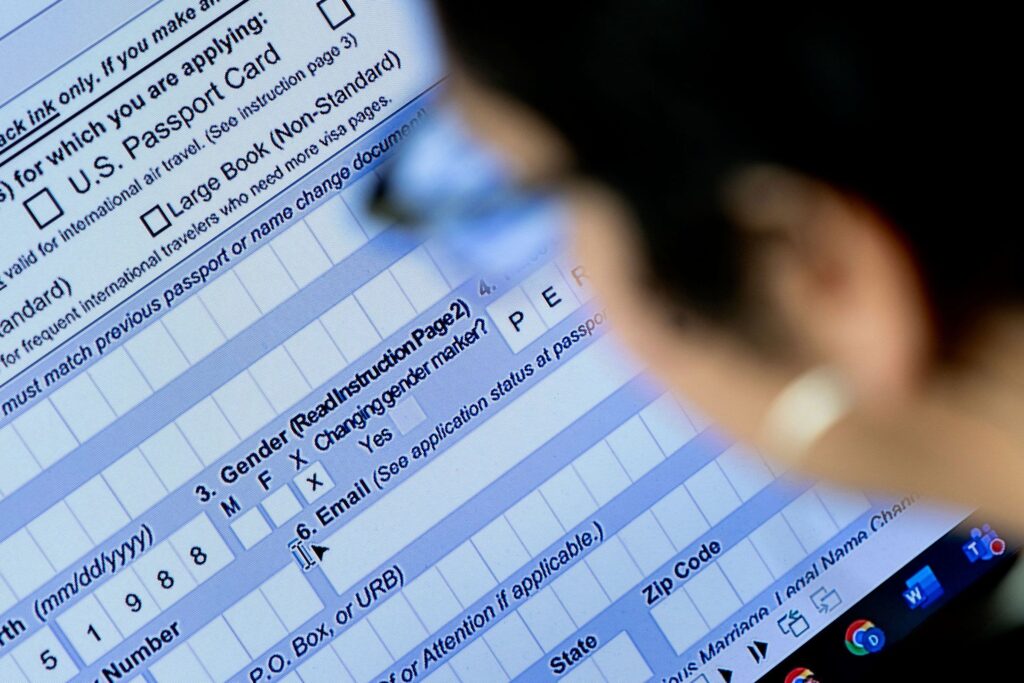
The Trump administration has formally asked the U.S. Supreme Court to allow it to enforce its recently introduced passport policy that restricts gender markers to only “M” or “F,” based on the sex listed on an individual’s birth certificate. This move reverses the policy under the Biden administration, which had permitted applicants to self-select gender designations including “X” for nonbinary and those whose gender identity does not align strictly as male or female.
Under an executive order signed in January 2025, “sex” was defined in strictly biological terms, and the State Department was directed to require that official documents reflect the birth certificate sex marker. The “X” option and self-attestation for gender identity have been eliminated in passport application processes.

A group of seven transgender and nonbinary plaintiffs, represented by the ACLU, filed suit challenging the policy as unconstitutional. A federal judge, Julia Kobick (appointed under the Biden administration), issued a preliminary injunction blocking enforcement of the policy for these plaintiffs. Kobick found that the policy likely violates the Equal Protection Clause and that it is motivated by animus toward transgender people. The judge also expanded that injunction in June to cover a broader class of applicants needing to renew or change their passports or gender markers.
The administration’s appeal to the Supreme Court seeks an emergency stay of the lower court’s injunction so that the State Department can once again enforce the “two-sex” policy while the litigation proceeds. The government argues that the lower court’s order harms U.S. foreign policy interests and that the Constitution does not require recognition of respondents’ preferred definitions of sex.

Why it matters
-
Impacts identity and dignity of transgender and nonbinary individuals who may be forced to present documents mis-aligned with their gender identity.
-
Raises constitutional questions about equal protection, animus, and whether government policy must accommodate gender identity in official documents.
-
Sets precedent for how broadly transgender rights will be recognized in documentation and travel, especially regarding federal versus state power.
-
Poses implications for international travel and foreign policy, since passports need to be accepted internationally.
-
Illustrates the broader tug-of-war between executive orders setting policy and courts enforcing constitutional protections.
Key Legal Outcomes
-
A federal district judge blocked enforcement of the two-sex birth-certificate-based passport policy for some plaintiffs, issuing a preliminary injunction. CBS News+1
-
The injunction was later expanded to cover a certified class of applicants (renewals, new passports, etc.) needing an “X” marker or gender identity aligned marker. CBS News+2AP News+2
-
The State Department’s policy change (eliminating “X” marker, requiring biological sex on passports) is under emergency appeal at the Supreme Court. CBS News+2Reuters+2
-
Judge Kobick found that the policy is likely unconstitutional, motivated by animus, and fails under equal protection standards. CBS News+1
-
The Supreme Court must decide whether to stay the lower court’s injunction, meaning enforcement of the policy might resume if the stay is granted. CBS News+1
Publication date & Live Link
- Publication date: September 19, 2025 CBS News
- Live link: CBS News: Trump administration asks Supreme Court to intervene in dispute over sex markers on passports CBS News
