
U.S. Judge Blocks Trump Religious Exemption to Birth Control Coverage
On August 13, 2025, U.S. District Judge Wendy Beetlestone (Eastern District of Pennsylvania) issued a nationwide ruling invalidating a Trump-era regulation that allowed employers with religious or moral objections to deny birth control coverage to employees under the Affordable Care Act (ACA). The policies were challenged by the states of Pennsylvania and New Jersey, who argued the exemptions were overbroad and not grounded in necessity or reason. Judge Beetlestone agreed, calling into question the rationale behind the sweeping exemptions and highlighting that they exceeded the limited circumstances where such allowances might be justified.
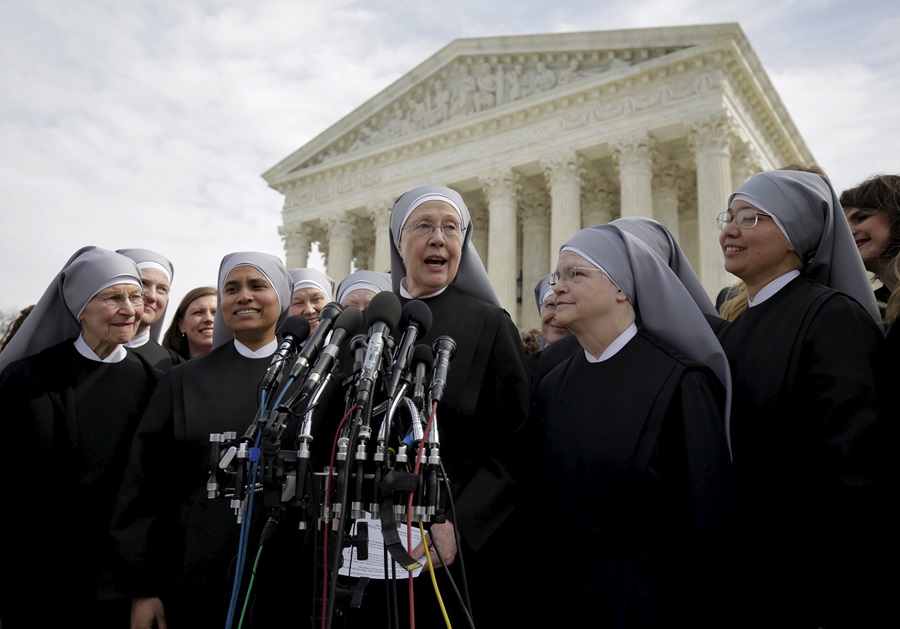
These Trump-era rules were embodied in 2018 regulations intended to broaden the range of employers eligible for exemptions, including non-church religious organizations such as the Little Sisters of the Poor, who had been granted the exemptions and defended them in court. Though the U.S. Supreme Court had previously upheld the rules on technical grounds in 2020, it did not weigh in on their substance or scope. Judge Beetlestone’s recent ruling marks the first time the substantive legality of the policy has been thoroughly evaluated and rejected by a federal court.

Judge Beetlestone criticized the breadth of the exemptions as irrational, noting that the expansion to include a wide swath of nonprofits lacked a meaningful connection to the problem the government purported to address. She indicated that the scope of the exemption far exceeded the needs of employers requiring it on sincerely held religious grounds.
Following the ruling, the religious liberty law firm Becket, representing the Little Sisters of the Poor, swiftly announced plans to appeal the decision. They criticized the ruling as a sweeping attack on religious conscience and a premature judgment that sidestepped constitutional questions, particularly as the court ruled without a hearing after five years of legal proceedings. Becket stressed that the case has involved repeated litigation—including at the Supreme Court—and reaffirmed their intention to continue pursuing remedy, potentially returning to the highest court.

Historical Legal Context
-
-
2011: Under the ACA, contraceptive coverage became mandatory in employer-based health plans, with a narrow exemption for houses of worship and closely affiliated religious entities.
-
2016 (Zubik v. Burwell): The Supreme Court remanded several cases involving religious nonprofits seeking broader exemptions, urging government reconsideration of accommodation mechanisms. Wikipedia
-
2014 (Burwell v. Hobby Lobby): In a landmark 5–4 ruling, the Supreme Court allowed certain for-profit employers to opt out of providing contraception coverage under the Religious Freedom Restoration Act (RFRA). WikipediaThe Guardian
-
2020 (Little Sisters of the Poor v. Pennsylvania): The Supreme Court upheld Trump’s expanded religious exemptions on procedural grounds, finding no violation of the Administrative Procedure Act (APA). Wikipedia+1
-
2025 (This ruling): Judge Beetlestone confronts the essence of the policy itself, rejecting its reasoning and signaling that broad exemptions must be narrowly tailored and justified.
-
Key Legal Outcomes
-
Trump-era religious exemptions struck down—Judge Beetlestone rules the policy overreached and lacked rational basis.
-
Nationwide impact—The decision applies across the U.S. and affects all employers relying on the 2018 rule.
-
Planned appeal—Becket, on behalf of the Little Sisters, will appeal, pointing out unresolved constitutional concerns.
-
Reassessment of RFRA accommodations—This ruling may reshape how religious exemptions are evaluated for sincerity and scope in future cases.
📰 Outlet & Publication Date:
-
Reuters – Published August 13, 2025 Reuters
