
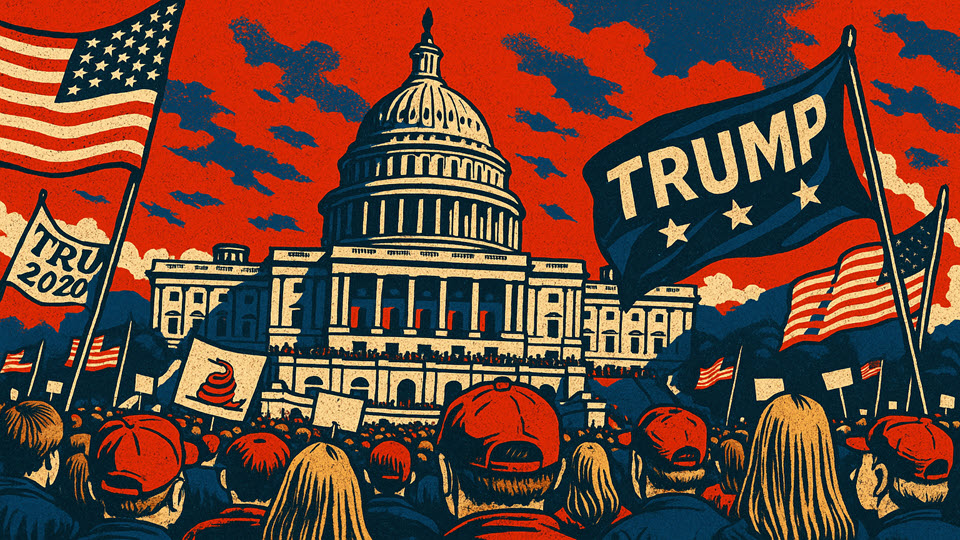
Virginia Passes Legislation Prohibiting Teaching Falsehoods About Jan. 6 Riot
Virginia lawmakers have passed new legislation that would prohibit public schools from teaching what the state considers falsehoods about the January 6, 2021, attack on the U.S. Capitol. The bill is designed to prevent schools from portraying the events of that day as a peaceful protest or promoting claims that widespread election fraud changed the results of the 2020 presidential election.
The measure was approved by the Virginia General Assembly in early March 2026 and represents one of the first state-level attempts in the United States to regulate how the January 6 Capitol attack may be presented in public school curricula. Supporters say the legislation aims to ensure that schools teach historically accurate and fact-based information about the event. Critics, however, argue that the law could limit academic freedom and impose government control over classroom discussions of controversial political topics.
The bill was sponsored by Democratic Delegate Dan Helmer, who said the goal of the legislation is to protect students from misinformation and prevent the rewriting of recent American history. Helmer argued that political figures and online narratives have attempted to portray the Capitol attack as a patriotic demonstration rather than a violent assault on democratic institutions. He said the legislation sets “guardrails” to ensure that public education in Virginia reflects established facts about the attack.
Under the bill’s language, public school instruction cannot “describe, portray, or present as credible” any claim that the January 6 events were a peaceful protest. The legislation also bars schools from presenting as credible the claim that extensive voter fraud occurred in the 2020 presidential election in a way that would change or cast doubt on the election outcome.
Instead, the measure directs that if schools choose to teach about the events of January 6, the instruction must describe the attack as “an unprecedented, violent attack on United States democratic institutions” carried out with the intent of overturning the results of the presidential election.
The bill passed the Virginia Senate by a narrow vote of 21–19, with all Republican senators opposing the measure and Democrats supporting it. The vote reflects the ongoing political divide surrounding interpretations of the January 6 attack and broader debates about how recent political events should be taught in schools.

Supporters of the legislation say it is necessary because misinformation about the attack continues to circulate widely online and in political discourse. Former Capitol Police officer Harry Dunn, who helped defend the Capitol during the riot, praised the legislation and argued that students deserve to learn the truth about what happened that day. Dunn said the attack represented a direct threat to democracy and that accurate education is essential to ensuring that such events are not forgotten or misrepresented.
Former federal prosecutors who handled January 6 cases also supported the effort, saying that attempts to portray the attack as peaceful ignore the violence against police officers and the damage inflicted on the Capitol building during the riot.
Opponents of the bill argue that the government should not dictate how teachers discuss historical events in classrooms. Some critics say the legislation risks becoming a form of political censorship by restricting certain viewpoints or interpretations of history.
The debate in Virginia also reflects a broader national discussion about how schools should address politically sensitive subjects. In recent years, several states have passed laws governing how topics such as race, gender identity, and American history are taught in classrooms. Education policy has increasingly become a political battleground, with lawmakers from both major parties proposing legislation that shapes curriculum content.
If signed into law by Virginia Governor Abigail Spanberger, the measure would set a precedent for other states considering similar policies related to the January 6 attack. Lawmakers in states such as New York have already proposed legislation that would require schools to teach about the Capitol attack and its aftermath as part of civics education.
The Virginia legislation does not require schools to teach about the January 6 attack. Instead, it establishes rules for how the event may be described if educators choose to include it in lessons or classroom discussions.
Supporters argue the law simply ensures accuracy in teaching recent history. Critics say it raises important questions about the role of government in determining historical narratives taught in public schools.
The governor is expected to review the legislation before deciding whether to sign it into law. If enacted, the measure could influence future debates about education policy, historical interpretation, and the balance between combating misinformation and preserving academic freedom in American classrooms.

Key Legal Outcomes
-
Virginia’s legislature passed a bill restricting how schools can teach about the January 6 Capitol attack.
-
The law prohibits portraying the attack as a peaceful protest in school instruction.
-
Schools also cannot present claims of widespread election fraud that would have changed the 2020 election results.
-
The legislation passed the Virginia Senate by a 21–19 vote along party lines.
-
The bill is expected to be reviewed by Governor Abigail Spanberger for final approval.
Why It Matters
-
The law could shape how recent political events are taught in public schools.
-
It reflects growing national debates over misinformation and historical education.
-
The measure may set a precedent for other states considering similar legislation.
-
Critics warn it could affect academic freedom and classroom discussions.
-
The bill highlights ongoing political divisions about the interpretation of the January 6 attack.
