
Why Meta’s Settlement Resembles Big Tobacco
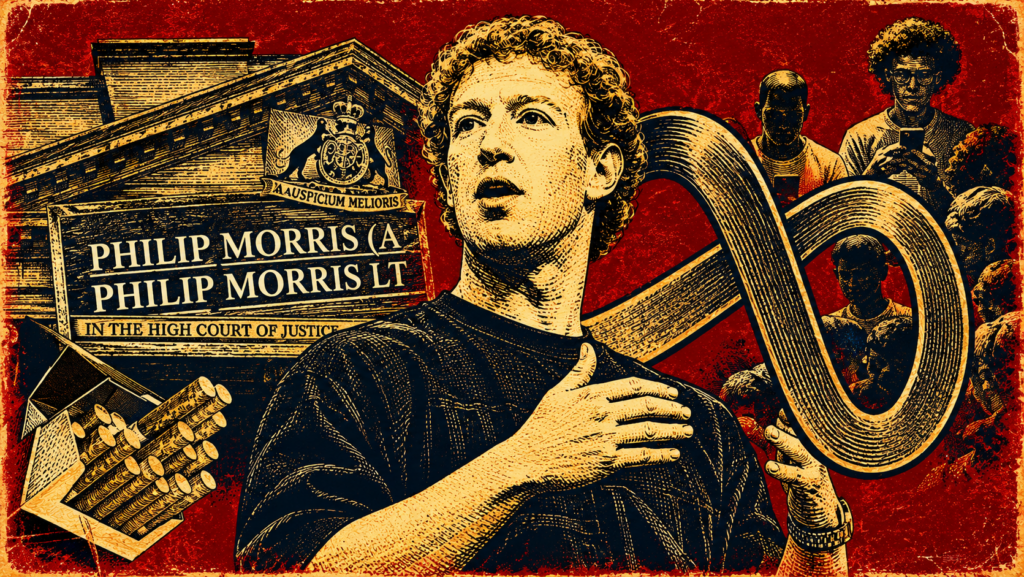
Meta’s landmark settlement of up to US$18 billion with U.S. state attorneys general has revived comparisons with one of the most consequential corporate legal battles in American history: the fight against Big Tobacco. The comparison is not based merely on the size of the financial penalty. Rather, it centers on the argument that both industries faced allegations that they knew about serious harms associated with their products while continuing to target and retain young consumers.
The settlement resolves a major legal confrontation in which U.S. states accused Meta of designing Facebook and Instagram in ways that encouraged compulsive use among children and teenagers. The allegations included claims that Meta understood the risks associated with its platforms, misled the public about those risks and failed to adequately protect young users. The litigation also involved allegations concerning the collection of data from children under 13 without appropriate parental consent. Meta has denied wrongdoing.
The financial scale of the agreement is extraordinary. Meta has committed to $12.7 billion in guaranteed payments over 10 years, with an additional roughly $5.3 billion conditional on competing platforms adopting comparable restrictions. That conditional component is particularly significant because it means Meta is attempting to avoid bearing the full competitive cost of imposing stricter controls on young users if rivals such as TikTok and YouTube continue operating under less restrictive conditions.
The settlement also requires substantial changes to how teenagers use Facebook and Instagram. Meta agreed to introduce a default two-hour daily usage limit, block access between midnight and 6 a.m. unless parental consent is provided, restrict most push notifications during school hours and strengthen age-verification and age-assurance measures. Other changes include additional protections around age-restricted content and modifications to certain engagement features.
Yet the author’s comparison with tobacco litigation raises a deeper question: Does a massive settlement necessarily mean an industry has been fundamentally defeated?
The historical tobacco comparison is particularly powerful because tobacco companies faced decades of litigation and regulatory pressure over allegations that they concealed research about smoking’s health consequences and continued marketing their products despite knowing about the risks. The eventual Tobacco Master Settlement Agreement became a landmark corporate settlement, while the tobacco industry itself continued selling cigarettes.
That distinction is central to the argument about Meta. The settlement imposes substantial financial and behavioural costs, but it does not fundamentally prohibit Meta from operating Facebook and Instagram, nor does it dismantle the engagement-driven business model at the heart of the allegations.

In that sense, the settlement can be interpreted in two very different ways.
From the states’ perspective, it represents an extraordinary enforcement achievement. The District of Columbia attorney general described it as the largest state consumer-protection settlement in U.S. history outside the Big Tobacco settlements of the 1990s. The agreement forces Meta to make concrete changes affecting millions of young users and potentially establishes a template for future technology regulation.
From Meta’s perspective, however, settlement may be preferable to allowing the litigation to proceed toward potentially devastating judgments and court-ordered structural changes. Before the settlement, states were pursuing enormous potential damages, with estimates in some circumstances reaching hundreds of billions of dollars, while Meta warned of theoretical exposure as high as $1.4 trillion. The settlement replaces that uncertainty with a defined financial obligation and specific product changes.
That is where the tobacco analogy becomes especially relevant. The argument is not that social media and cigarettes are identical products or that Meta has been judicially found to have committed the same conduct as tobacco manufacturers. Rather, the analogy concerns corporate litigation strategy: fight aggressively, contest allegations, settle when the financial and legal risks become sufficiently large, accept regulatory restrictions, and continue operating the core business.
There is also an important legal distinction. Meta’s settlement is not the same as a court finding that all allegations against the company were proven. Meta did not admit wrongdoing as part of the agreement. That means headlines should avoid suggesting that a court has definitively ruled Meta caused widespread mental-health harm to children.
At the same time, the settlement should not be viewed in isolation. Meta has faced other significant legal challenges involving children and platform safety. In a separate New Mexico case, for example, a jury found Meta liable under state law and imposed substantial civil penalties, while other litigation has produced verdicts concerning social-media addiction and youth mental health.
The broader significance is therefore larger than the $18 billion price tag. The case demonstrates that social-media platforms are increasingly being treated not simply as neutral communication tools but as products whose design choices can attract regulatory and legal scrutiny.
Algorithms, recommendation systems, notifications, infinite scrolling, age verification and other engagement mechanisms may increasingly become matters of public policy and litigation. The Meta settlement could consequently serve as a warning to the wider technology industry.
Ultimately, the central question is whether the settlement represents a genuine transformation in how Big Tech treats children or simply a costly adjustment that allows the existing business model to continue. The author’s experience with tobacco litigation suggests caution: a record-breaking settlement can impose significant costs without necessarily changing the fundamental economics of an industry.
That makes Meta’s $18 billion agreement both a major legal victory for child-safety advocates and a potential example of how powerful technology companies can absorb enormous penalties while preserving the core business that generated the underlying controversy.

Key Legal Outcome
- Meta agreed to pay up to $18 billion to resolve claims brought by a broad coalition of U.S. state attorneys general concerning child safety and alleged addictive platform design.
- $12.7 billion is guaranteed over 10 years, while approximately $5.3 billion is conditional on similar commitments by competing platforms.
- Meta will introduce major restrictions for teenage users, including a default two-hour daily limit and overnight restrictions.
- The agreement includes stronger age verification and other safety measures, as well as restrictions on notifications during school hours.
- Meta did not admit wrongdoing, meaning the settlement should not be described as a final judicial finding that every allegation against the company was proven.
Why It Matters
- It could establish a new regulatory model for Big Tech: platform design itself is increasingly becoming a target of legal scrutiny.
- It strengthens the legal focus on children’s digital safety: age verification, screen-time restrictions and engagement design are moving into the regulatory spotlight.
- Other platforms could face increased pressure: the settlement explicitly links part of Meta’s financial obligation to comparable commitments from competitors.
- The Big Tobacco comparison highlights a strategic issue: enormous settlements can impose substantial costs without necessarily dismantling the underlying business model.
- It could influence future social-media litigation: the agreement provides plaintiffs and regulators with a major precedent for negotiating restrictions with technology companies.
