
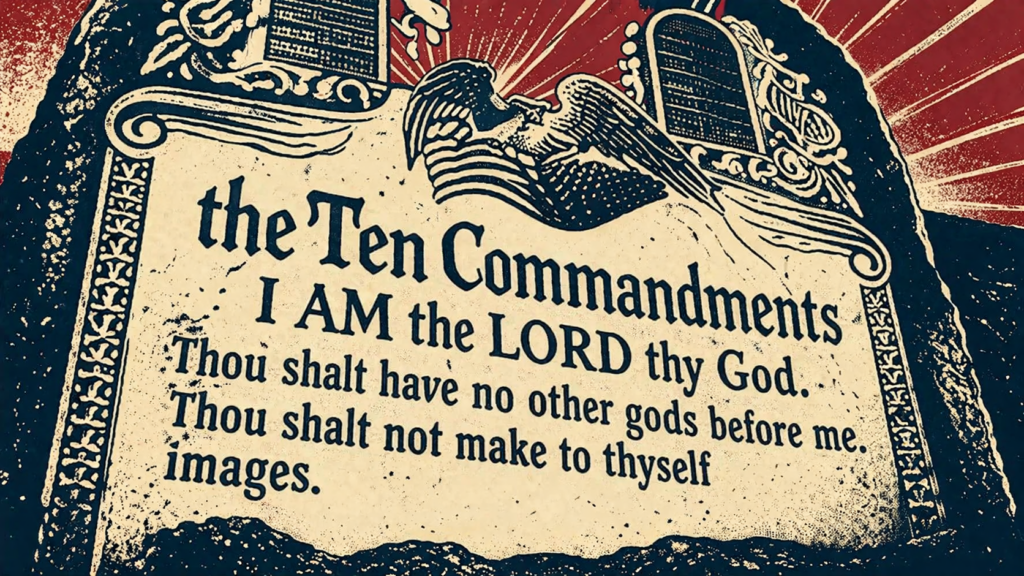
Judge Orders Arkansas Secretary of State to Remove Ten Commandments
A federal judge has ordered the removal of a Ten Commandments monument from the Arkansas State Capitol grounds, ruling that the display violates the U.S. Constitution’s Establishment Clause, which prohibits government endorsement of religion. The decision represents another major ruling in the long-running national legal conflict over religious symbols on public property.
The monument, located at the Arkansas State Capitol in Little Rock, was installed as part of a state-backed initiative intended to highlight what supporters described as the historical influence of the Ten Commandments on American legal and moral traditions. However, the court determined that the monument’s purpose and presentation were primarily religious rather than secular, making it unconstitutional when displayed on government property.
U.S. District Judge Kristine Baker concluded that the monument “crosses the constitutional line” by appearing to endorse a specific religious doctrine. The ruling emphasized that while historical references to religion are sometimes permissible in public spaces, government installations that primarily promote religious teachings violate the First Amendment when they lack a clear secular framing.
The legal dispute surrounding the monument has lasted several years and is part of a broader wave of similar cases across the United States. The Arkansas monument was originally installed in 2017 and later replaced after it was destroyed in a vehicle crash shortly after its installation. It was rebuilt and reinstated, leading to renewed legal challenges from civil liberties organizations, including groups arguing that the display violates religious neutrality requirements in public institutions.
In her ruling, Judge Baker ordered state officials—specifically the Arkansas Secretary of State—to remove the monument. However, the court also issued a temporary pause on enforcement of the removal order, giving the state time to appeal the decision to the Eighth Circuit Court of Appeals. This means the monument will remain in place for now while the legal process continues.
Arkansas state officials have defended the monument, arguing that it reflects the historical foundations of law and governance and does not constitute religious endorsement. They maintain that the Ten Commandments are widely recognized as a cultural and legal influence rather than purely religious instruction. State representatives have indicated they are reviewing the ruling and preparing their appeal strategy.

Opponents, including civil liberties groups, argue that the monument represents government preference for a specific religious tradition and violates constitutional protections guaranteeing freedom of religion. They contend that public spaces should remain neutral and inclusive, ensuring that no religion is given official preference or symbolic dominance.
This case is part of a broader legal pattern involving Ten Commandments displays in schools, courthouses, and state capitols across the United States. Similar disputes have reached federal appellate courts and even the U.S. Supreme Court in past decades, with rulings often hinging on whether the display is deemed primarily religious or historically educational in nature.
The Arkansas ruling also comes amid renewed national debates about religion in public education and government spaces. Several states have recently passed or attempted legislation requiring or encouraging Ten Commandments displays in schools, many of which have faced legal challenges on constitutional grounds. Courts have repeatedly emphasized the importance of maintaining a separation between church and state, particularly in public education and government institutions.
Legal experts note that while the state may continue to appeal, previous Supreme Court precedent generally places strict limits on overt religious displays funded or maintained by government entities. However, outcomes can vary depending on context, historical framing, and the specific design of the display.
For now, the Arkansas monument remains in place pending appeal, but the ruling marks a significant setback for state efforts to maintain religious monuments on public government property. If upheld, the decision could influence similar cases in other states facing legal challenges over religious displays in public spaces.

⚖️ Key Legal Outcome
- Federal judge ruled the Ten Commandments monument violates the U.S. Constitution’s Establishment Clause.
- Arkansas Secretary of State ordered to remove the monument from the state Capitol grounds.
- Court found the display has a primarily religious purpose rather than a secular historical one.
- Removal order is temporarily paused pending appeal to the Eighth Circuit Court of Appeals.
- The monument remains in place while higher courts review the decision.
📌 Why It Matters
- Reinforces constitutional limits on religious displays in government spaces.
- Could influence similar Ten Commandments cases across multiple U.S. states.
- Highlights ongoing legal tension between religious expression and state neutrality.
- May set precedent for how “historical vs religious” displays are evaluated in court.
- Adds momentum to broader national debates over religion in schools and public institutions.
