
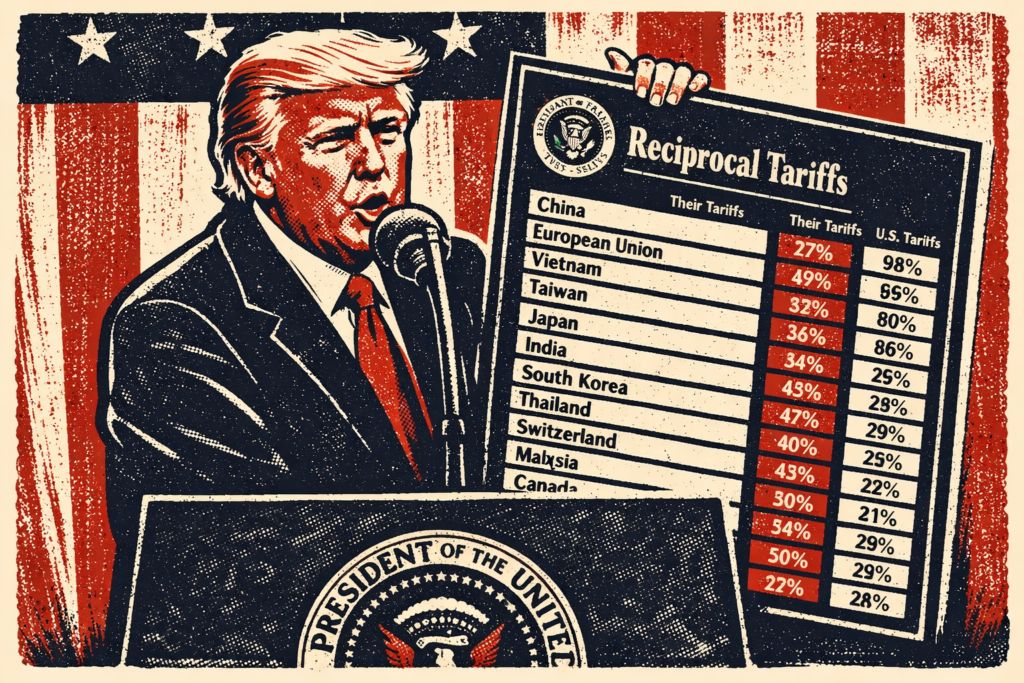
US Trade Court Declares Trump Tariffs Legally Unlawful
A U.S. trade court has ruled that President Donald Trump’s latest round of sweeping 10% import tariffs exceeded presidential authority under federal trade law, delivering a major legal setback to the administration’s aggressive tariff strategy and intensifying uncertainty surrounding U.S. trade policy. The decision, issued by the U.S. Court of International Trade, declared the tariffs unlawful and raised significant constitutional and statutory questions about the limits of executive power in imposing broad economic restrictions without direct congressional approval.
The dispute centers on tariffs imposed by the Trump administration under the International Emergency Economic Powers Act (IEEPA), a federal statute traditionally used to address national emergencies involving foreign threats. The administration argued that large trade deficits and alleged unfair trade practices constituted national economic emergencies justifying unilateral tariff measures. Using that authority, Trump announced a blanket 10% tariff on a broad range of imported goods from multiple countries earlier in 2026 as part of a wider effort to reshape global trade relationships and encourage domestic manufacturing.
However, the Court of International Trade concluded that the administration likely exceeded the legal boundaries of IEEPA. According to the court, Congress did not clearly authorize presidents to impose broad, across-the-board tariffs through emergency powers in the manner attempted by the administration. Judges expressed concern that accepting the government’s interpretation would effectively grant presidents nearly unlimited authority to impose taxes on imports without meaningful congressional oversight.
The ruling came in response to lawsuits filed by multiple business groups, importers, and trade organizations that challenged the tariffs shortly after they were announced. Plaintiffs argued the tariffs caused substantial financial harm by increasing import costs, disrupting supply chains, and creating instability for companies dependent on international trade. The lawsuits also claimed the administration improperly bypassed procedural safeguards and congressional authority established under federal trade laws.
The court emphasized that tariffs traditionally fall within Congress’s constitutional authority to regulate commerce and levy taxes. While Congress has delegated certain trade powers to the executive branch through statutes like Section 232 of the Trade Expansion Act and Section 301 of the Trade Act of 1974, judges found that IEEPA was not designed to function as a broad tariff mechanism. The ruling suggested that the administration’s interpretation risked upsetting the constitutional separation of powers by concentrating excessive economic authority within the presidency.
The Trump administration strongly criticized the decision and quickly signaled plans to appeal. White House officials argued that the president possesses broad constitutional and statutory authority to respond to economic threats posed by foreign nations. Administration lawyers contended that persistent trade imbalances and foreign economic practices threaten national security and domestic industry, justifying emergency intervention. Officials also warned that limiting presidential trade powers could weaken the government’s ability to respond rapidly to economic coercion from rival countries, particularly China.
Business groups and trade organizations largely welcomed the ruling. Many importers argued the tariffs created sudden cost increases that were ultimately passed on to American consumers and businesses. Retail associations, manufacturers, and logistics companies have repeatedly warned that blanket tariffs can disrupt supply chains, increase inflationary pressure, and create uncertainty for companies operating in global markets. Some plaintiffs described the court’s ruling as an important defense of constitutional checks and balances.
The decision also has major international implications. Several foreign governments had criticized the tariffs as unlawful and potentially inconsistent with World Trade Organization obligations. Trading partners expressed concern that the administration’s broad tariff strategy risked escalating global trade tensions and provoking retaliatory measures. Analysts noted that the court’s ruling could ease some international concerns about further expansion of U.S. tariff policies, at least temporarily.

Legal experts say the case could become one of the most significant trade law disputes in recent years because it directly addresses the scope of presidential emergency powers in economic policy. Scholars have increasingly debated whether modern presidents have accumulated excessive authority under broadly worded emergency statutes. Critics of expansive executive power argue that presidents from both parties have increasingly used emergency declarations to bypass Congress on major policy initiatives.
The Court of International Trade’s ruling may therefore extend beyond trade law and influence future disputes involving presidential emergency powers more broadly. Constitutional scholars noted that the court’s reasoning reflects growing judicial skepticism toward broad interpretations of executive authority without explicit congressional authorization. Some analysts compared the case to recent Supreme Court decisions limiting administrative agency powers under the “major questions doctrine,” which requires clear congressional authorization for actions involving major economic or political significance.
The economic stakes are substantial. The challenged tariffs affected billions of dollars in imported goods across industries including electronics, automotive products, industrial materials, consumer goods, and food products. Businesses involved in the lawsuits argued that sudden tariff increases created operational instability and complicated long-term pricing decisions. Financial markets also reacted to uncertainty surrounding the administration’s trade agenda and the future of tariff enforcement.
The litigation arrives amid broader political debates over protectionism, globalization, and domestic manufacturing. Trump has consistently defended tariffs as necessary tools to protect American workers, reduce trade deficits, and pressure foreign governments into renegotiating trade agreements. Critics, however, argue that broad tariffs often function as hidden taxes on consumers and may harm industries dependent on imported components.
If upheld on appeal, the ruling could significantly limit future presidents’ ability to impose sweeping tariffs under emergency powers without congressional approval. Conversely, a successful appeal by the administration could reinforce expansive presidential authority over trade policy and economic emergencies. Legal observers expect the dispute may ultimately reach the U.S. Supreme Court given its constitutional significance and economic impact.
Ultimately, the case represents a major test of the balance of power between Congress and the presidency in shaping U.S. economic policy. The final outcome could redefine the legal boundaries of presidential trade authority for years to come.

Key Legal Outcome
- The U.S. Court of International Trade ruled Trump’s latest 10% tariffs unlawful.
- Judges found the administration exceeded authority under the International Emergency Economic Powers Act.
- The ruling emphasized Congress’s constitutional role in regulating tariffs and commerce.
- The Trump administration announced plans to appeal the decision. (reuters.com)
- Business groups challenging the tariffs argued they disrupted supply chains and increased costs.
Why It Matters
- Could significantly limit presidential emergency powers in trade policy.
- Raises constitutional separation-of-powers concerns between Congress and the presidency.
- May affect future tariff policies and global trade negotiations.
- Impacts businesses, importers, and consumers facing higher costs from tariffs.
- Could become a landmark Supreme Court case on executive economic authority.
